
Translated material
The trial of Khodorkovsky
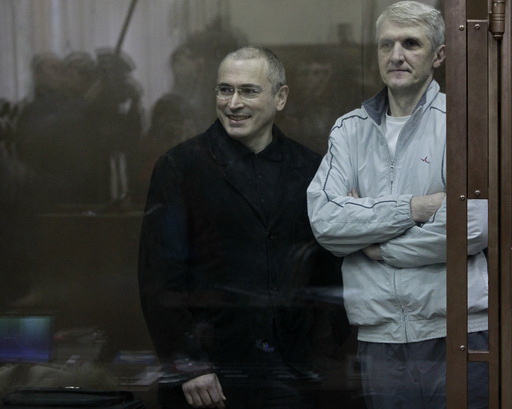
The trial of Khodorkovsky, in my opinion, has a fairly accurate historical analogy: these are processes over the Templars under Philip Beautiful (1307), the Jacques Coeur, 1400-1456 process and the process of Jacques de Bon, Baron Samblanca (Jacques de Semblancay) (1527).
All three processes occurred for two centuries, when the become French absolute monarchy faced independent financial force born in the bowels of feudal society.
The Templars were, in fact, the largest banking house in Europe: Philippe owed him a beautiful one. Jacques Ker (1400-1456), a resident of Montpellier, who started with independent travels to Damascus, made himself. By the 1430th, his country, thanks to the business activity of Ker, could compete with the Italian trade republics. In 1436, Ker was called up by Charles VII to Paris and appointed the head of the Mint. At the height of his career, Jacques Ker was the richest private person who had ever lived in France. The sea was covered with his ships, he had 300 managers subordinate, his agents mediated when concluding contracts between the Egypt Sultan and Knight's Orders, he financed the war for the liberation of Normandy from the British and colleges in Paris, Mill. The whole top of the country, including the king himself, went to his debtors. In 1450, after the death of the mistress of King Agnes Sorel, one of the debtors Jacques Ker accused him of poisoning Sorel. Ker was thrown into prison, his wealth was confiscated. He managed to run; After his death, Charles VII allowed his sons to inherit what was left of his condition.
In the same way, the fate of Jacques de Samblans. His father, Jean de Bon, sells a cloth; By the will of the king, he takes part in the confiscation of property at Cardinal Balu and Philip de Complic; In 1473, the king has 30 thousand livres to the king so that he could buy from King Aragon Perpinyan.
Son, Jacques, initially a merchant and a banker. Only from October 1490 to January 1492, he sells to King Charles VII cloth for 41 thousand livres. Since the 1492nd he has become the main treasurer of the Duchess of Anna Breton, from the 1496th one of the four finance generals. In 1503, he borrowed the XII 23 thousand livres; In 1525, Francis should already be Jacques 910 thousand livres. By this moment, Jacques are fulfilled under the king of the responsibility of the superintendent of finances. In the 1527th, the king throws him into prison, takes everything away and hangs on Monfoon as a traitor.
Partly the same thing happened with the fugers (which the emperors refused to pay on accounts), with Bardi and Peruzci (who were refused to pay the French and English crown).
There were no such processes in imperial Rome. In Imperial Rome, the richety, which was close to the emperor, was just a thief and a freedman, and did not make himself a merchant. There were no such processes in the Ottoman Empire, where the ruined richness was just a vizier of the former Sultan, and there was no court to take away the property from him - all his property and so belonged to the treasury.
These processes are characteristic of Europe of the end of feudalism. Feudalism is not some kind of special system, it is a mixture of several ways, and here is the emerging absolute monarchy, which can do everything, faces precisely with personal wealth, with people who made themselves, and approached the authorities, and with the help of this power make new money, which led the king-unlike the same Ottoman Empire, where no one has led anything, because nobody leaned, because no one has led it away because The Sultan took everything in vain.
For such a situation, you need a very complex historical situation, an extremely complex relationship between power and business. A business that is, on the one hand, by independent power, and on the other hand, receives income from power. And the authorities, which, on the one hand, are becoming more and more absolute, and on the other hand, is forced to observe decency and collect at least a fictitious court in order to present at least fictitious accusations to too powerful creditors: Agnes Sorshni poisoning or serving Idol BafoMet.
In France, this happened with almost all the creditors of the king. This did not happen in England, and therefore now the whole world speaks English, and England has become a mistress of the seas, but France did not. When they tell us that the process of Khodorkovsky did not destroy the Russian economy, this is true - he did not destroy, just as the Samble process did not destroy the French. As it turned out, after three hundred years, the Sambland process destroyed not the economy, but the future of France.
And in this sense, the process of Khodorkovsky - it is completely fundamental. If we want to answer the question why there is no modernization in Russia: guys, what is the modernization in France of the 15th century? In a country where the monarch has the same idea of the needs of the state as Philip Beautiful and his favorite Angerran de Marigny?
***
However, there are significant differences. Jacques Ker or Jacques de Sambansa are political prisoners, in the sense that they were not in prison for what they were accused of, but because the king was their debtor.
But Jacques Ker or Jacques de Samblans did not constitute plans for political reconstruction of France. It is true that their activities changed the role of France. Jacques Ker alone was able to make his country compete with the Italian trade republics. And if the French kings did not have the habits of hanging those to whom they owe, then the history of France would be different, and, perhaps, the industrial revolution would begin in France, but the Sambling itself about the industrial revolution, of course, did not think.
Another thing is Khodorkovsky: by 2003, he quite consciously embodied the project of another development of Russia. In the early 90s, he was an ordinary oligarch (if the oligarchs are ordinary), he made money, like everyone else, he loved to repeat the phrase of Ford, that he could explain the origin of all his millions, except, of course, the first.
But by 2003, Khodorkovsky completed the accumulation of assets and took up an increase in the value of these assets, which, in turn, meant an increase in the company's transparency. Which, in turn, meant an increase in the country's transparency. The increase in the country's transparency entailed not only political transparency, but also investments in education; It was one of Khodorkovsky's favorite projects. The increase in Yukos transparency was not due to the fact that Khodorkovsky repented of sins: it was needed to increase the capitalization of the company. But it just so happened that at this moment that it is good for Yukos is good for Russia.
And it was precisely the desire of Khodorkovsky to greater transparency that was directly encountered with Putin's plans. The arrest of Khodorkovsky meant: we do not need transparent companies, we need submissive companies.
Russia in 2003, as in 1913, was like a caterpillar on the eve of the transformation into a butterfly. Already prepared for the disclosure of information both Alpha and Rusal. “Alpha” was then baptized: how good that we did not stand on the same path. “Rusal” ordered himself from international auditors, and when, after the arrest of Khodorkovsky, this report was published “Vedomosti”, Rusal sent an angry letter asking him not to publish .... defamatory materials. What was good for Yukos was good for Russia, but bad for the Kremlin. Putin preferred to be Philip Beautiful, not Queen Elizabeth. The absolute master over a weak stagnant economy, and not a servant with strong and growing. The first in the province, not the last in Rome.
***
Russia in 2003, like Russia in 1913, stood on the verge of transformation into an open society. What would it be if it were not for the process of Khodorkovsky?
Firstly, Russian companies, one after another, would become more open in order to increase their capitalization, like Yukos. A wave of mutual exchange of shares between Russian and transnational companies would ride - as Yukos with a Chevron wanted to do.
Given that Russian capital is concentrated in one hand, this would lead to the fact that the Russian oligarchs would have received de facto control over many transnational corporations. This would lead to a real strengthening of Russia and, including its master Vladimir Putin. At the same time, we note that we are talking about an increase in soft power - that is, the possibility of influence in the interests of Russia to world processes. It is clear that rigid power - that is, the opportunity to throw any businessman to prison, disperse the demonstration with batons and put pressure on the streets with impunity - would have decreased significantly.
This is the same type of power that President Obama possesses. He is the most powerful ruler in the world, but he cannot put businessmen who are dissatisfied with his rule in prison, and is forced to wear hours of $ 200 on his hand. President Zimbabwe Robert Mugaba does not have a similar influence. But in terms of the cost of hours and the number of businessmen thrown into prison, he has no restrictions.
The next position that would have changed dramatically is the size of investments in the country. Russia is currently the most corrupt per capita country in the world. Corrupation is now eating at least half of the Russian GDP of one and a half trillion dollars; We have ordinary investigators ask bribes of $ 15 million, and the price of a square meter of real estate in the Moscow market reaches 5-6 average monthly salaries (in the world this indicator is 1-2 month old salaries).
These same $ 700 billion. They would put pressure on the real estate market in Moscow or in Nice, but would go to Russian industry. The first consequence would be an increase in oil and gas production, which are not increasing now, as well as the construction of chemical plants- the decision is completely natural for the country with rich natural resources. There is no resource curse. The USA is a country with huge natural resources. The United States is now extracting more gas than Russia, and the USA has the world's first chemical industry. China, which with gas is much worse than that of Russia, annually invest $ 5-6 billion in chemical production. This is 1% of the Russian corruption.
Another inevitable step would be the creation of an industrial belt on the border with China. First of all, this concerns oil production, as Khodorkovsky wanted to do, for this, bought up oil licenses in Eastern Siberia (now these licenses have gone to Rosneft, nothing has been rebuilt), but this would be related to other resources: Udokan copper deposit, etc.
It is clear that the creation of powerful international companies along the border with China - companies whose shares are quoted on the exchange, and managers graduated from Harvard - would completely change the geopolitical situation in this region. Now things are going on in such a way that this territory this de facto sooner or later will depart China, simply because geopolitics does not tolerate vacuum. If there is nothing on these lands - neither power nor business, then they will be filled with neighboring powerful power and business.
Transnational companies along the border with China would mean the industrial revival of Russia and protect this border more reliable than any division. At the same time, if half of the Chinese worked in these companies, it would be a plus, not a minus.
Do not be ashamed of the fact that we would get raw materials and supplied it to China. You should also not think that Russia in its today's demographic and social state could follow the “Chinese path” - the path of cheap labor. Russia could go along this path during Khrushchev, when there was still a supply of labor in the villages, the social security of the population was zero, and the Communist Party had a certain share of passionarity. If, then, under Khrushchev, Russia did not open oil, then Russia would most likely follow this way. But by the end of the 90s, Russia has firmly turned into a raw material country, the population of which exists at the expense of subsidies obtained from the export of raw materials, and the cost and requests of our labor force are not comparable to Chinese.
There is nothing wrong with this. Each country should reasonably use what has, and Russia, like Norway or Australia, should reasonably use its characteristics.
The creation of assembly facilities based on cheap labor in Russia was excluded. The creation of a modern mining and chemical industry, provided that $ 700 billion from GDP do not go to Nice, but in the Russian industry, was inevitable.
The third inevitable step would be the growth of education - I remind you that Khodorkovsky was invested in education, as he was invested in the oriental oil fields. Now with education, the situation in Russia is catastrophic. In the US universities, 64 thousand students from India are studying, 57 thousand - from China, 1.5 thousand - from Nigeria, and the same amount from Russia. In Putin's Russia, the educational ideal is represented by Lake Seliger, where cut -off (well, on paper) of human rights activists serve as educational manuals.
It is in such an education that the authorities need, in which bribe takers, rapists and killers appropriate $ 700 billion from GDP. In a country where these same $ 700 billion go to industry, the need for education is somewhat different.
Khodorkovsky laid the system of that private educational charity on which not only Harvard, but the entire educational system of the United States is founded.
The fourth inevitable step, following the growth of education, would be the modernization of the economy. Not on the basis of infinitely cheap labor, as in China, but on the basis of a large amount of educated youth.
Question: What role in this unfulfilled Russia would be played by the arbitrariness of the police - one of the main topics of today's Russia? Answer: There were no arbitrariness, for the same reason why it is not in the USA or in China. The economy, which is a game with a non -equal amount, and the power of which is directly proportional to the prosperity of society, by definition gives rise to a police investigating crimes. The economy is a game with a decreasing amount, and the power that exists due to the forcibly seizure of the product from subjects, by definition, is based on the class of security forces who have the right to commit crimes.
Another question: what system would be in Russia, democracy or dictatorship? Paradoxical, but this is an irrelevant question. You can do it and so. Here the difference is not in the political, but on the economic basis of the authorities. Either this is the power of which increases directly proportional to the wealth of society, and then this power is interested in the development of the economy. Either this is the power of which increases directly proportional to her robbery, and then this power is interested in the blessing of violence. It is quite possible to imagine a situation in which Russia would follow the path described by me, and Putin would carry out rigid control over the press (possibly even more tough than now), would appoint governors and would be a very powerful world leader as Barack Obama and Hu Jintao.
Another thing is that power would be a different kind than now. Putin’s decisions would have had a significant impact on the world economy, but he could suddenly stand up from the wrong foot and try to hang Saakashvili by the eggs, as Hu Jintao could not give an order to start a war against Taiwan.
All this is industrial development, the Russian share in transnational corporations, the creation of new industrial clusters, education, and modernization - all this was quite real. And this is Russia in which you want to live. Those who say that I draw a too idealistic picture, object: changes in the economy are now taking place instantly. China and India needed less than two decades for radical transformation.
Notice, for everything this would not be necessary to do something. It was only necessary not to do something- not to arrest Khodorkovsky. And all this - the opportunity to be a member of not the “eight”, but the “triples” - Vladimir Putin exchanged for Mishura. On the opportunity to ride in three yellow "frets" on off -road. On the opportunity to pose in Tuva with a naked torso; At the Patece Philip watch, for two dozen residences, to the opportunity to explain in the usual journalist what exactly should be done with the opposition, if she, “knitting the hooves”, does not “move towards the sea”.
It is a pity Khodorkovsky, who was sitting for making his company transparent: not because he was so good, but because it was beneficial to him. It is a pity all of us: we are actually sitting with Khodorkovsky. A very small number of people in Russia are now free: Putin, Timchenko, Kovalchuki, Sichin, Rotenberg, Yakunin. Everyone else is sitting: in the sense that a prisoner is a person who has no private property, with whom you can do anything, at any time, and any creative activity of which, ultimately, is useless. So we are all sitting. This is not to say that Putin turned the country into a gulag. He turned Russia into limb. In Niflheim is the world of eternal ice and darkness, where all the dead fall, except for those whom Valkyrie is taken to Valgalla.
So very sorry Khodorkovsky. It is a pity Russia. But I propose to regret Putin, who could not only create - not to prevent the new Russia from appearing, and at the same time become one of the most powerful world leaders. And he exchanged all this for the golden dream of Shpan - an expensive watch, countless residences and the praise of United Russia.