
Translated material
The son of Leo
To the 125th anniversary of David Ben-Gurion
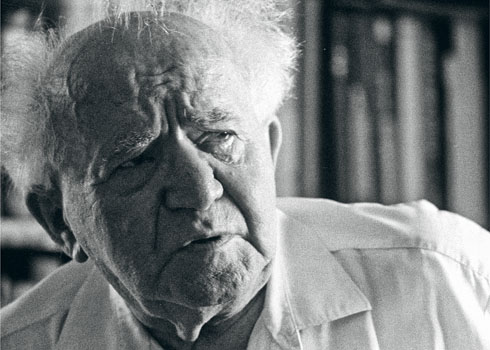
The son of Leo. 125 years ago, on October 16, 1886, David Josef Green, known to the world as David Ben-Gurion, was born. It was he who on May 14, 1948 proclaimed the declaration of independence of Israel and is rightfully considered the founding father of the Jewish state. How he went to the goal, what he managed to do and what he taught compatriots - remembered The New Times
He had a rare and valuable quality for politics - the ability to convince. So it happened in May 1948, when the British mandate for Palestine and the national rule-the government of the not created state of Israel came to an end-discussed the question of: proclaim independence or postpone the decision until better times. The invasions of the armies of several Arab states were afraid of the invasions of the armies. Can a young state withstand him? But Ben-Gurion, who offered not to hesitate, managed to get the necessary voices. The decision on the creation of Israel was held with an advantage of two votes: six - for, four - against.
Healthy and full of faith
David Ben-Gurion (his family was called the Dovchik) was born in the Polish town of Plonsk, he also received a traditional education in a header, a religious primary school. Then he moved to a Russian school - a significant part of Poland, including Plonsk, then became part of the Russian Empire. The boy was in his mother: stunted, painful, thin. Another feature is disproportionately large head that distinguished it from peers. When the father, who was worried about this, took the boy to the doctor, he felt his head, examined the crop and predicted: "This child will become a great person over time." The mother then proudly decided that her son would become a rabbi, "great in the Torah." She died suddenly when David was barely 11 years old. The pain from this blow did not leave Ben-Gurion for many years. Then he will write about his mother: "She was for me the ideal of purity, love, nobility, humanity and devotion."
Under the influence of his father, who headed the local organization “Loving Zion” in Plonsk, David was imbued with the idea of the founding of a Jewish state and at the age of 14 he created his own youth society “Ezra” - its members taught Hebrew children from poor families. David, who received the Zionist education of David, had no doubt that his homeland and the house of his people should be in Palestine. In 1906, with the second wave of repatriates-Halucim, pioneers-first-settlers-he arrived in Palestine, who was still under the rule of the Ottoman Empire, and there he took himself a new name-Ben-Gurion, that is, the “son of a lion”, “lione”, the name of the famous military commander of the anti-Roman uprising. Going ashore in the port of Jaffa, David sent a postcard to his father: “I am healthy, cheerful and full of faith! Hot greetings from Eretz Israel. ” * * Eretz-Israel is the land of Israel. On the first night, on the ground of the acquired homeland, David could not fall asleep ...
He found a refuge in one of the first Jewish settlements-Petes-Tick-and immediately began to work on an orange plantation. He dragged fertilizers, removed stones, planted trees. A young man who had never worked on Earth had never worked on earth. In less than two weeks have passed since the time of arrival, as David dumped a fever. The attacks of malaria were repeated every two weeks. The doctor, who has called to treat the patient, pronounced the verdict: “Nothing will help you. Leave Palestine. "
But David remained. His decision to work on Jewish land, becoming a real farmer was unshakable. * * “Jewish labor on Jewish land” is a motto proclaimed one of the founders of socialist Zionism by Aaron David Gordon, who saw in this a means of moral self -improvement of the people. Not only David, hundreds of other young Jews brought with them to Palestine from Revolutionary Russia (this refers to the first Russian revolution. - The New Times) Socialist ideas of labor as the main source of equality and vital goods. For this, they arrived in Eretz-Israel. Like other first-male men, David became a plowman. In the literal sense - digging the earth with a shovel and a plow. And he managed to read a lot. There were jokes about his passion for reading. They told, for example, that once he walked behind the oxen, without taking his eyes off the newspaper, when he finished reading and raised his eyes, he found that he was standing in the middle of the field, and the shock and the trace caught a cold.
Over the years, Ben-Gurion gathered the richest library in ancient and recent history, philosophy and many other sciences. As a rule, he read these books in the original language.
Trade union leader
In 1912, Ben-Gurion, along with Yitzhak Ben-Zvi ***, would subsequently become the second president of Israel, from 1952 to 1963 he entered the law faculty of Istanbul University. In 1915, when Ottoman Türkiye joined the First World War, Ben-Gurion was expelled from the country for Zionist activities. David went to the United States, where he continued his work. There he met his future wife Polina, a native of Minsk, who has become his friend, an ally, mother of his children for life.
For the second time, David arrived in Eretz-Israel no longer with a farmer, but a politician. In the 1920-1930s, he was actively involved in the socio-political life of the Jewish community-Ishuva, creates a Jewish trade union of workers-histadrut, in 1930 unites a number of working movements in the Mapai party, the largest in the Zionist movement.
In the summer of 1923, a young politician went to Soviet Russia to the International Agricultural Exhibition-as a representative of Jewish workers of Palestine. In Moscow, he hoped to meet Lenin, whose ideas did not seem alien to him then. It was not possible to meet with a deadly sick leader, but nothing left of sympathy to Bolshevism after this trip. On the deck of the ship heading to Palestine, Ben-Gurion wrote in his diary: “Russia-the country has opened for us / ... / exalted aspirations for freedom and justice and ugly wretched reality; revolution and speculation; holy suffering and dirty corruption /... /where light and shadow are inextricably intertwined with each other, so you do not know where the holiness ends and where the gates of evil open. ”
The dream came true
During the Second World War, the position of the Jewish community in the British Palestine was extremely complicated. In order to ensure a strong rear in the Middle East and under the pressure of the Arabs, Britain *** Britain’s mandate for Palestine Management lasted from 1920 to 1948. In 1939, a white book that limited Jewish immigration up to 15 thousand per year. In the first period of the war, when Rommel’s tanks stood at the gates of Palestine, the Jewish people before fighting for the creation of their own state, had to fight for their existence. In those days, Ben-Gurion formulated the slogan: “We will help the British in the war, as if there is no white book, and fight against the White Book, as if there was no war.” As soon as the war ended, Ishuva’s leadership resumed the struggle for the creation of a Jewish state. 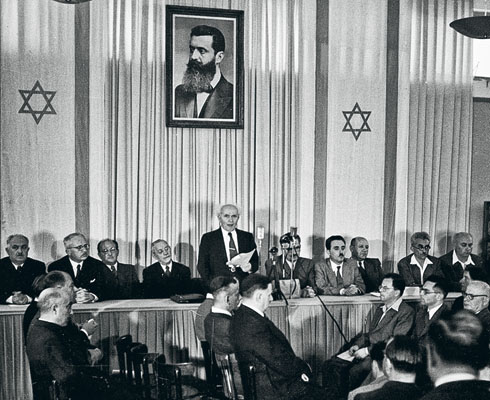
Just a few hours before the end of the British mandate in Palestine, on May 14, 1948, the declaration of independence of the state of Israel was made in the Tel Aviv Museum-the dream of many generations of Jews scattered around the world came true. This historical document was even, without any emotions, Ben-Gurion read, who took on the role of the head of the Provisional Government and the Minister of Defense. “The decision to proclaim the state in those conditions was made exclusively thanks to Ben-Gurion,” Igael Yadin wrote many years later, who commanded the armed forces of Israel. “This decision is in its importance and significance surpasses thousands of political decisions and actions.”
The first war
However, fears were justified. The independence of Israel was barely proclaimed, the army of five Arab states immediately broke through several fronts. The Egyptian tank column entered the Tel Aviv direction, the Egyptians entered into Ber-Schu. At this time, the Jordanian units blocked Jerusalem. The city was continuously subjected to artillery shelling. By the end of the fourth day of defense, food and water came to an end. To the north of Jerusalem, Iraqi units were preparing for a breakthrough of Israeli defense and access to the Mediterranean Sea. On Saturday evening, May 22, one of the highest commanders told Ben-Gurion: “There is nothing more in the reserve. Within 72 hours, everything will be over. ” But the prime minister and Minister of Defense were in no hurry to give up. He needed to win the time. Indeed, at the direction of Moscow, then seeing its interest in the support of Israel, the first combat aircraft began to come from Czechoslovakia (there during the war were produced during the war. In addition, the supply of weapons purchased by Israeli representatives in Europe and America went. In fact, in a matter of days, having reached the army, Ben-Gurion on May 28 already sets a new task for the commanders: in turn to strike at each of the participants in the enemy coalition, restraining the enemy on the rest of the fronts. (Over time, this doctrine will become the main in the combat tactics of the IDF, the Israeli defense army-both in the six-day war of 1967, and in the Judgment Day in 1973). A few days later, in early June 1948, Ben-Gurion could proudly declare: "The plan to crush the state of Israel / ... / failed." 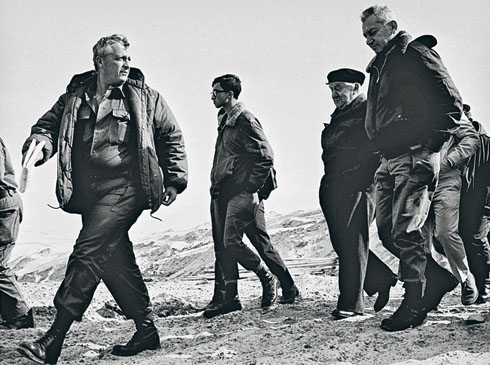
But the victory over the external enemy is half the battle. It was necessary to stop the dangerous politicization of the armed forces and turn the scattered formations into the regular army of Israel; prevent a potential civil war; Accept and equip thousands of new repatriates. There were enough cases for five years of premiership.
In a shepherd field
In the spring of 1953, returning from Eilat, in the Bolshoi Ballo Benev Ben-Gurion desert, he saw several buildings, and near them a group of young people. He got out of the car, asked them what they were doing here. They replied that they decided to establish in the middle of the desert the new kibbuts of the SDE-Booker ("Shepherd Field"). Ben-Gurion, who was 67th year, caught fire-recalled youth. Soon he had an idea: to leave the prime minister’s chair and join the new kibbutz, in which he asked to build a hut for himself. The opponents of Ben-Gurion met with sarcasm about this decision, supporters with anxiety: “What did you start, David? Is time? " But Ben-Gurion is inexorable: in November 1953, he sends the president a request for a resignation, and after that he performs on a farewell appeal to the nation, in which the psalms quoted the verse with an excited voice: “Lord, my heart was not arrogant, and my eyes did not have the eyes, and I did not follow the great and unattainable for me” (Psalm 131: 1).
The new member of the kibbutz SDE-Booker went to work the day after the move. I took up the transportation of manure - just like the first day after arriving in Palestine 47 years ago.
Return and care
Life in desert solitude lasted only 14 months. In February 1955, the Moshe Sharret government called on Ben-Gurion to head the Ministry of Defense again. Israel's safety was at risk - Egypt, where Soviet weapons went in a continuous stream, nationalized the Suez Canal, and the Arab terrorists now and then penetrated Israeli territory. And the old man, as Ben-Gurion was called, agreed. In the fall of 1955, he again became the Prime Minister, and a year later he struck a preemptive blow to Egypt, moving the Israeli army on the Sinai Peninsula and to the gas sector. * * On October 22, 1956, a secret Sevra protocol was signed, according to which London and Paris pledged to provide Israel with air cover. And although the Egyptian territories - under pressure from the USA and the USSR - had to be returned soon, the Sinai campaign gave Israel ten years of the world.
So, having triumphantly returning to politics, Ben-Gurion lasted in the prime minister’s chair until June 1963. And then he decided to finally resign - the cause was intra -party friction in Mapai. His sunset as a national leader took only six days - as much as the victorious war of 1967 for Israel. When her approach began to feel in the air, the 81-year-old old man urged the Israeli hawks rushing into battle. And not only because he was convinced: even the Israeli army, even qualitatively superior to the enemy, will not be able to withstand the numerical superiority of the Arabs throughout generations. Not only because I was afraid: a new war can become protracted and bloody. Even when the prime minister, he tirelessly sought not only military guarantees of the existence of his people. That is why he repeatedly signaled the Egyptian leader Gamal Abdel Naser about readiness to meet with the Egyptian leader anywhere, including Cairo ... 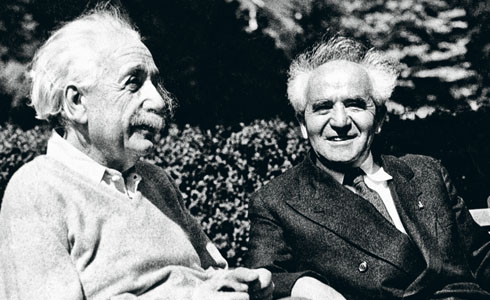
The reputation and past victories of the old man gave his opinion a colossal weight. But at the end of May 1967, a turn occurred in the mood of the masses-fewer people listened to his opinion. “He lives in the world of the past,” said Moshe Daian, who was appointed on the very eve of the war, “will reverently in front of de Gaulle, exaggerates Nasser’s power and does not understand how much the power of the IDF has grown.”
By the end of the six -day war, the old man's time was already irrevocably left. He himself understood this, plunged into memoirs in his beloved SDE cycle. A few years later, near Kibults, at the top of a rocky cliff I chose a place for the grave ... 
In 1971, the whole country celebrated his 85th anniversary. Two years later, he suffered a heavy stroke. In the will, he asked, during the funeral, not to pronounce tombstones and not to arrange arms salute. Everyone did it. On December 1, 1973, he left, and with him a whole era.