
Translated material
82 years of loneliness
Books on the history of science are different. Some are strict, chronometrically verified and ideologically correct textbooks intended for students and graduate students. Others are textbook collections composed of primary sources that are most important for the analysis of the logic of the development of a certain science. Both the first and second are similar to the academic style and an impartial manner of presentation. But if the textbook sometimes look more “motley” due to the style of the authors turned on, then textbooks are most often emotional-neutral, claiming maximum objectivity.
There are also books that allow you to look at the development of science from a different angle - as a process unfolding in the life of a particular person, seeing this process from the inside through the eyes of his direct participant or even a direct initiator. We are talking about scientific biographies and autobiographies. True, in the latter case, the authors often “sin” subjectivity and addiction. But maybe this is the main advantage of autobiographical literature. Thanks to the subjectivity and emotional involvement of the author in the narrative process, the events of centuries -old or half a century ago come to life before the reader, and well -known scientific facts are re -comprehended based on a specific historical and biographical context.
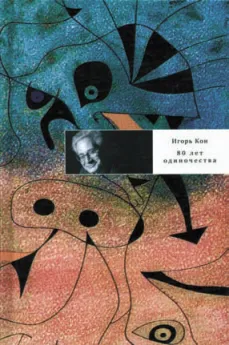
Igor Kon's autobiographical book “80 years of loneliness” is a wonderful confirmation of this, although the scientist himself modestly called her “just a story” about his work. “I want through my life experience, the focus of which was my scientific work, to tell about the past and long time, why I became interested in a particular problem and what came of it,” the author wrote in the preface and remained faithful to the selected route to the last line. Following him, we set off in the 1930s and observe the intellectual formation of the future scientist, we enter the institute, we protect one, second candidate dissertations and try to find our place in the scientific world. This search dragged on for decades - for his scientific “career” Igor Kon managed to visit the historian, and the philosopher, and the sociologist, and the psychologist. Whatever the field of knowledge he is interested in, almost everywhere he left a noticeable mark, realized as a scientist and publicist.
Therefore, it is difficult to say which of the sciences is given more space in the book. A considerable part of the autobiography is devoted to the description of the history of the development in the country of sociology as an independent discipline and people who have contributed to this process.
Separate chapters are devoted to how the author’s interests that were in the field of psychology, pedagogy, ethnography, sexology and other humanities have developed and changed over time. On the example of the life of Igor Kon, we see that the scientific and journalistic activity of the scientist is always closely intertwined with his worldviews and lifestyle, that scientific ideas are not taken from the ceiling, but are born in the depths of the scientist, under the influence of other people and life events.
Igor Kon wrote a large number of scientific and popular science books, some of which are devoted to the problems of the Soviet and even post-Soviet time to intimacy and sexuality unconventional for science. But this book, perhaps, turned out to be the most frank and intimate. The author admitted to the reader in mistakes committed in the past, dedicated him to his fears and hopes, spoke about close people and experiences associated with loneliness, aging and summing up life results.
At 82, Igor Kon passed away. But his voice will always sound from the pages of this book, to conduct a dialogue with the reader about the urgent problems of science and culture, to surprise with his insight and scientific erudition.
Igor Pavlov