
Translated material
Two mayors - two politicians
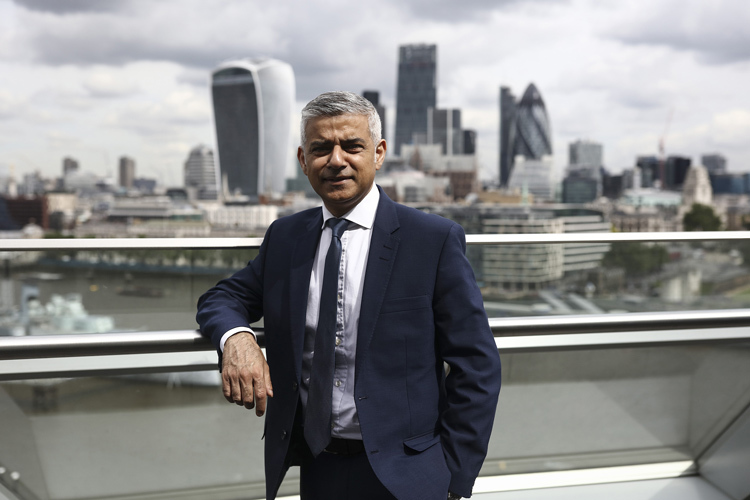
The decision to leave the UK from the European Union was a shock for the kingdom citizens - the atmosphere of uncertainty reigned in all areas of social and political life. The only thing that remains unshakable is the mayor of London recently taking office.
As a result of the mayor re -election in May of this year, Labor Sadik Khan replaced Conservator Boris Johnson. Two months after the appointment, a referendum occurred, and managed to forgot about the new mayor. However, London and without a referendum have serious problems that themselves will not disappear. What is to deal with the freshly chosen head of the city?
The predecessor of the kindergarten Khan, the famous Boris Johnson, became famous for ambitious ideas and the most extravagant form of their propaganda: the forever shaggy mayor reached the work of a bicycle, and made an epic flight over the park to represent the new funicular. Boris's projects are inseparable from the personality of the former mayor and in colloquial speech is not in vain called his name - Boris B US , Boris B Ike S ; Perhaps the talent in the field of self -promotion Boris owes many years of work as a journalist, whom he also managed to combine with the mayor. Always in full view of the media and the public, Johnson was able to expand the authority of the city hall, without avoiding, however, accusations of vanity. A characteristic joke about Boris summarizes the attitude towards the former mayor: “The question is not whether Boris was a good mayor of London, but whether the status of the mayor of London was good enough for Boris.” But no matter how you relate to Johnson, it is difficult to deny that the double period of his reign had a significant impact on the city.
Housing question
For the Londoners, the issue of housing is far from deceived: 56% of the townspeople called it the main problem of the metropolis. Astronomical prices for renting and buying apartments, coupled with unsatisfactory housing conditions, affect almost all social layers of the British capital: youth, creative business and low -income families are simply replaced from the city. Over the two mayor's deadline, Boris rose prices for housing by 51%, and salaries - by only 8%. This state of affairs brings to frustration millions of Londoners; No wonder the British pavilion at the Venetian Architectural Biennale of this year is dedicated to the problem of housing crisis and overpopulation. Of course, in a crisis it is impossible to blame an exclusively former mayor, rather, this is a consequence of objective causes, such as national policy and population growth, but Boris also contributed. As a result, the election race for the post of head of the city turned into a housing policy competition - each of the candidates first voiced its views on the construction, regulation of lease and licensing of homeowners.
It is believed that the victory of the kindergarten khan over his competitor, millionaire Zaku Goldsmith, is largely due to the approach to the problem of housing. While both candidates noted the need to build twice as many apartments and houses, that is, at least 50 thousand units annually, the proposals of the conservative Goldsmith did not convince the townspeople. His program implied the continuation of Johnson's undertakings, in particular, encouraging foreign investments and the regeneration of municipal areas, which was criticized for eviction of entire quarters, with the subsequent increase in rental prices.
Over the two mayor's deadline, Boris rose prices for housing by 51%, and salaries - by only 8%.
The response of the candidate of the Khan Sadik to the housing crisis is the stimulation of developers to the construction of more socially oriented houses, the support of municipal construction and the proclamation of the priority of Londoners over foreign customers: a significant amount of housing in London is owned by wealthy investors from the Middle East and Asia, as a result, real estate prices are inflated to heaven, and apartments in strange skyscrapers are used as a valuable asset.
To solve the tasks, Sadik Khan proposed organizing the Coordination Center Homes for Londoners - a mediator between the city authorities, developers and landowners, which controls the appetites of foreign customers and that half of the housing under construction is available. It should be noted that affordable housing for London is a relative concept. The accessibility is understood as the settled cost of the rental, but with respect to a specific amount between the parties, the watershed passes: if conservatives believe that renting in affordable housing should be 80% of its market value, the Laborists talk about a lower price - equal or traditional social rent, or a special “London rent” khan, which should amount to a third of the average earnings on district. As for the purchase of apartments, the conservative government is not inclined to subsidize social projects, although it offers young citizens a 20% discount in the acquisition of their first housing. At the same time, the cost of a house or apartment can reach £ 450,000, which is not available to every young citizen.
The pre -election program of the khan’s kindergarten also included the launch of a single non -profit real estate agency, which will freeze the rent for housing - for London, where two million citizens live in rented houses and apartments, this agenda is very relevant. However, it is difficult to predict how in reality the London housing is: due to Brexit , most likely, many construction projects will be frozen, also predict the fall in the prices for rent and purchase of real estate, but also a reduction in income due to the withdrawal of investments, which can lead to a voltage increase in society. In any case, in order to implement the declared plans, the new mayor will need to knock out the budget and powers from the government, negotiate with developers, look for free land and make changes to the London plan (a document that determines the development strategy for the Greater London until 2031).
Ecology of transport
The high cost of public transport is the second most acute problem of the British capital. The main reproach of the former mayor is a serious increase in the cost of the fare during his reign: two -thirds for the bus and twice per metro. In general, Boris Johnson turned widely in this area and achieved a lot: a number of iconic projects belongs to transport infrastructure. Under him, the construction of Crossrail began, a high -speed railway connecting areas and suburbs of London, he introduced a new cycling system, known as Boris Bikes , a new bicycle infrastructure of the CYCLE S UperhighWays , organized a funicular through the Thames Diesel-electrical buses New Routemaster , popularly called Boris B US .
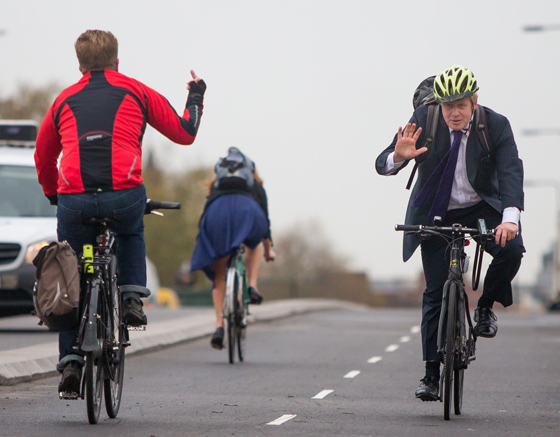 © Zuma / TASS Boris Johnson
However, almost every of these projects is ambiguous. The Boris Bikes system was planned as self -bumped, but required significant expenses (225 million pounds from the budget against 50 million sponsorship funds), although it became popular. The first -generation bicycle super -shacks, simply painted with blue paint, turned out to be unsafe for cyclists. However, London’s bicycle diagram continues to develop, and superhaves are now separated from the roadway with a physical barrier. The new Boris B US buses were declared as superecological, but due to faulty batteries, more harmful substances were emitted than old ones, and their cost almost twice as usual, non-gibyda models. Moreover, since 2010, they managed to purchase them in the amount of 1000 units. And, finally, a spectacular funicular for 60 million pounds turned out to be an expensive toy for tourists, which is useless in transit, due to an unsuccessful location and high travel price.
You will not envy a kindergarten khan with such an inheritance, even if he worked for a year as Minister of Transport in the office of Gordon Brown. On the other hand, the London transport infrastructure is the best in England. The new mayor managed to make rather loud statements, while still a candidate: he promised to freeze travel prices until 2020 with a moratorium for the purchase of Boris B US , instead of which he plans to find more environmentally friendly and less expensive models. Another intention of the candidate is to stop investing money in the road to serve a funicular, even if it means his closure (it is also not clear what to do with the Moscow monorail ).
Having assumed, the khan’s kindergarten first demonstrated serious concern about the issue of ecology, which is gaining more and more relevance . The mayor announced the introduction of air pollution tax : in addition to 11.5 pounds of entry for entry into the center, car owners produced before 2005 will pay another 10 pounds. But the new Hopper bus tariff will allow you to make free transplants within an hour. The Super -Khayweev program for the kindergarten khan will continue, even if it does not allow the daughters of the bike rods on London.
After Brexit, it is not known what will happen to London as with the financial center. Perhaps all banks and large companies will move somewhere else and the wind will wear pieces of paper along the empty London City.
Not too public space
After Brexit , it is not known what will happen to London as with the financial center. Perhaps all banks and large companies will move somewhere else and the wind will wear pieces of paper along the empty London City. However, even with this development of the situation, it will not be easy to refuse some projects: they include the Garden Bridge - another brainchild of Boris.
The prospect of the construction of a new bridge through the Tomas Khezervik project has been dissatisfied with critics for more than one year: Boris laid 30 million pounds from the transport budget to embody this idea, the other 30 million were allocated from state government, and the total cost reached 175 million. According to the critical public, the bridge is needed in other parts of London, besides it is in private property, so it will close at night and during corporate events, and in general it is planned paid - 2 pounds want to levy for crossing the bridge. The Londoners were outraged by this fact and even held a parody of the architectural competition , and the ALLIES and Morrison architects suggested landscaping the existing bridge instead of the new construction. As for the kindergarten of the khan, he promised that he would cancel the construction, but, having taken office, reluctantly gave the go -ahead, noting that "the money has already been spent, and the cancellation will cost twice as much as realization." However, he still asked the developers to make the bridge more accessible to the townspeople and cut its budget.
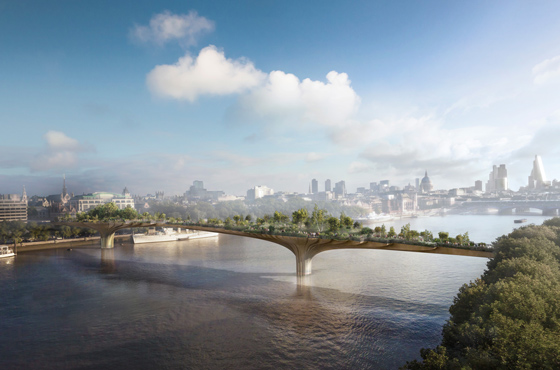 © Heatherwick Studio "Garden Bridge"
Another legacy of Boris, or rather, the Olympiads - Olympicopolis Plan - a large -scale redevelopment on the territory of the Olympic complex in East London includes 10,000 apartments, the research campus of the University College of London, the Center for Water Sports on the Zaha Hadid project, the building of large museums and theaters, and, of course, strange The thing from Anish Kapoor. The project cost is estimated at 850 million pounds taking into account private investments, and the implementation will end by 2022.
And, finally, the question of whether the most aggravated street of London Oxford Street is completely pedestrian was considered under Boris-without much success, but the khan’s kindergarten supports this idea.
It is clear that in the light of recent events, London's problems have faded into the background and predict the further development of the situation is not easy. One thing can be said for sure-it is unlikely that the new mayor will build up the whole London with municipal areas: firstly, even if the Khan’s kindergarten is a socialist and for all the good, the left consider him a centrist, and secondly, the mayor’s figure in Britain is extremely dependent on the national government, and the government will remain conservative for another four years.
The London mayor is inherently the same “strong business executive” as the Moscow mayor, but their similarity ends.
The ideological emancipation of the mayor, due to the opportunity to belong to another party and have his own views, more than compensates for the lack of authority and financing (the London City Hall complains that only 7% of the tax collected in the territory of the tax, while the New York authorities are dropped by 50%, the rest is entered in the form of government subsidies to one or another need). And in itself, the position of mayor of London was established recently - in 2000, and before that the city was governed by district councils. Sadik Khan (as, by the way, Sergei Sobyanin) is only the third in this post.
The London mayor is inherently the same “strong business executive” as the Moscow mayor, but their similarity ends. The Moscow City Hall is ideologically loyal, stably financed, and she has enough powers. However, the tendency to manual management and the non -obvious spheres of responsibility of departments make the decision -making mechanism unpredictable. For example, if in London for the development and management of the entire transport system, including pedestrian zones, the city hall-the London transport agency ( Transport for London ) is responsible, then three large departments are engaged in Moscow at once, and the positions of the Department of Transport from them are the weakest: the construction of the subway, highway, transport units and Moscow Ringe The construction complex controls the railway (MKZHI), the city economic complex is engaged in pedestrian zones, and the organization of paid parking lots, navigation, tickets and ground public transport, important decisions for which are clearly not made independently. FSO continues to have a serious influence on transport issues - refusing to coordinate ground crossings and highlighted stripes on city highways. In addition, the areas of responsibility can migrate: for example, MKZHI and bicycle infrastructure previously supervised Deptrans, now the ISC is given to the Khusnullin department, and it seems to be abandoned bicycle paths. But the Department of Trade suddenly settled in all that is heavy in terms of adornment of the capital, having surpassed even wild Luzhkov times. All this is supplemented by the weak coordination of departments and city services among themselves, an incomprehensible mechanism for monitoring the results and the lack of a general development strategy of the city.
But back to the agenda of the London mayor. The Khan’s kindergarten, using the bustle and the petition addressed to him, is trying to strengthen the influence of the city authorities - and if Boris needed to hang out over the park with two flags, now the figure of the mayor, on the contrary, gains some weight: the face responsible for the well -being of the capital will continue to work at any outcome. But whether the kindergarten will be able to wrap a split in British society to the benefit of the city, time will tell.