
Translated material
Spy -community
In society
 Spy -community
July 12, 2010 Dmitry Sidorov
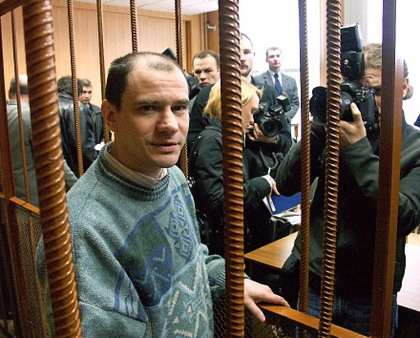
Without Khodorkovsky and Lebedev, as well as some other Russian prisoners, the exchange proposed by the Kremlin, the exchange resembles the sale of speculators of one leg from the coveted pair of jeans in Soviet times.
One component was the former employee of the Institute of the United States and Canada Igor Sutyan, who spent more than 11 years in prison. Of course, the liberation of this person, whose guilt raises serious doubts among many human rights organizations, but not in “independent” Russian justice, is already a serious achievement. Because at least one person, torn from the Kremlin regime, will receive the right to dispose of his life as he considers necessary. However, having written this, I understood why the Kremlin suggested Washington and London Sutyagin.
This did not happen because of the noise raised by Human Rights Watch and Amnesty International, who called Mr. Sutyagin “political prisoners”. Sutyan does not possess and is unlikely to have access to the state secrets that he can share with the intelligence services of the West. The Kremlin knew this when the FSB beat himself in the chest and received awards for the capture of the “spy”, he knows this now.
As brandedly packed desired jeans purchased in the Black Market in Moscow in the 70s or 80s, they could bring the joy of only one-legged disabled person, so the exchange of Sityagin for Anna Chapman and is unlikely to bring the FBI satisfaction. But the White House, it seems, is ready to be satisfied with this “exchange”. Having “achieved” the liberation of the “political” prisoner, the Obama administration got the opportunity to once again translate its commitment to the protection of democratic principles.
Having spent ten years and significant funds, American counterintelligence brought a network of foreign spies in the teeth. If you forget about a professional victory and be guided only by pragmatism, which declares the current US administration in relation to the Kremlin, then the FBI delivered the so -necessary tool for conversation with Vladimir Putin, which she had not had a hitherto absent. In response, the White House muttered something like “thank you”, but decided not to spoil relations with the Kremlin for the sake of some kind of visible to the world, but serious strategic interests that we are reminded of from Washington and Moscow all the time.
If the White House is not in words, but in fact it is really preoccupied with the state of democracy in Russia, then in the response to the list of exchange offered by the Kremlin should have at least two names: Khodorkovsky and Lebedev.
I perfectly understand the problems that would have arisen both the Obama administration and the two, perhaps, the most famous “sidelists” in Russia. The White House would not only receive a negative response to his demand, but probably would have spoiled relations with the Kremlin. The latter, in glorious Soviet traditions, seems to intend to keep these two hostages as long as possible.
It is not the fact that Khodorkovsky and Lebedev would like to leave the country. In any case, the former President of the Yukos frankly told me about this, while in the United States a few weeks before his arrest. It is difficult to say how much the stay behind the thorn changed his views. The second problem would be the need to sign grateful documents that so far Khodorkovsky and Lebedev refused to do, despite the incoming signals from the Kremlin about the possibility of such an option for their release.
However, you can write or talk a lot about these signals, as well as about much more, but, unfortunately, this plot has nothing to do with our topic. Neither Khodorkovsky nor Lebedev in exchange lists, and, according to my information, the question of their exchange was seriously not discussed.
I repeat once again, not at all reducing the importance of the liberation of Igor Sutyagin: he went to freedom because the White House accepted the conditions of the game offered to him by the Kremlin. Just like Moscow, Washington wants to hush up the spy scandal as quickly as possible, once again not paying attention to who he is dealing with in Russia.
Photos of RIA Novosti