
Translated material
Site for a billion
On the Internet project, you can ozolity. But rarely
 |
Site for a billion. Many success stories of recent years are associated with the Internet. Therefore, it is not surprising that the “startup” was the most popular word among young IT developers. Does it make sense to devote himself to the original Internet project in the hope of ozoluvo-the New Times found out
Every second dreams of creating a new Facebook, every third is Google. But experts pay attention: many popular sites with billionth capitalization are actually “bubbles”. It is not as easy to achieve superprofits on the Internet market as it seems to those who want to see only success stories, such as the rapid take-off of Mark Zuckerberg and Facebook. The reason is on the surface: unlike buyers of most other products, users of the sites, as a rule, do not pay anything. So here it is not enough to collect a large number of customers, you also need to come up with - how to earn on them? Not everyone succeeds. Therefore, investors before investing money in a new site are sure to ask about the monetization scheme by which he is going to earn.
 |
| Dropbox data storage |
The fourth is extra? It would seem that the most obvious version of monetization is advertising. But the price of one banner show is very low, and for large income it is necessary not only to provide a lot of shows, but also to increase their value somehow. It turned out to Google, Facebook and VKontakte: they have a giant number of users, and they managed to make advertising more efficiently and more expensive, finding it for suitable addressees (Google takes into account what search issues you introduced, social networks - what data reported about yourself). So these three have a stable big profit, and nothing says that tomorrow its source may run out. But becoming the fourth in this row is extremely difficult: the market is divided, it remains only to make highly specialized inexpensive projects like “socialists for motorists”.
Sell another method immediately is the sale of goods. But this market, being profitable, is divided along and down: it is difficult to establish a small specialized store and earn money, but it is difficult to compete with Amazon. Unless there is not enough universal store for music and a video that combines the widest assortment at an affordable price with a choice between “reproduce right now” and “download for the future”. But his absence was not caused by the fact that no one thought of this, but by the fact that the copyright holders do not want to meet the creators of the services - even if Google became this creator.
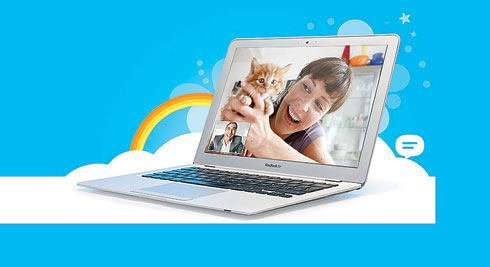
Video call using the Skype program the third option - specialized services tied to the theme of the site. For example, the LinkedIn website is conceived as a “social network for professionals”, and as a result, it receives the main money not from advertising, but from paid announcements about work. (Obviously, Facebook would have helped out a little on this - for its scale). A significant place for the Russian-speaking IT community was the Habrahabr website, and so that companies interested in the dialogue with this community are eager to pay for the creation of official habraiglog. Here there is a scope for fantasy - the site theoretically can be arbitrarily large -scale, and the paid services themselves are arbitrarily unusual. However, the presence of income from them does not yet guarantee profitability. For example, the Groupon service receives a lot of money from companies who want to unwind with its system of collective discounts, but it takes even more to maintain the site. Thus, it is both highly profitable and unprofitable.
 |
| Windows Phone 7 Series |
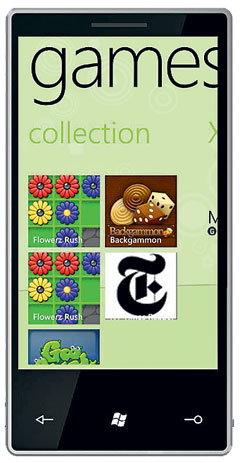
The goal is another option - the project does not bring much money, but it is bought for other purposes. When Microsoft bought Skype for $ 8 billion, he didn’t do it for the sake of direct profit: it is very modest, because calls inside it are free. But Skype could help in promoting the Xbox 360 and Windows Phone platforms, which was more important for the giant. So, by the way, it was with YouTube (bought by Google in 2006), it could have happened with the Dropbox online system-synchronization service (so far the site creator refuses to sell it Apple), it theoretically could happen to the unprofitable Groupon-its owners refused to sell Google last year, but it is obvious that the proposals will still be.
 |
| Game console xbox 360 |
Only without panic, one way or another, it is clear that the crisis of the bursting “bubbles” of the Internet industry has not yet threatened. Some of the popular sites are profitable and stable projects, some simply have not yet managed to rensign, and the rest, even if they do not be able to go into plus, will not close, but will sell large players. For example, Twitter can not find his monetization scheme, but his giant audience is such a tidbit that she will not be given an abyss. Popular paying projects may fall in capitalization, if the profit remains less than the predicted, but there is no tragedy in this, they will continue to work. Only individual, unsuccessfully invented sites can be closed completely. But this will not lead to a collapse in the market, and we will talk about the new “bubble”, which will cover everyone, as during the collapse of the dotcom in the late 90s, is panicirism.