
Translated material
Will the Commissioner be enough?
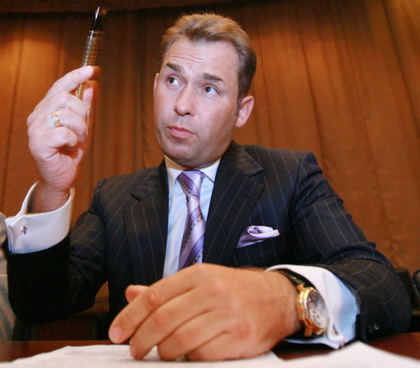
On the newspaper, it became known that President Dmitry Medvedev appointed a new Commissioner for the Rights of the Child. He became a well -known lawyer, teacher, author of books on jurisprudence and novel "Raider" Pavel Astakhov. His predecessor Alexei Golovan was dismissed a few days before with the wording of “at his own request”. This story looks rather strange: Golovan, who has been involved in the problems of protecting children since 1989, has been in the post of children's Ombudsman for less than four months (since the establishment of this position on September 1), and nothing testified to his intention to leave the post. For colleagues, the dismissal of Golovan was a complete surprise. As for Astakhov, many know him primarily not even as a lawyer, but as a TV presenter, the justice of the peace in the program “Hour of the Court”. In the practice of Astakhov there were loud affairs, he defended the interests of the Moscow mayor Yuri Luzhkov, chairman of the Accounts Chamber Sergei Stepashin, violinist and conductor Vladimir Spivakov, as well as the American Edmond Pool accused of espionage. Compared to Alexei Golovan, the new Ombudsman seems to be a figure chosen almost by accident. On the other hand, it should be remembered that in 2007, Astakhov headed the coordination council of the “For Putin” movement.
However, judging by the words of the newly -minted Commissioner for the Rights of the Child, his intentions are quite serious. However, no matter how serious the intentions of the Ombudsman are, they are clearly not enough for a radical change in the situation with the protection of children's rights.
The first Russian Commissioner for Child Rights has repeatedly advocated the introduction of juvenile justice in Russia. Pavel Astakhov, in an interview with the correspondent of the “Daily Journal”, referring to the experience of America and France, said he considers this system effective. But, in his opinion, in order to understand how juvenile justice is applicable in Russia, serious research is needed, since society was divided into supporters and opponents of its introduction. In the meantime, the number of judges specializing exclusively on the protection of the rights of children, including in district and world courts, should be increased.
Indeed, for many, including the Russian Orthodox Church, juvenile justice is an unconditional evil, which is designed to destroy the family institution. The soils now celebrate the dismissal of Golovan as a victory in the fight against an alien system.
In the current legislation, Astakhov is not satisfied primarily on how the rights of children during the divorce of parents are spelled out. According to him, it does not reflect the proclaimed equality of the father and mother in relation to the child and "works a very simple principle: who used to get up, that’s the slippers." According to the new Ombudsman, a child always turns out to be a weak side in the divorce proceedings, but often a woman, therefore, the legislation should focus on the rights of these participants in the situation more. As an illustration, he gave an example from his own practice: his father keeps the child at home and does not allow him to communicate with his mother, and in order to only see the child, she needs to wait for a court decision, who is afraid to introduce interim measures, because he is not quite familiar with the topic. In fairness, it is worth noting that situations with the reverse distribution of roles are much more common, but Astakhov’s idea is that the courts cannot cope with specific situations, so the mechanism should be spelled out in law. His predecessor also spoke about this, in particular, in connection with the sensational conflict between Christina Orbakaite and Ruslan Baysarov, who came for the duration of the Ladan’s stay as an Ombudsman. Baysarov then advocated the protection of the rights of the fathers. But Golovan just admitted that leaving his mother by default is the heritage of the Soviet approach to the problem.
Golovan also said that the guardianship authorities should not be limited to the conclusion on the examination of the housing and material conditions of the parents, but to find out which of the parents to the child will be better to live in terms of mental comfort. In this matter, Astakhov echoes him. The guardianship authorities, according to him, should generally work in conjunction with specialists - doctors, teachers, psychologists who can help find out how things are in the family. This is also necessary in cases where it is a violation of the rights of the child. In particular, to talk to the child, you need a professional. “I talked a lot with the children and I know: the child is so arranged that when he is afraid, he will lie - this is a natural form of protection,” says Astakhov and recalls stories about how children and teachers were arrested in France on the seniority of children.
The idea of attracting experts is approved by the head of the regional public organization "Right of the Child" Boris Altshuler. In a conversation with the Hedgehog correspondent, he emphasized that at present in Russia, “giant punitive system” has been launched in relation to the “full power” families, according to the results of which 320 children are selected from their parents daily. “No one works with the family, no one is engaged in restoration, family correction. We have neither in laws nor in practice, social work with the family is provided. ” In addition to attracting experts, Altshuler sees a way out in the creation of a single system at the local level, which would work “in the same way”. According to the law, the coordinators of this work are the commission on minors, but they must be reformed. The rules of work of guardianship authorities, together with the commission and the entire social service as a whole, should be, according to the altshuler, are prescribed in the Federal Law. Otherwise, the system will not develop, and will only remain hoped for rarely working in the local enthusiasts, as, for example, in Karelia, where they successfully introduce the experience of neighboring, socially protected Finland.
Astakhov himself states that the guardianship authorities are limited today by the limits of their municipalities and do not look at what is happening in the neighborhood. Therefore, some problem can be solved within one education, but not throughout the country. “We can say that if there was a federal system, a federal body, as in America, then everything would work, but we cannot afford to inflate the state apparatus through the creation of a new federal service. My position that I will realize now, ”says the Ombudsman,“ is to make those who are working. To do this, it is necessary to create such a system that the guardianship authorities clearly interact with each other and understand the tasks that are facing them. ” In order for this system to work, the guardianship authorities, according to Astakhov, must give instructions and direction of development children's ombudsmen, which will soon appear in every subject of the federation.
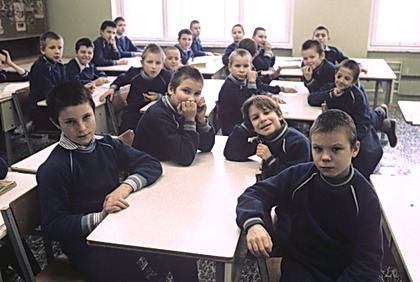
It is clear that in some cases the punitive system mentioned by the altshuler still acts in the interests of the child. But it is also clear that, for example, to deprive the alcoholic father is much easier than sending him for treatment and monitor the results, and just to deal with the details in each case. It is much easier, as Altshuler says, "take and forget." But sometimes both parents and the child, as a result of such decisive actions, under the guise of taking care of children, are done real harm. Recently, the story became known about how the adoptive parents of Alexander Lapin and Zinaida Smirnova from Balashikha tried to take (and even sent to the orphanage for some time) the girl Vladilena on the basis of her two bruises and scratches on her neck. Apparently, the reason for such actions was the political views of Lapin and Smirnova (they are communists, participated in local elections, wrote articles about the collapse of the army). At the same time, in the orphanage, Vladilena was infected with tuberculosis. In the New Year's statement of the organization “The Right of the Child”, other similar cases are given when the parents - their relatives, whether the adoptive ones - were selected by children under various far -fetched prepositions and gave them to the orphanage with unthinkable living conditions.
Apparently, Pavel Astakhov did not know about the Lapina case and brought the Grechushkins as a counter -instrument (for the brutal handling of adopted children and the murder of one of them, the wife received 16 years in prison, and her husband was sentenced to life imprisonment) and the Ageevs (their three -year -old foster son Gleb was hospitalized with numerous burns and hematomas, and the adoption of Gleb and his Polina's sisters were canceled). However, he admitted that no one was safe from errors, and in order to make errors less, it is precisely necessary to improve the operation of the system and increase control by the Ombudsmen.
Here, however, there are at least two problems that Boris Altshuler indicated. The first is that the Ombudsman as an authority cannot be included in the operation of the executive system, it does not have a device for this. Of course, the presence of children's ombudsmen in each subject of the Federation is the idea is correct, but it belongs not to Astakhov, but in the form of a recommendation, it is contained in the presidential decree on the Commissioner. The problem, according to Altshuler, is that in the regions, people from the apparatus have already begun to take people from the apparatus as children's ombudsmen. “Thus, the idea is completely perverted,” he says, “because the Commissioner is, by definition, a person who is not afraid to pull power. And now they are appointed cool apparatchiks. Such a system will not work, and this is a problem, including Pavel Alekseevich Astakhov, although he does not appoint them. If he appointed, there would be an opportunity to get independent people on the ground. They are, and very active, ready to conduct this work, but they will not be allowed close to them! ”
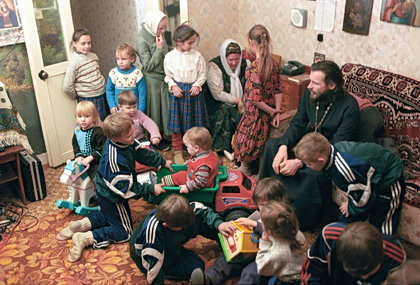
Astakhov does not object to foreign adoption - "I saw how our children feel like well -being in America, in Europe, this gives them a serious chance to see a slightly different life." But, in his opinion, we must gradually proceed to ensure that the children remain in our country, we must restore order in our country. However, in order for the “children to remain with us,” the order should be significantly increased in the country. Astakhov, meanwhile, believes that if you establish a system of work with children, then by 2020 in Russia it will be possible to close all the orphanages, replacing them with other forms of custody. In particular, family orphanages, where children live in small groups under the supervision of more adults than in an ordinary orphanage, and where the atmosphere is really family, and not barracks, as in many orphanages. As an example of Astakhov, the experience of Bulgaria, countries with serious problems in the field of protection of children's rights, which, nevertheless, is going to abandon the orphanages in 2014, cited the experience of Bulgaria.
The idea of a family orphanage is close to Boris Altshuler, he cited France as an example, where the maximum number of children in an orphanage is twelve people. He specified that orphanages cannot be closed just like that - first the stream of children selected from their parents or abandoned by them should weaken. In some municipalities, this stream is really reduced: for example, in the city of Tchaikovsky, Perm Territory, work is underway to prevent orphans, they begin to work in advance with problem families, and not when the conflict takes an acute form, even a specialty “Family rehabilitologist” was introduced. As a result, only children from 14 to 16 years old remained in the orphanages, which, due to the complexity of the age itself, you can’t transfer to the family. For such children, according to Altshuler, it is necessary to develop a mentoring system. We also have examples of reprofiling of orphanages to the centers of the prevention of orphanage and facilitating the family structure of orphans. This work of the first in Russia began the director of the Moscow orphanage No. 19 Maria Ternovskaya. In accordance with the model she created, the preschool correctional orphanage in Smolensk was transformed into the center of psychological-medical and social support, and a number of institutions in other regions also changed the form of custody.
According to Altshuler, you can even close orphanage in Russia faster than ten years, but he warned against the so -called formal closure: “Now some regions have reported, so they simply drain two institutions in one and say that they have half of orphanages.” That is, without working with the population and the development of patronage, this goal cannot be achieved. Meanwhile, Maria Ternovskaya herself in December last year left the post of head of her own center - it is claimed that the audit discovered financial violations, and patronage educators were not responsible for the children. Altshuler is sure that she was forced to leave corrupt officials, and the director who replaced her did not intend to continue to work in this direction. True, Golovan, who had not yet been fired by that time, stated that there were no repressions against Ternovskaya and that she was offered to engage in the methodology of the family structure of orphans in the Moscow Department of Family and Youth Policy.
In general, according to the head of the “child’s right”, there is little Ombudsman alone control over the work of the guardianship authorities. There should also be strict control by the commissions on minors, and we have completely unrealized civil control, that is, control of the society itself, including institutions where helpless people are in a closed space, the same orphanages. This is evidenced by foreign experience. Altshuler said that at the last meeting of Medvedev with the Council for the promotion of the development of civil society institutions and human rights, the President was transferred to the President’s Act on Civil Control in institutions of this kind, and he ordered to create a working group. Now let's see how representatives of the administration of the relevant institutions will respond to public initiative.
Photos of RIA Novosti