
Translated material
Money for the official
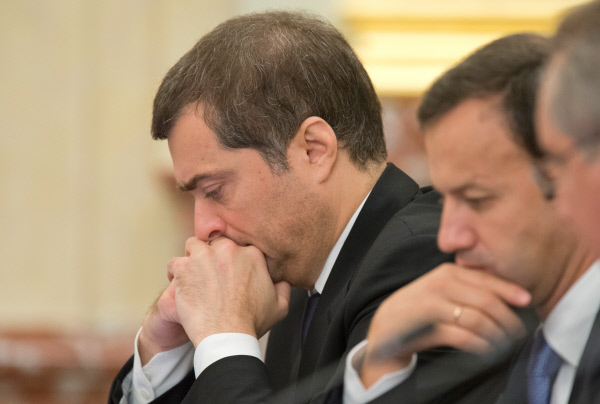
Of the whole topics, in an interview with Vladislav Surkov, the newspaper Vedomosti, perhaps, only one stirred the media space for real.
Indeed, the stories about the still small, but the successes of the Skolkovo miraculous-winnograd, about the rapid increase in the expenses of state-owned companies on R&D, obviously enracated the persistence of the “innovation support group” in the Cabinet of Ministers, and the like in the teeth with informational wool to move someone at least to the line today.
Another thing is the bright speaker of the Deputy Prime Minister in defense of Russian bureaucracy, which, according to him, is entirely consists of “very smart, high quality people”, plowing without sleep and rest “for not the biggest salary”.
To raise it, salary, the entire state apparatus - and this, according to the official, is more than 600 thousand people - calls. Since, if "we do not do this in the near future, then we will become absolutely uncompetitive." Along the way, “we must stop this constant terror from idle talkers who have appropriated the right to speak on behalf of society” in relation to officials, and create conditions in which they “exist as a separate despised caste”.
There really is a cherry truth in the words of Vladislav Surkov. A striking example of this is the Deputy Prime Minister himself, who was literally interrupted from bread before arriving at the White House and received an increase in cash content only this summer, when his salary was increased from 24.6 thousand to 33.7 thousand rubles a month. And then only after receiving new duties. However, the modest salary did not stop the deputy prime minister last year to earn a circle of almost 5 million rubles-the corresponding information was posted on the government’s website.
It would seem that this is not God the news that (although more than last year’s earnings of President Putin and Prime Minister Medvedev), and it would be worth thinking about choosing a different career field, if not for the duty to the homeland and not the support of loved ones. In the case of Vladislav Surkov, we are talking about his wife, Natalia Dubovitskaya, whose income, according to the same document, exceeded 125 million rubles last year.
However, the Deputy Prime Minister does not complain. The position of ordinary bureaucracy is much more concerned, on the shoulders of which the main load and routine falls. According to Rosstat, in the first half of the year the average salary of officials in the country was about 57 thousand rubles. The amount of the same order, by the way, the Ministry of Internal Affairs estimates the average size of a bribe in Russia.
Similar facts, to hide, really cause contempt for the bureaucratic “caste” and much more of the famous part of Russian society, simultaneously provoking “idle talkers” to criticism and attacks at their address. Sociologists also fix this attitude. So, for example, 64.7% of respondents surveyed by the Levada Center in August this year announced their negative attitude towards officials. Moreover, only 24.7% of respondents are ready to share the thought of Surkov that domestic bureaucrats are “educated, knowledgeable specialists”.
And who would our fellow citizens want to work with you in such layouts? Well, of course, state officials and security forces - 26.9% and 18.4% of respondents, respectively. The number of people who want to do their own business is much more modest - only 10.4% of the audience.
By and large, in such a paradoxical, at first glance, attitude to the officials of most of our fellow citizens - contempt mixed with the desire to join his slender ranks - there is nothing surprising. The work of the official is a guarantee, albeit relatively modest (though higher than the average in the country), but of stable earnings to which, if you are lucky, you can get a well -known corruption increase. The last circumstance in the philistine consciousness of the bulk of Russians is not considered either a crime or a sin. Work “for a private trader” or your own business is troublesome and unsafe. And the one -sided structure of the modern Russian economy, in which the state also belongs to the dominant position, also does not give special space for a private initiative. At the same time, the quality and effectiveness of the bureaucratic apparatus and institutions is one of the most serious obstacles to its diversification.
What to do with all this? It is necessary and will have to increase the salary of officials, we agree with Surkov, the “cheap” bureaucracy is really too expensive for the country. Although this automatically does not guarantee at all that the sizes of bribes will fall, and the level of bureaucratic competence will increase. Therefore, the increase in salaries of domestic bureaucracy should be linked with an increase in the quality and effectiveness of bureaucratic labor, which can be measured in different ways-at least in terms of the amount of services rendered to the population, at least in terms of investment attracted, and at least according to the dynamics of Russia in the Doing Business rating. And if in the end we get, albeit an expensive, but professional and effective bureaucratic corps, it is not a pity to pay for this, by golly.