
Translated material
A special way
In the regions
 A special way
December 24, 2007 Alexander Cherkasov
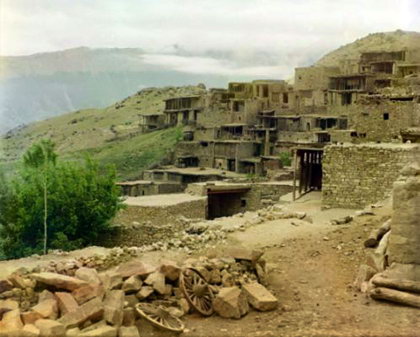
Alexander Sergeyevich Pushkin was right: "We are lazy and unsociable." The journalist, who was bred by Ilf and Petrov, was not afraid of the "Shakalovs similar to the snakes, because" they are not poisonous in the Caucasus, "was also convinced that Pushkin wrote about the same Caucasus on the materials. Links to "Travel to Arzrum" seemed to not work ...
In our contemporaries, the ideas about the Caucasus have undergone significant evolution-only in what direction? .. This edge seems to be something homogeneous. And even for those who regularly write about the events in the Caucasus, Dagestan seems to not stand out on a general alarming background.
Since the late 1990s, an armed underground has been operating here, which is opposed to the "security forces", federal and local, has been attacked by law enforcement officers, prosecutors, and special services, while the population often suffers. To combat these armed groups, a significant contingent of the "security forces" was introduced into the republic. The “counter -terrorist operation” goes here as an entrusted order: shelling of residential buildings, illegal detentions and abductions of people, illegal methods of inquiry and investigation, torture, beating, physical and psychological pressure, extrajudicial executions, “disappearance” ... Everything is everywhere.
However, the regions and the Republic of the Caucasus are not only not similar to each other, but each in itself is very diverse - this is the natural property of mountain resettlement systems.
Most of all, this is true for Dagestan. The situation here differs from the situation in neighboring republics. There are reasons for this: unlike Chechnya and Ingushetia, in essence of mono -ethnic, the population of Dagestan make up many ethnic groups - only fourteen “state -forming” ethnic groups are represented in the State Council. This predetermines the multiplicity of forces operating in the republic and implies the need to coordinate their interests in resolving the emerging conflicts. This feature prevents the concentration of power in the republic in a single center, the formation of an authoritarian regime. But "coordination of interests" and "resolution of conflicts" often occur by no means in a legal way. The latter, ultimately, determines the situation in the republic. Back in the nineties, a hidden sluggish confrontation was established here-both between armed groups and power structures, federal and local, and between criminal political groups using the "security forces" to "resolve" conflicts. The standard of living in the republic is one of the lowest in Russia, and the scope of corruption is amazing.
Islam came to the North Caucasus through Dagestan, the religiosity of the population is traditionally high here, which survived the period of militant Soviet atheism.
And the modern conflict in Dagestan has a pronounced religious shade. In the 1990s, a new religious fundamentalist in the republic spread in the republic. His adherents call themselves members of Jamaat Salafiya or simply “Muslims”, law enforcement agencies - “Wahhabis”.
There was a tension - both inside the Islamic communities in settlements, and between the leaders of the Salafites and the spiritual department of Muslims of the Republic of Dagestan. The latter resorted to the help of the authorities. Since the end of 1996, the Salafites took up the "security forces", and the head of the spiritual department of Sidmukhammad-Haji Abubakarov threw a cry: "Every Muslim who killed Wahhabita will go to heaven." To which the leader of the Salafite Bagauddin Muhammad declared Hijra (Arab. Literally - flight, eviction, emigration) of his supporters in Chechnya. The consequences are known - the invasion of 1999 in Dagestan.
Unfortunately, the authorities-that spiritual, that secular ones are not inclined to learn from mistakes: according to the same scenario, the conflict of spiritual management with non-traditional communities-appeal to the city-force against communities, drive them into arms to terrorists-war "several years later, events developed in Kabardino-Balkaria. And he commanded the attack on Nalchik in October 2005 the same Shamil Basayev, who led the invasion of Dagestan in August and September 1999. However, I was distracted ...
After the invasion of Dagestan, in the wake of folk anger, the People’s Assembly of the Republic adopted the Law “On the prohibition of Wahhabi and other extremist activities on the territory of the Republic of Dagestan” on September 22, 1999, first of all, a mixture of criminal law and religious concepts: the fight against terrorism de facto turned into the fight against the adherents of “wahhabism” as Religious currents, secondly, this law unleashed the hands of the police-everyone who, according to the very subjective assessments of the "security forces", could be ranked to the "Wahhabis" became the object of close interest: women who are in Muslim clothes, their husbands, brothers ... The consequences are various-from interrogations and "preventive" conversations with unequivocal threats. beatings, "disappearance" ...
A law subject to arbitrary and expansion interpretation is rarely effective.
It would seem that 1999 - the invasion of numerous detachments of militants, the battles in the "Wahhabis" Kadar enclave - gave law enforcement agencies the opportunity to engage in real defendants in real criminal cases. Indeed, after that they began to “attract” militants and “accomplices”, there was a lot of cases-mainly under articles 208 (illegal armed groups) and 222nd (illegal storage of weapons) the Criminal Code. How did the "bodies" dispose of this opportunity - to separate and approximately punish real militants?
The suspects were detained, but as a rule, no one was engaged in painstaking collection of evidence - and the “queen of evidence” sometimes became exceptional indications. They mined them with the help of torture, often - "humiliation of male dignity." That is, rape or threat of rape ... This is not forgiven.
In court, in this way, the cases (confessed under torture cannot serve as evidence) turned a blind eye, and condemned the suspects for minor terms of imprisonment. It seems that the situation in Dagestan calmed down. But somewhere since 2002, convicted "for 1999" began to be released. And the shooting began - continuous, on the list - those who conducted these affairs.
In the investigation, the republican “sixth department” (in other words, the ARU) and the Kirovsky District Department of Internal Affairs Makhachkala - the employees of these structures were more likely to be victims of attacks by the armed underground, sabotage and attacks in the investigation. The most impudent group of Rasul Makasharipov in Dagestan is attributed to more than a hundred killer murders. Many of those who have not died and were not wounded lived in the fear of possible attacks. Around 2004, the understanding came that torture and "appeal that humiliates human dignity" can do too much.
After that, the "concept changed." Now, according to lawyers working in the cases of suspects in participation in armed groups, the tactics of the Dagestan "security forces" have become different. More and more often they began to take the clients to Chechnya - there you can torture, without fear of the intervention of a lawyer. And those who are tortured in Dagestan, then often "lose" - they "disappear" , disappear without a trace.
The use of "illegal methods of inquiry" is facilitated if it is not known where to look for a person - that is, if he "disappears" from the very beginning. According to relatives and lawyers, the suspects are illegally detained in Dagestan, more precisely, abducted. But unlike Chechnya and Ingushetia, where armed abductors in masks come to the person home and take him under witnesses, in Dagestan the abduction, apparently, are carefully planned: everything happens without witnesses and unnecessary noise - the person leaves the house and does not return.
The other day, I already wrote about the fate of 24-year-old Ilyas Dibirov, who was detained on November 15, 2007 and subjected to cruel torture. Today we will talk about his brother.
On April 25, 2007, Makhachkale, 26-year-old Ramaz Dibirov disappeared without a trace. I went on a date in the bride in the evening, Karina Dadaeva, about eight in the evening led the bride home on Peter the Great Street, said that he would put money on her mobile and go home. However, he did not return home, he did not put the money either. At 3:31 am a mobile Karina, a call from the Ramaz phone came to the mobile Karina. Having picked up the phone, she heard the cries of men, including her fiancé. In the morning of April 26, Karina began to call Ramaza - the subscriber dropped an incoming call. At lunch from Ramaz, who only Karina knew, she called her again, Karina heard the conversation of two men who discussed what to do with the phone: "What to do with a pipe and a SIM card?" -"Pull the SIM card, turn off the phone." After that, both rooms were inaccessible ...
Maybe this was the work of the bandits? But on April 23, 2006, Ramaz Dibirov was already "disappeared", and for several days relatives were looking for him to no avail everywhere. Only on the tenth day, May 2, the investigator of the prosecutor's office of the Soviet district Makhachkala called Shahrazad Dibirov, the mother of Ramaz, to testify in connection with the fact that her son was detained on suspicion of participating in the criminal community and organizing terrorist attacks. The case was referred to the court of the Sovetsky district, Dibirov was fully justified and went out to freedom in the courtroom.
But in those ten days, according to the mother, Dibirov contained in the building of the UBOP, where they were tortured, beaten with their feet, batons and plastic bottles of water. They beat on the head, in the joints, into the area of the groin. They put a gun in their mouths and pressed the trigger. Threatened with rape ... During the conclusion, Ramaz lost 40 kilograms of weight. In the end, he could not stand on his feet, he began pulmonary bleeding. Dibirov remembered his tormentors in the face and could identify them ...
There are other grounds to suspect that Ramaza was by no means abducted by bandits. The fact is that, according to the mother, after the first investigation, the dibirs were seriously ill - tuberculosis of both lungs with periodic pulmonary bleeding. Recently, he was treated at home, in fact did not get out of bed. And shortly before the abduction, the employees of the Organized Crime Control Department - some are known by names - they asked in the mosque to the Ramaz peers: "Why doesn't he go to the mosque? Why is it not visible in the city?" Mother believes that the "security forces" took her son for the "Amir" of the local Jamaat.
According to relatives, a few days before the last “disappearance”, cars were on duty at the house - they recorded brands and numbers - in which the “security forces” sat. And, according to the bride, on the day of "disappearance", April 25, 2007, Ramaz told her that they were being watched and that he did not want to get to "him" again ...
On the fact of the abduction of Ramaz Dibirov "unidentified persons" the prosecutor's office of the Leninsky district of Makhachkala opened a criminal case No. 701605 under Art. 126 h. 2 p. "A" of the Criminal Code. There is no advance, neither in search of Ramaz, nor in the investigation of the case.
Today, dozens of such "disappeared" are known. Their number is likely to grow, because in the past years Dagestan remained for human rights defenders "in the shadow of a large war." It is unlikely that it is fair to assign responsibility for this nightmare in the current republican leadership - President Muhu Aliyev received Dagestan in the inheritance with all his problems. There is some hope for local civil society - it is in the republic, without any quotes. There are associations of relatives of the missing, there are real activists, although their work is difficult and dangerous - recall the fate of Farid Babaev. However, the temptation of going beyond the right - for the sake of quick and effective resolution of the conflict - makes this conflict endless.
The author is a member of the board of society "Memorial"