
Translated material
Memory. Ivan Bunin
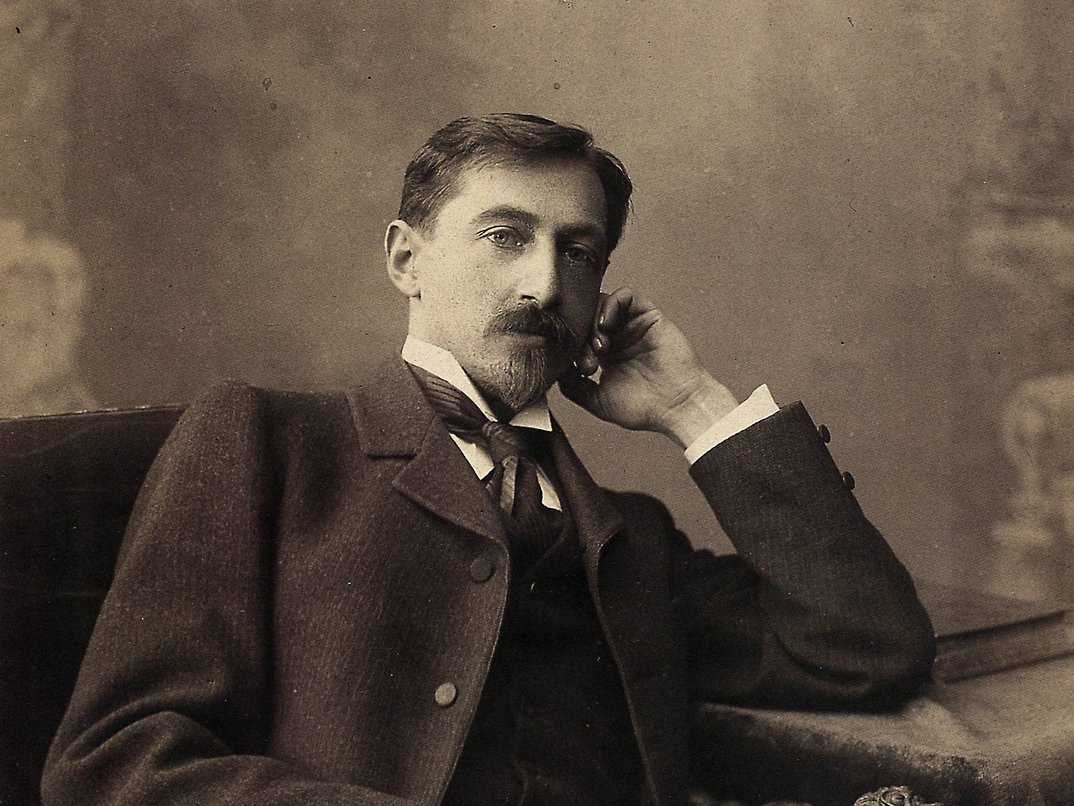
On October 22, 1870, writer Ivan Bunin, Laureate of the Nobel Prize in Literature, was born.
Personal business
Ivan Alekseevich Bunin (1870 - 1953) was born in Voronezh in a noble family. He spent his childhood in a family estate near Yelets. He received primary education at home, then studied at the Yelets gymnasium, but, having finished four classes, after the winter holidays he did not return to the gymnasium. He was engaged in science on his own and under the leadership of his older brother Julia. In 1887, the first verses were published, and in 1891, the first poetic book of Bunin was published in Orel. Since 1889 he worked as a corrector in the Oryol Bulletin newspaper.
In the 1890s, Bunin was fond of the ideas of Leo Tolstoy, visited the colony of Tolstoye in the Poltava region, and even wanted to “process” himself, having mastered the craft of the Bonder, but Tolstoy himself dissuaded him from this idea. Since 1895 he lived in St. Petersburg and Moscow.
In 1897, a collection of Bunin’s stories was published, and in 1901 his poetic collection “Listopad” received the Pushkin Prize. Bunin gets acquainted with Chekhov, Balmont, Bryusov, Gorky, is part of the circle of realist writers who are working with the Publishing House "Knowledge". By the end of the 1900s, Bunin was an already famous writer. In 1909, he became an honorary member of the Academy of Sciences.
In the 1910s, he begins to act as a translator, his translations of the works of Byron, “Songs of Gayavat” by Longfello, Taras Shevchenko, Adam Mitskevich, Alfred tennison are released. In just sixty years of literary activity, Bunin has released about thirty books of poetry and prose, not counting the reprints and three lifetime works.
Although in the 1910s, Bunin sympathized with the Social Democrats, after the February Revolution, he came to the conclusion that it would bring Russia not renewal, but only destruction. The impressions of that time are described by Bunin in the Pampflet Diary “Cursed Days” (published in 1935 in Berlin). In the spring of 1918, Bunin fled from Moscow to the south to Odessa, and on January 26, 1920 he finally left Russia. Having visited Istanbul, Bulgaria and Serbia, in the end the writer settled in Paris, conducting annually in the south of France in the city of Grace.
In 1933, Bunin became the first Russian writer to receive the Nobel Prize in literature - "For the true artistic talent, with whom he recreated a typical Russian character in prose."
Bunin spent the years of German occupation in Grass. Although he always opposed the Government of the Bolsheviks, nevertheless, unlike a number of other figures of Russian emigration, Bunin did not support the German fascists in their war with the USSR.
Returning after the war to Paris, Bunin gave an interview with the pro -Office newspaper “Soviet Patriot” and left the Paris Union of Russian writers and journalists when he decided to exclude from his ranks all who, having absorbed the tempting promises of the USSR in France, accepted Soviet citizenship. Although Bunin himself did not accept the citizenship of the USSR and rejected the invitation to visit the country, these actions contributed to the fact that his books began to print in the Soviet Union. However, many representatives of the Russian diaspora regarded Bunin’s behavior as apostasy, which led, for example, to a break in his relationship with one of the closest friends - writer Boris Zaitsev. The last years of his life spent alone and poverty.
Ivan Bunin died on November 8, 1953 in Paris. He was buried in the Russian cemetery of Saint-Genevieve-de-Bois.
What is famous
 Leonard Turzhansky. Portrait of Ivan Bunin. GLM
Ivan Bunin is one of the most significant Russian prose writers. One of the main topics of his works of the 1900s-1910s was the collapse of the noble culture during the onset of a new historical era.
The writer’s youth is devoted to his autobiographical story “Arsenyev’s Life”. The story "Sukhodol" (1911) is devoted to the tragic fate of the Russian district nobility. But Bunin cannot be considered exclusively "singer of noble estates." Gorky said about his peasant story “Village”: “Nobody took the village so deeply, historically.”
What you need to know about
In France, in the work of Bunin, the second flowering occurred, although the works of these years are less known compared to the textbook stories and stories of the 1910s. In exile, he wrote ten new books of prose, including “Jericho Rose” (1924), “Sunny Bun” (1927), “God's Tree” (1931), the story “Mitina Love” (1925). In 1943, a collection of stories "Dark Alleys" appeared, which became one of the peaks of Bunin's work.
Direct speech
“Of us, like a tree, is a club and an icon, depending on the circumstances, on who processes this tree: Sergius of Radonezh or Emelyka Pugachev. If I had not loved this “icon”, I didn’t like this Rus', because of why I would have gone so crazy all these years, because of which I suffered so continuously, so fiercely? ”
Ivan Bunin "Cursed Days", 1926-1936
All in the snow, curly, incense,
All you are buzzing a blessed ringing
Bees and OS, from the sun of gold.
You are old, dear friend?
It doesn’t matter! Will there be such
Young old age for others!
Ivan Bunin "Old Apple tree"
“... I remember the early weather autumn. August was with warm rains, as if deliberately falling out for sow - with rains at the very time, in the middle of the month, near the holiday of St. Lavrenty. And "autumn and winter are good, if the water is quiet and rain on Lavrentia." Then Babi in the summer of the web a lot of villages in the fields. That is also a good sign: “There is a lot of Tennik for Babier Summer - Autumn Autumn” ... I remember an early, fresh, quiet morning ... I remember a big, all gold, dried and thinning garden, I remember maple alleys, a thin aroma of fallen leaves and the smell of Antonov apples, the smell of honey and autumn freshness. The air is so clean, as if it are completely gone, votes and creaking of carts are heard all over the garden. This is Tarkhana, bourgeois -soda, hired men and pour apples to send them to the city at night - certainly at the night, when to lie on the cart, look into the starry sky, feel the smell of tar in the fresh air and listen to a long convoy creaking in the dark on a large road. A man, pouring apples, eats them with a juicy bang one by one, but such an institution - the tradesman will never break him, and he will say:
- Vali, eat it, - there is nothing to do! On draining, everyone drinks honey.
And the cool silence of the morning is violated only by the well -fed quacks of the blackbirds on coral mountain ash in the often garden, the voice and the echoing knock of apples and tubs poured into measures and tubs. ”
Ivan Bunin "Antonon apples"
“After the ball, I was drunk with memories of him and about himself: about that elegant, beautiful, light and clever gymnasium in a new blue uniform and white gloves, who, with such a joyful-young cold in the shower, was interfered with an elegant and thick girlfriend, rushed along the corridor, then the saw in the buffet, then the Orshad’s business, then the house. He glided among the parquet dancing on a parquet sprinkled with some kind of satin powder, in a huge white hall, poured with pearl lights and the triumphantly-blinking thunder of military music, which was stubborn with the chorus, breathed with all that fragrant heat that was stupefied by newcomers, and was fascinated by every white peler, each white peler. black velvet on the neck, every silk bow in a spit, every young breast, rising high from the blissful dizziness after a waltz ... "
Ivan Bunin “The life of Arsenyev. Youth"
““ I am in one father’s book, ”he has a lot of old funny books,-I read what beauty should be for a woman ... There, you see, so much that you won’t mention everything: well, of course, black, boiling with a resin of her eyes, by golly, it is written: boiling with resin! - Black, like night, eyelashes, gently playing a blush, a thin camp, longer than an ordinary hand, - you see, longer than an ordinary! - A small leg, to the best of a large breast, correctly rounded caviar, knee of the sink color, sloping shoulders, - I have almost learned a lot by heart, so all this is true! “But the main thing, do you know what?” - A light breath! But I have it - you listen to how I sigh - is it true, is there?
Now this light breathing scattered again in the world, in this cloudy sky, in this cold spring wind. ”
Ivan Bunin "Light breath"
9 facts about Ivan Bunina
- The Bunins' Rod in the “Herbinnik of the Nobility” says: “... Bunins come from Simeon Butkovsky, a noble husband who left Lithuania with his squad to serve the Grand Duke of Moscow Vasily Dark.”
- Bunin’s distant relative was the famous poet Vasily Zhukovsky - the illegitimate son of the landowner Afanasy Ivanovich Bunin (1716–1791) and the captive Turkish woman Salha.
- Until the end of his life, Bunin adhered to spelling rules in the option before the reform of 1918.
- The Song of Gayavat in Bunin was first printed in the Oryol Bulletin newspaper in 1896. At the end of the same year, the printing house of the newspaper published it with a separate book.
- In 1907, Bunin made a trip to the Middle East and North Africa. Purpose impressions are described in the book "The Shadow of Birds".
- As a candidate for the Nobel Prize in Literature, Bunin was first proposed back in 1923 by Romain Rollan. When Bunin became the laureate of the award, he repeatedly offered the Nobel Committee the candidacy of Mark Aldanov.
- At the villa in Grace during the years of the German occupation, the Bunin family hid several Jews. In 2015, Ivan Bunin became a candidate to receive posthumously the title of the righteous of the world.
- The Bunin Museum is in the city of Efremov of the Tula region, where the writer lived in 1909 - 1910.
- The famous film directed by Alexei Teacher “Diary of his wife” (2000) is dedicated to Bunin.
Materials about Ivan Bunina
Article about Ivan Bunin on Russian Wikipedia
Article about Ivan Bunin in the Encyclopedia "Circumspices"
Ivan Bunin in the project "Chronos"
Works in the library of Maxim Moshkov