
Translated material
The burden of white
In the regions
 The burden of white
May 27, 2009 Stanislav Belkovsky
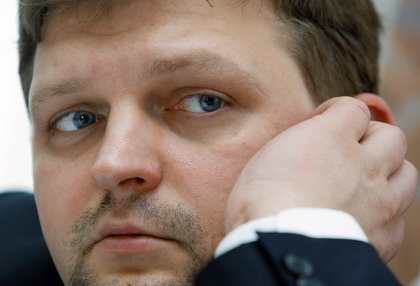
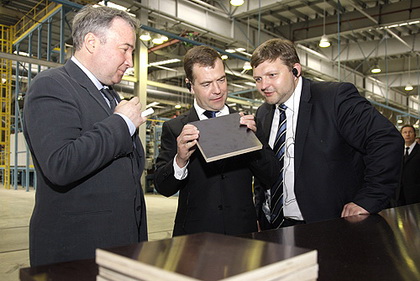
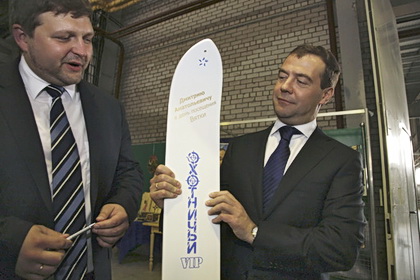
As you know, in mid -May 2009, Russian President Dmitry Medvedev paid an official friendly visit to the Kirov Region region (Governor - Belykh N. Yu.).
The visit, according to a number of federal and regional media, passed, is very successful. However, the governor of the Kirov region, the former chairman of the Federal Political Party (FPP), the Union of Right Forces (ATP), Nikita Belykh has been subjected to quite malicious criticism for some decisions adopted in anticipation of Dmitry Medvedev. In particular, the head of the region is trying to constantly plow (pin) the fact that:
- On the way of the probable following the motorcade of the President of the Russian Federation in Kirov, a railway crossing was paved;
- were also covered with a continuous layer of asphalt sewer hatches on some streets of G. Kirov; In addition, the so -called lying police officers are eliminated;
- The regional administration (however, with reference to the Federal Security Service - the FSO of the Russian Federation) recommended residents of the city of Kirov (Kirovites, they are Vyatichi) on the day of D. Medvedev’s visit to the windows of their apartments and/or houses (from the inside).
Over the past one and a half weeks, many photographs of the naval rail, dark desert windows have appeared on the network over the past one and a half weeks, for which there is practically no Kirovtsy (Vyatich), etc.
Such reproaches to the Governor of the White cannot be recognized as fair. Their authors, sources and wrestlers are simply not able to understand the political, strategic and geoistoric meanings of what happened in mid -May in the Kirov region of the Russian Federation.
We will analyze sequentially all 3 problems described above.
1. Asphalting railway
The long -term political significance of such a campaign is quite obvious to any attentive observer and thoughtful analyst.
It is no secret that all railways and railway crossings in the country are under the control of Russian Railways OJSC (Russian Railways). The head of JSC Russian Railways is one of the most odious representatives of the group of the so -called. St. Petersburg security forces - Vladimir Yakunin. In the past, this person (reconnaissance lieutenant general) has repeatedly spoke out in support of the third term of V. Putin, and recently personifies the hardware resistance of the “thaw” (liberal and democratic changes), emanating from the power bureaucracy. According to the experts of the study sector of the elite of the Institute of Sociology of the Russian Academy of Sciences, Russian Railways is one of the key economic supports of the Russian power lobby, also known as a militocracy.
Therefore, the liquidation of any crossing, any linear meter and even a centimeter of the railway in the country is, firstly:
- a measure aimed at economic and political weakening of militocracy;
- a signal indicating that the security forces in Russia are no longer omnipotent (I apologize for an unsuccessful pun) - they can be rolled into asphalt.
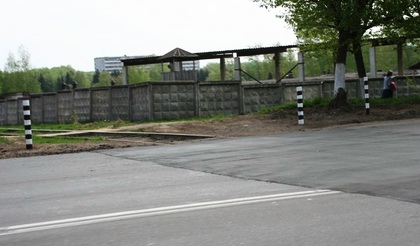
The fact that President Medvedev drove through the paved crossing - and, obviously, without prior consistency with Prime Minister V. Putin, there is a political signal no less significant than the release of Svetlana Bakhmina or the inclusion of a number of opponents of the authorities in the Council of Human Rights under the President of the Russian Federation.
It is impossible not to note the significant modernization potential of the measure.
According to reports, one of the contractors of the state corporation in the form of a non -profit partnership of Rusnano (the chairman of the board - A. B. Chubais) developed a model of the fifth -generation polymorphic railway. A similar wheel is equipped with the latest operating system (development of the Microsoft Corporation), thanks to which, when changing the type of coating (canvas), it can independently transform from the classic railway into a road (and vice versa, if necessary). If trains in the Russian Federation are equipped with such wheels, they will be able to easily move well both on the traditional coating (rails) and road roads with asphalt, as well as off -road (endemic road surface).
The consistent liquidation of railway crossings in the Russian Federation with the replacement of their asphalt road sections will prompt OJSC Russian Railways to carry out an early introduction of polymorphic wheels on all types of rolling stock, which will give a giant impetus to the technological re -equipment of the domestic economy and reduce the level of dependence on raw materials exports.
It should also be noted that the railway crossings themselves are a relic of the Soviet totalitarian economy, which developed purely extensive and was not considered resource costs. According to experts of the State University "Higher School of Economics" (GSHE), the economic efficiency of the railway move, on average, 37-39% lower than similar in terms of the length of the road.
By virtue of this, an asphalt of the railway crossing in Kirov can be considered a pilot project, which is designed to demonstrate the effectiveness of yesterday's liberal oppositionists integrated into the executive structures of various levels thanks to the change of the President of the Russian Federation.
It is also impossible not to note the important geoistoric and civilizational-cultural aspects of the pavement.
It is known that the railways in the Russian national consciousness and domestic culture have traditionally been associated with hopeless totalitarianism and the lack of European historical perspective among Russia. You can recall the appropriate lines, for example, N. A. Nekrasov (“ The Russian people brought out enough, I made this iron on the iron one ...” ) or A. A. Blok ( “So the youth was useless, exhausted, road, Iron, whistling, and my heart is breaking ...” ). And F. M. Dostoevsky in the novel “Idiot” nominated a version according to which the network of railways is the same “wormwood star”, which, according to the revelation of John the Theologian, should fall to the ground at the end of time and stir up the sources of life.
Therefore, every attempt on the total power of the railways over Russian land is a direct evidence that the eternal authoritarian squalor of our life can be overcome. That Russia can break the networks of slavery and become a full -fledged, full -fledged part of European civilization. Nikita Belykh - a simple northern “hero of the asphalt” - turned out to be the first Russian governor, who dared to send not only the Kirov region, but the whole country of our country is such a historically significant signal.
The superficial critics of the Kirov governor demonstrated to all frank inattention to regional traditions and beliefs in which the railway is given a negative role.
So, according to one of the Kirov (Vyatka) folk tales (legends), in the late 1970s. A special train was followed through the territory of the region, the main passenger of which was the Secretary General of the CPSU Central Committee Leonid Brezhnev. It was expected that the elderly Secretary General would leave the train in Kirov and hold a meeting with the party-economic asset of the region. However, this did not happen - the train proceeded further to the east without stopping. It is obvious that if on the eve of the train arrived the then leadership of the region guessed the railway crossing, the Brezhnev train would inevitably stop. The Secretary General would go to the Kirov asset, and the fate of the region could have developed in a completely different way.
Thus, by carrying out an asphalting project of the railway movements, the Governor of the White showed that in just a few months of work, a deeply penetrated the fabric of local history and culture, fully assimilating the Vyatka traditions. In truth, only very few governors, whom the federal center has been sent to the regions in recent years, succeeds in something similar. Most appointments remain classic “Varangians” who refuse to take root in local grounds.
2. Sliding police and sewer hatches
And in this matter, the critics of the Kirov governor allowed themselves to be precious judgments that were not based on the responsible analysis of the situation.
There is no doubt that the notorious “lying policeman” is a symbol of the corrupt security official, which hinders all sorts of reforms in today's Russia. The lying policeman in front of the school slows down the education reform, the full integration of Russia into the Bologna process and a 100 percent transition to the exam. A lying policeman in front of the hospital - the replacement of old Soviet medicine with its crumbling ceilings and reusable syringes with modern high -tech polyfunctional medical care based on insurance mechanisms. The lying policeman in front of the elderly house delays pension reform, etc.
Therefore, the liquidation of such road dunnings and growths that interfere with the progressive national development is more than a clear and frank modernization-winding signal sent to the whole Russian society. The power mafia in the future will no longer be able to interfere with the modernization of Russia - this is what they made it clear not only to the Kirovites (Vyatichs), but also by President Medvedev and the Governor of the Belykh to the whole Russian society.
As for the sewer hatches, the situation here is somewhat different. A representative sociological survey conducted by the Volga branch of the All -Russian Center for the Study of Public Opinion (VTsIOM) from May 5 to May 7, 2009 showed: 59% of the population of the Kirov region, in principle, do not know why sewer hatches are needed, “rather do not know”, and 12% are convinced that sewer hatches exist so that citizens (especially those who are in the drunken state) They had the opportunity to break legs or other limbs. So the decision to pave the Luke data was the result of a thorough and comprehensive study by the administration of the new governor of the Kirov region of public moods in the region. A similar approach can also be called innovative, because most Russian governors work in the old fashioned way, without first finding their decisions by sociological measurements.
3. Windows
Whatever those who still cannot come to terms with the appointment of a young liberal oppositionist on the governor, the practical meaning of the recommendation “not approach the windows from the inside” is quite clear. And he goes far beyond the temporary segment (period), during which President Dmitry Medvedev was in the Kirov region.
The mass low -tech window inherited by us from the Soviet regime is a constant source of the threat of colds and other diseases. According to the Health Committee of the Kirov Region, up to 46% of cases of temporary disability of citizens in 2008 were associated with increased (rapid) stay of such categories of citizens from windows at different times of the day. And temporary disability is, of course, a sharp decrease in labor productivity in the region, which is especially dangerous in the conditions of an ongoing economic crisis.
Especially alarming makes the situation the spread of a deadly dangerous virus A/H1N1, also known as Pork flu. Experts of the Russian Association of Study of Pig influent (Rosswing) indicate that it is precisely the window gaps and cracks that are not properly sealed that are one of the most common (29%) channels for the spread of deadly virus. According to some reports, the virus carrier recently detained at the Sheremetyevo airport (terminal 2) was infected with Pork flu, because everything long (10 hours) was too tightly adjacent to the aircraft window (porthole), which, apparently, turned out to be insufficiently densely covered.
However, the problem of windows has a deeper historical and strategic significance.
The habit of a Russian person to spend a lot of time at the window is a reflection of excessive dreaminess and contemplation of our national nature. In our window, we are trying to make out the signs of new hope, the vague promises of life changes. And the evening reflections of the spring sun, and the fresh wipers, walking with the May Day demonstration, and a random-chuckling smile in the window opposite-all this is hypnotizes us and distracts us from the main one in life for a long time, i.e. consistent creative activity.
If even when Russian (Russian) people will be able to and learn to approach the windows less often, labor productivity in the country, according to experts of the Higher School of Economics, will be able to grow by 65-72%within one and a half to two years. Which, in turn, will create the prerequisites for the accelerated non -intake modernization of the national economy, even without a qualitative change in the composition and structure of productive forces.
It was established that the Russian consciousness is still, in many ways, at the infant stage - especially in everything related to the ethics of labor and the philosophy of life success. And for any fragile, too young mind, the window is a source of unnecessary impressions and risky temptations. It is no coincidence that on the campus of the Microsoft Main Computer Corporation to programmers who have worked for less than five years, a work room without a window is provided.
This means that Nikita Belykh, formally, only having fulfilled the recommendation of the FSO, in fact began to implement a full -scale program for the transformation of the consciousness of residents of the Kirov region. Programs that will create a precedent of an economic breakthrough in one separate region taken, devoid of easily accessible natural resources and other traditional factors of success and prosperity within the given economic model of the modern Russian Federation.
So, we have every opportunity to make sure that the decisions of the governor of the Kirov region, adopted and - what is especially important in Russia! - Quickly implemented on the eve of the visit to the region of the President of the Russian Federation, will have positive consequences in both the short and long term. Nikita Belykh, unlike many of his colleagues in the governor's workshop, showed himself not only as a successful tactician, but also as a real strategist, capable of understanding the fate of the region trusted by him not in a local manner, but in a national context. It is no less important that the Governor of the White proved himself as a pronounced member of the Presidential team of the Russian Federation and one of the first swallows of the thaw that appeared in the usually sad Russian sky. So, those who only a few months ago predicted the liberal-governor for an almost quick collapse in the new field were brutally shared.
But there is another aspect that needs to be touched by summing up the results of the iconic visit of President Medvedev to the Kirov region.
Please note: the asphalt, at the direction of the Governor of the White, was applied to the railway track with a thin layer. What does that mean?
Firstly, this is a clear indication of new technologies for the fight against corruption, which will be implemented in the Kirov region under the liberal governor. Since stealing something from a thin layer is much more difficult than from Tolstoy.
But the main thing, nevertheless, is in another.
A layer of asphalt, applied to the Kirov rails that have seen species, is a symbol of that thin layer of new generation managers and intellectuals, which is designed to become a gear link between the fashionable, like “Mercedes”, the wheels of the thaw and frozen, like a Russian road, the population of the Russian Federation. This thin layer, the brightest representative of which is N. Yu. Belykh, is designed to convey the impulse of liberalization and modernization to the broad masses, emanating today from the supreme power - the Medvedev Kremlin.
Nikita Belykh is not just another regional leader. The story itself has a difficult burden on it - to prove that liberals can effectively manage Russia. That freedom, as Hegel said, is really better than not free. Politicians such as the White bear their burden “ to serve in the conquered, gloomy tribes, to serve for the half -workers, and maybe the devil ”, as the famous Russian poet Igor Irteniev wrote.
We wish them all good luck.
Photos www.kremlin.ru and RIA Novosti