
Translated material
Alexey Fatyanov
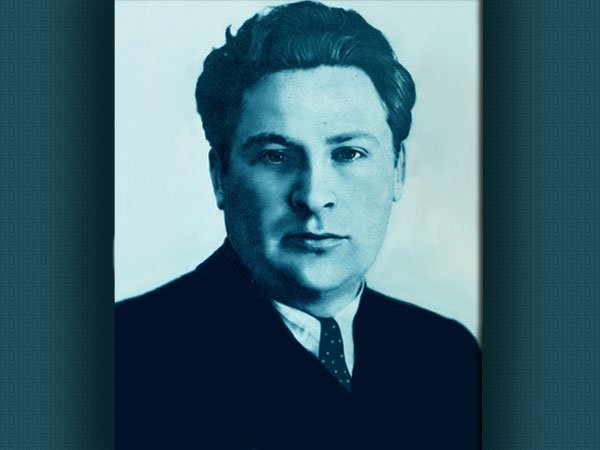
On March 5, 1919, Alexei Fatyanov, the Soviet poet, the author of many military and post -war hills, was born.
Personal business
Alexey Ivanovich Fatyanov (1919-1959) was born on the outskirts of the city of Vyazniki in the village of Maloye Petrino Vladimir province. Before the revolution, the Fatyanovs traded beer, shoes, which they sewed in their workshops, owned a cinema. They lived in a two -story stone house with columns, known in the district as the Fatyanov trading house in Vyazniki. On holidays, concerts and carnivals for children were held there.
After the revolution, a telephone station was located in the mansion. The Fatyanov family moved to Malaya Petrino, where Alexei, who became the fourth child in the family, was born. The boy learned to read early, was also fond of breeding pigeons and fishing.
During the NEP in 1923, the Fatyanovs again settled in the old estate in Vyazniki. Parents took up shoe production, but in 1929 their property was finally nationalized.
The family moved to the village of Losinoostrovsky, now located within Moscow. Alexey was engaged in the dramatic class of a music school, attended Moscow theaters and exhibitions. In 1935 he entered the theater studio at the All -Union Central Council of Trade Union. Two years later, he was admitted to the school of the acting troupe of the Central Theater of the Red Army. He toured with the theater on the garrisons of the Far East. In May 1940, he was drafted into the army, ended up in railway troops. Soon he became the director of the district ensemble of the Oryol Military District. He also wrote his first song - "The Great Motherland Son." “The beginning of my professional activity is attributed to the date of entry into the ranks of the Red Army. More precisely - by the beginning of the war. Only then I began to write a lot and received all support and encouragement in the thick of the Red Army masses. He began to write poems that the front recognized; articles, essays that the army recognized; The songs that the Soviet Union recognized and sang, ”said Fatyanov in a note“ Something like an autobiography ”. In the first months of the war with concerts, he traveled through the advanced positions of the Bryansk Front, wrote reports more than once with a request to send him to the army, but the leadership of the ensemble refused.
In February 1942, the ensemble was evacuated to Chkalov, where he became the ensemble of the Red Army song and dancing of the South Ural Military District. He included Fatyanov's concerts in the hospitals of Bashkiria, Orenburg, Kazakhstan, Kuibyshev and Aktobe regions. Then the poet met with composer Vasily Solovyov-Sedm. “In the fellow war of 1942, in the small high-standing town of Chkalov (now Orenburg), in a shredalon with the loud name of the Topol, I met a young and beautiful bogatty guy. The mighty shoulders burst out the weed and burnt out a long term of the third period of the socks, the Kirza boots kept on a honest word, and the dandy cap miraculously sat on a beautiful, slightly curly hair of wheat color. Blue, kind, clear, childishly naive, slightly mischievous eyes glowed, looked at the interlocutor with curiosity and undisguised interest. If there is love at first sight, then this was the same case. I didn’t think then, I didn’t wondered that this guy was destined to enter my life so firmly, ”recalled the first meeting with the poet Solovyov-Seda.
After the fracture in the war of the Fatyanov - the front -line correspondent of the newspaper "to defeat the enemy." In December 1944, during the assault on the Hungarian city, Sekereshfehervar was wounded, awarded the medal "For Courage". In April 1945, at the initiative of Solovyov-Sedogo, he was seconded to Tallinn, where he performed as part of the Baltica sailors ensemble. According to the memoirs of contemporaries, in 1945 it was not a day that songs on his poems did not sound on the radio. He was awarded the Order of the Red Star for work in the ensemble.
In February 1946, he was demobilized from the army with the rank of sergeant. By the end of the year he wrote a dozen songs, performed on the radio, and was engaged in literary work. In the same year he marries Galina Kalashnikova.
In 1947, he was admitted to the Union of Writers of the USSR as a poet-songwriter, at the same time he himself did not like when they called him that, considering himself just a poet.
In early November 1959, during a walk on the river tram along the Moscow River, he felt bad. On November 13, 1959, he died suddenly from the rupture of the aortic aneurysm. According to the memoirs of contemporaries, Fatyanov was buried all over Moscow, as at one time Maxim Gorky.
What is famous
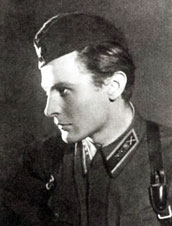 Alexey Fatyanov
 is the author of wonderful military verses. His works are designed in the style of civilian and love lyrics, they organically went to the music, were simple, easily remembered and enjoyed very popular.
The song "Nightingale" is sometimes called the best lyrical song of the Great Patriotic War. Thanks to the films, the poet’s other works are still hearing-“First of all, the first thing you are aircraft”, “The brass band plays in the city garden”, “Where are you now, friend-soldiers?”, “Silence for the Rogozhskaya outpost” and other songs. Meanwhile, during the life of Fatyanov, only one small book of his poems “Sings the Harmon” (1955) was published. They began to be widely published later, in the 1960s and 1980s.
The heroes of Fatyanov are simple guys and girls, often rustic, or demobilized military.
At the creative evenings, Fatyanov himself performed his songs, also played on the accordion and piano.
What you need to know about
The artistic director of the Red Banner ensemble, Major General Alexander Alexandrov, initially sympathized with the young poet. Fatyanov headed the literary part of the ensemble and brilliantly conducted concert programs. However, Alexandrov was jealous of his wife - in the recent past, the ensemble dancer. And although Fatyanov himself avoided contacts with the young general in every possible way, she persistently tried to draw his attention to herself. As a result, Aleksandrov sent Fatyanov to speak in the penalty battalion. On the territory of Hungary, the poet participated in the assault on the city of Sekereshfehervar. In battle, he was wounded in the head and miraculously survived. Fatyanov was given a short -term vacation by injury and awarded the medal “For Courage”, which he was very proud of.
Fatyanov had an addiction to alcohol. On this occasion, I went a verse:
They saw Fatyanov,
Sober, not drunk!
Sober, not drunk?!
Well, then - not Fatyanov ...
Direct speech:
About childhood: “I spent all my childhood among the richest nature of the Central Russian strip, which I will not exchange for any rugs of Crimea and the Caucasus. Tales, fairy tales, fairy tales of Andersen, brothers Grimm and Afanasyev - here are my faithful satellites on the country road from the village of Petrino to the provincial city of Vyazniki, where I entered school and, having studied in it for three years, was delivered to Moscow to conquer the world. I did not win the world, but I learned so much literacy that I began to write poetry under the influence of Blok and Yesenin, which I love to this day madly. But not they soon became my mentors in the literary field - Pushkin, everything was personified for me ... The first poem wrote at ten years. "
Vasily Solovyov-Sede about meeting the poet: “He brought me a poem, carefully written on a sheet torn from some barn book. It immediately charmed me. Poems were fresh, touching, devoid of literary beautifulities or the desire to seem original. Trust intonation, a simple Russian spoken language ... There was already a melody in the verses, they sang. ”
Fatyanov about the birth of "Soloviev": “I remember the front. In a large green grove, we soldiers, after the just dead battle, lie, shaking the grounds falling asleep from us, and suddenly hearing: after the ribid of enemy aircraft that melted in the distance in the whole throat, as if affirming life, snapped the nightingale! From the first days of the Great Patriotic War, being in the ranks of our glorious army, I began to understand the greatness of the feelings of people, their spiritual beauty, recognized the price of friendship and love, the price of the desired word in time. The heroes of my songs were next to me, and I began to write about modest, courageous, fair Soviet soldiers: recognizing grief. Speaky grief. They did not burn in the fire. They survived in battles. No one will tell you funnier than stories, and no one will sing more fun. Well, that endless volleys are rattling. The accordion takes off, sparkling with a threaded one. And, listening to the song, no one would say that the hour is only how the guys returned from the battle. ”
Nightingale
Nightingale, nightingales, do not disturb the soldiers,
Let the soldiers sleep a little,
Let them sleep a little.
Spring came to our front,
The soldiers were not up to sleep -
Not because the guns are beating
But because they sing again,
Forgetting that fights are going on here
Singing Solovy nightingale.
But that the war is for the nightingale!
The nightingale has its own life.
The soldier does not sleep, remembering the house
And green garden above the pond,
Where nightingales sing all night,
And in the house they are waiting for the soldier.
And tomorrow there will be a battle again -
So appointed fate,
To leave, under love
From our wives, from our NIV;
But with every step in that battle
We are closer to the house in their native land.
4 facts about Alexei Fatyanov:
In the house of the Fatyanov family in Vyazniki there is a museum of Russian song. Since 1974, the song festival named after Alexei Fatyanov has been held there.
In 1996, the Union of Writers of Russia established the Fatyanovsky Literary Prize.
In the last months of his life, he completed work on the poem "Bread", which he reprinted on a typewriter on November 12. After death, the text was lost. Later it was restored from memory by director Dmitry Sukhachev.
The poet chose names for children himself. From childhood, he admired Russian fairy tales. He called his son as a hero Nikita, and his daughter in vain-Alyonushka. “Not Elena, namely Alena Alekseevna. He gained full pockets of sweets and came to the registry office. There, without explaining for a long time, he poured two chocolate kilograms on the table, he firmly asked: "Girls dear! Write down my daughter Alena - I will not forget the century!" And pretty officials recorded the name of the girl - Alena, ”says Tatyana Dashkevich in the book“ Fatyanov ”.
Materials about Alexei Fatyanov:
Article about Alexei Fatyanov on Wikipedia
Biographical certificate at the "chronos"