
Translated material
The dream of hunger
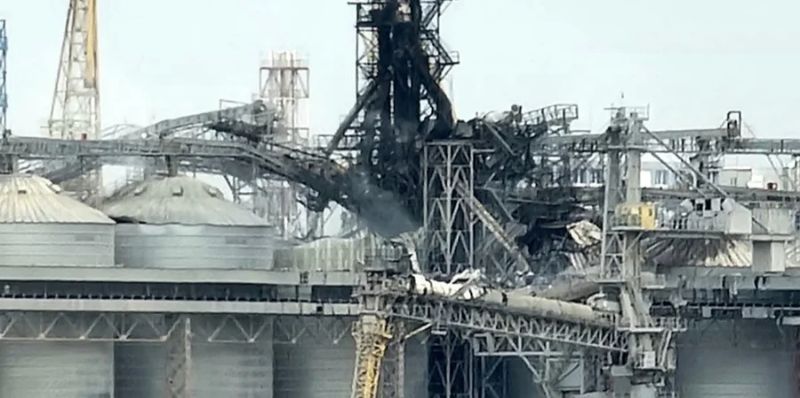
Odessa port after shelling. Photo: Ministry of Development of Communities, Territories and Infrastructure of Ukraine
Putin’s decision to get out of the "Grain Transaction" is unlikely to surprise anyone. Putin wanted to abandon the agreement literally from the next day after signing it, he simply exhausted with impatience. But if so, then why did he even agree to sign this fundamentally that does not suit him?
There are several reasons at once. The first was to spoil relations with Recep Tayyip Erdogan and - most importantly - to question the reputation of the President of Turkey as an outstanding peacekeeper on the eve of the presidential election. At the same time, Putin needed not so much the victory of Erdogan as the failure of an opposition candidate. Because he perfectly understood that any opposition candidate would be able to establish much more trusting relations with the United States than Erdogan.
But Erdogan defeated, and almost since his success in the presidential election, the Zerinovaya deal was doomed, Putin is clearly not going to make new gifts to the old Turkish president.
There was another motive - Russia's reluctance to be responsible for hunger in the "global south". In Moscow, they seriously thought about the deal precisely when African politicians spoke out loud about the possible victims of Russia - namely Russia - and the former presidents of Liberia and Nigeria Helen Johnson -Serlif and Olusegun Obasanjo wrote about this article in The Economist - an unequivocal signal to the Kremlin.
However, during the execution of the "grain transaction" it became clear that many countries of the "Global South" would not venture to deteriorate relations with Russia, and even more so with its ally of China, by the way - the main buyer of Ukrainian grain, nor a word or mentioned a Russian decision. In addition, Russia as it were, as it were, will not be the direct culprit of hunger, since the poorest countries receive a small amount of Ukrainian grain. But Russia will be the culprit of prices, as a result of which millions of people run the risk of losing access to food. But this is indirect wine, it is not scary to Putin. Here it is necessary to track causal relationships, and many leaders of the countries of the "global south" will not bother themselves.
The rejection of the "grain transaction" promises Putin there are plenty of benefits. The first advantage is associated with the desire to strike at the Ukrainian agricultural sector. Yes, Putin, perhaps, understands that he has no strength to win Ukraine. But he still has a desire and desire to destroy it, to turn into a country-country now not only from the point of view of the torn territories, but also from the point of view of economic degradation. The rejection of the "grain transaction" creates new opportunities for this. Plus, now nothing - except the air defense of Ukraine - cannot prevent Putin from destroying the Odessa port.
Another important circumstance may be related to the dream of hunger. If, as a result of increasing products for products, this hunger will help destabilization in the Global South and lead to a new migration crisis in Europe, the ratings of populist supported by the Kremlin will grow like yeast - yes, in fact, they are already growing. Well, then Putin will receive a completely different Europe as a partner in negotiations.
Therefore, Putin, if he doesn’t know exactly what he does, then in any case knows exactly what he wants. Is it possible to say the same about the West? While the Western leaders melancholy observe the Ukrainian offensive and try to understand what geopolitical position will develop as a result and whether it will be possible to get the end of the war at the negotiating table if Putin "understands that the war is unprofitable", the grain is slowly sprinkled from the sand clock of this long brutal war ...