
Translated material
Holy Martyr Nicodemus Krotkov
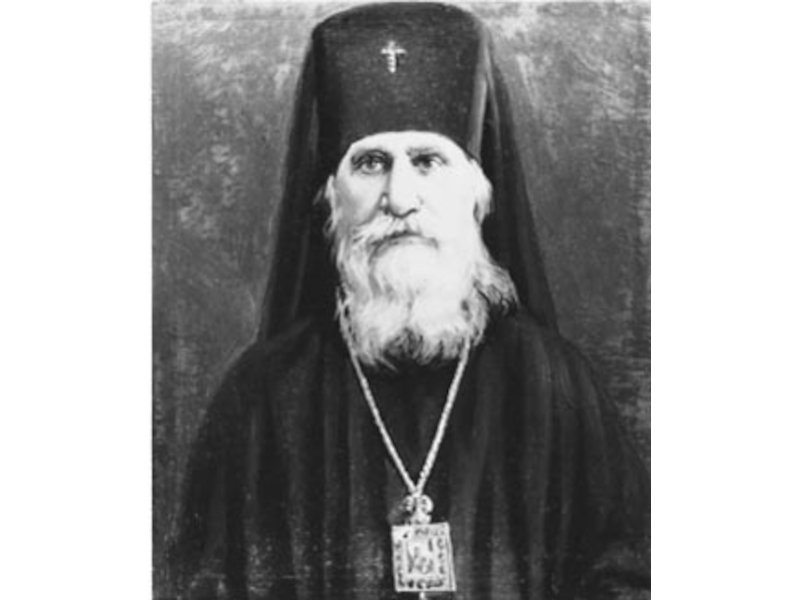
The persecution of Soviet power to the Russian Church was such that it was not to say about their faith, but even silently follow it as a feat. The new martyrs and confessors, glorified in the face of the saints did not come: believed, prayed and meekly went to their Calvarys.
“Polit.ru” recalls those who gave their lives for faith and by whose prayers the Russian Church is alive - even if almost nothing came to us besides the name.
Publications were prepared by Kirill Kharatyan (included by the Russian authorities in the register of foreign agents).
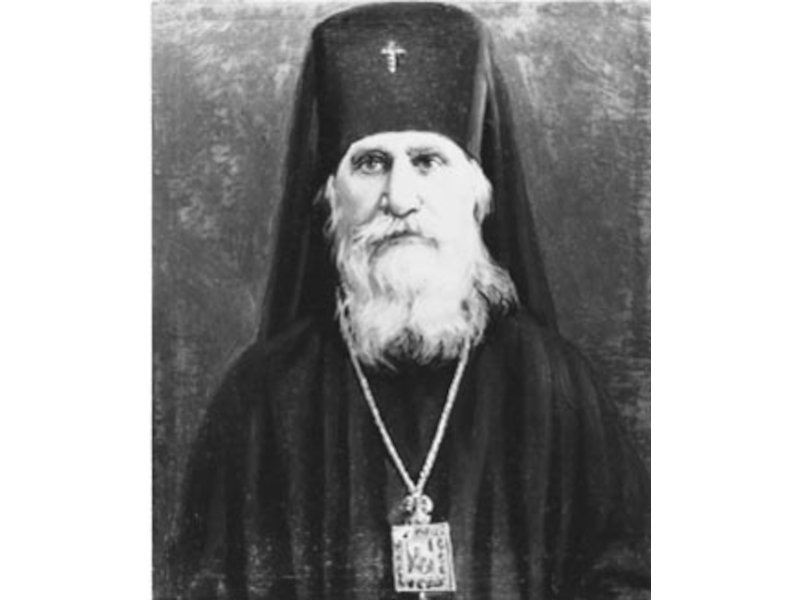 Holy Martyr Nicodemus Krotkov
Nikolai Krotkov is the son of a priest from the village of Trograshino of the Sereda district of the Kostroma diocese. In 1889, 21-year-old Nikolai Krotkov graduated from the Kostroma Theological Seminary and was appointed teacher at the parish school of the village of Olesh Galich district. Married.
On February 25, 1890 he accepted the Holy San and was determined by the Bishop Augustine (Gulyanitsky), Bishop of Kostromsky, to the priestly place to the Petro-Paul Church of the village of Thesino of the Kinesham district. The tireless pastoral and educational activity earned the Universal Love of the parishioners and the location of the diocesan authorities, which soon awarded the novice priest, the nabedman, earned the Tezin priest.
Father's family life did not work out: the child died, and his wife also died.
In 1896 he entered the Kyiv Theological Academy. On August 13, 1899, at the 4th year of the Academy, he was tonsured in monasticism. In 1900 he graduated from the Academy with the degree of candidate of theology and appointed the caretaker of the Vladikavkaz Theological School. In 1902, he was elevated to the rank of abbot and appointed and. O. Inspector of the Kutaisian Theological Seminary. On January 8, 1903 he was elevated to the rank of Archimandrite and appointed rector of the Ardon missionary seminary. Since January 1905 - rector of the Pskov Theological Seminary.
On November 11, 1907, Hirotonisan at Bishop of Akkermansky, Vicar of the Chisinau diocese. Hirotony was committed by: Bishop of Chisinau Vladimir (Senkovsky), Bishop of b. Akkerman Arkady (Filonov), Bishop of Novomirgorodsky Sergius (Petrov) and Bishop of Kanevsky Innokenty (hawks).
Since November 16, 1911 - Bishop of Chigirinsky, Vicar of the Kyiv diocese.
In 1918 he was arrested by the Petliurists.
According to some reports, in May-October 1919 he was in Krakow, in the Catholic monastery, along with Metropolitan Anthony and Metropolitan Evogy, before that they lived in Buchach for 4 months. They returned to Kyiv under Denikin.
In June 1920 he went to Simferopol, where there was a Wrangel. He was appointed to the Simferopol department with the blessing of St. Tikhon.
In 1922 he was erected to the rank of archbishop.
In 1922 he was arrested on charges of "resistance to seizure of church values." He was convicted in Simferopol, the open hearing continued from November 5 to December 1, 1922. He was sentenced to 8 years in prison.
He spent about ten months in the Nizhny Novgorod prison. He was released and went to Crimea through Moscow. He lingered in Moscow to better get acquainted with church affairs. He was invited to the Holy Synod by the Holy Patriarch Tikhon. Later, at the direction of Evgeny Tuchkov (wrestler with religion from the OGPU), he was deprived of the opportunity to leave Moscow.
In 1923 he was arrested in Moscow and sent to Turkestan Territory (in Krasnovodsk) for a period of two years. In 1926 he was released from exile, but soon arrested again, sent to Moscow, was kept in Butyrskaya prison. After the trial, he was expelled to Turkestan, first to Kzyl-Orda, then to Tortkul. After the exemption from exile in 1929, he was transferred to a settlement to the Kostroma region, deprived of the right to live in large cities. He settled in the village of Thesino of the Kineshamsky district, where he began his path of the priest.
Since October 6, 1932 - Archbishop of Kostroma. On November 23, 1932 he was awarded the right to wear a cross on Klobuk.
On December 3, 1936 he was again arrested on charges of correspondence and providing financial assistance to the clergy of the clergy. In addition, Vladyka Nicodemus was accused of accepting to his diocese of others to 10 hieromonks to priestly places, as well as in storing two collections of sermons published under tsarism.
January 2, 1937 was dismissed.
On March 27, 1937, he was sentenced for “counter -revolutionary activity” to send five years to the Krasnoyarsk Territory without a reference to the law. His state of health worsened sharply. On February 11, 1937, the prison doctor diagnosed: rebirth of the heart muscle, unstable compensation, suspicion of the chest toad, arteriosclerosis, pulmonary emphysema, urinary incontinence. In this state, Vladyka could hardly have been sent into exile.
On September 3, 1937, without the initiation of a criminal case by the NKVD department of the Yaroslavl region, a new charge was charged with counter-revolutionary activities (Articles 58-10, 58-11 of the Criminal Code of the RSFSR). Passed in the “group case of Metropolitan Paul (Borisovsky) and Archbishop Nicodemus (Krotkov). Yaroslavl, 1937-1938. ” The indictment was as follows: “It forms a counter -revolutionary group from the clergy, which spreads anti -Soviet vile slander, sows among believers doubts in collective farm construction, waiting for a capitalist war and preparing rebel organizations to struggle with the Soviet state.”
From the interrogation protocol: “He admitted to espionage in favor of Romania since 1910, after the revolution - in favor of Poland. Accepted in 1910. 1000 rubles. From Romanian intelligence through the Holy. Valovius. In December 1911, he was transferred to Kyiv, the connection with Romanian intelligence continued until the war, received only 1000 rubles twice. And twice smaller amounts. Since 1919, in Krakow he became a Polish spy. Since 1922, in Kostroma he received money from Metropolitan Evogy.
He pulled into his diocese from Ukraine, Crimea and their places of exile of people related in the past by a/s activity (20 names). He prepared with them, with the participation of the peasants, armed speeches against modernity. Was associated with Borisovsky P.P. " (Pavel Borisovsky - Metropolitan Yaroslavsky.)
The archbishop of Nicodemus left the last forces. Office, torture and night interrogations have done their job.
He died on August 21, 1938 in the Yaroslavl prison hospital from the acute catarrier of the intestine with the phenomena of growing heart weakness - paralysis of the heart.