
Translated material
"Contemporary" was driven through the system
“Russian officers” require the prosecutor's office to the stage text of the performance with Lia Akhedzhakova
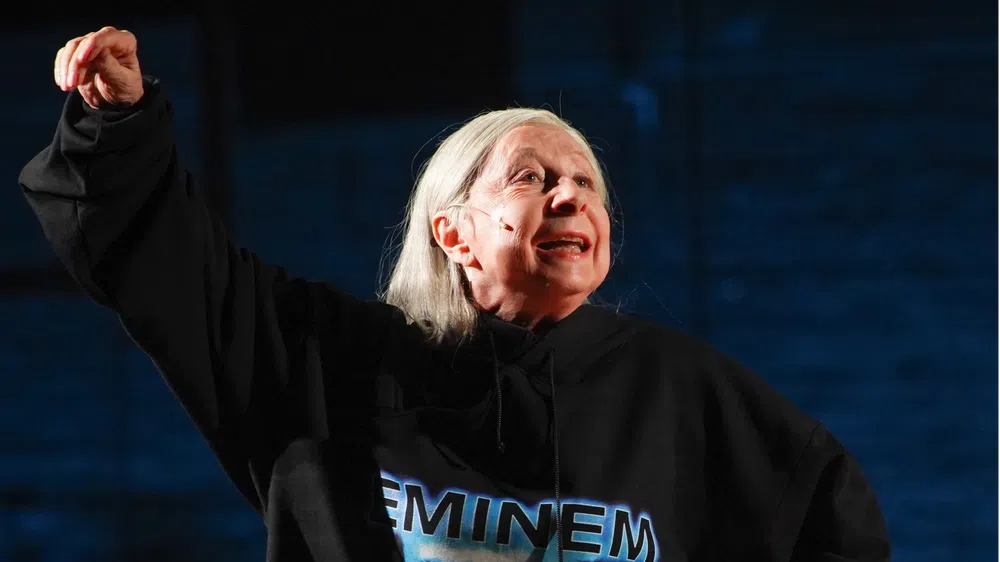
How is it osophulus: to get to the theater in the prosecutor's office. And not just for the theater, but for a specific performance, in the center of which is the People's Artist of the Russian Federation 83 years old.
The premiere in the "Contemporary" is called "First Bread". The play was written by the Ural playwright Rinat Tashimov, a young Polish director Veniamin Kotz set. Immediately after the first performance, the public organization “Officers of Russia” wrote a letter to the Prosecutor General and the city hall, a copy - the artistic director of the theater Viktor Ryzhakov. The letter was signed by the Hero of Russia and the chairman of the Presidium of the Public Organization Sergey Lipova.
The premiere passed on July 19, and two days later, letters with charges were in the instances. They say (we quote on the Novosti Novosti): “... It’s not the first day that our organization receive numerous appeals from veterans, including the Great Patriotic War, the Heroes of the Soviet Union and the Russian Federation, which are outraged by the marginal disrespect for the defenders of the Fatherland from the play“ The First Bread ”.
The young renunciation of veterans amazes-not otherwise someone stood at a low start: the delivery speed is courier. The performance was rehearsed for a long time, but the premiere in the hall was attended by a purely theatrical audience - from Evgeny Mironov to Dmitry Pevtsov; When the defenders of the Fatherland managed to create “numerous appeals” - a riddle. The pure selectivity of their reactions is also mysterious: where were the “officers of Russia”, when a month ago not on the stage, but to the place of the director of the theater museum brought the famous “girl with the swastika”?
It seems that the “officers” have been preparing for a long time for an attack on a particular theater bridgehead.
Who does Lei Medzhidovna play? Tatar grandmother named Nuria. Gray straight hair, black sweatshirt, thin legs in reituses. The old woman travels in a baby stroller, loves tequila, cognac, ditties, grandson and a boy’s dog. She jumps into the well, where ice water is waist -up, and threatens to stay there until her grandson Dan "does not return from the war." Here is the plot of the plot: the grandson signed up for the legionnaires to escape from the house from the provincial longing of "a very small city on a very large river." Further in the plot there will be a matchmaking, wild and funny relatives, the sudden passion of the hero and brother of his bride, blackmail, deception, suffering. And the dramatic ending.
The scene that caused special complaints of veterans occurs on a wasteland, remaining instead of a wiped cemetery. The heroine of Akhedzhakova wanders over him, calling for her dead and having re -sang war, past and real. Akhedzhakova knows how to play sharply, eccentrically, piercingly, on her fragile shoulders - the load of the text of the play.
Its author uses several fashionable dramatic stamps at once: the destruction of pathos stereotypes, the anthem of the love of two men, anti -war sentiments and slightly delicious folk obsession. “Innordinate vocabulary” and “undisguised propaganda of same -sex love” and outraged the “Russian officers”. Apparently, they managed to carefully read the play without bills made in the play.
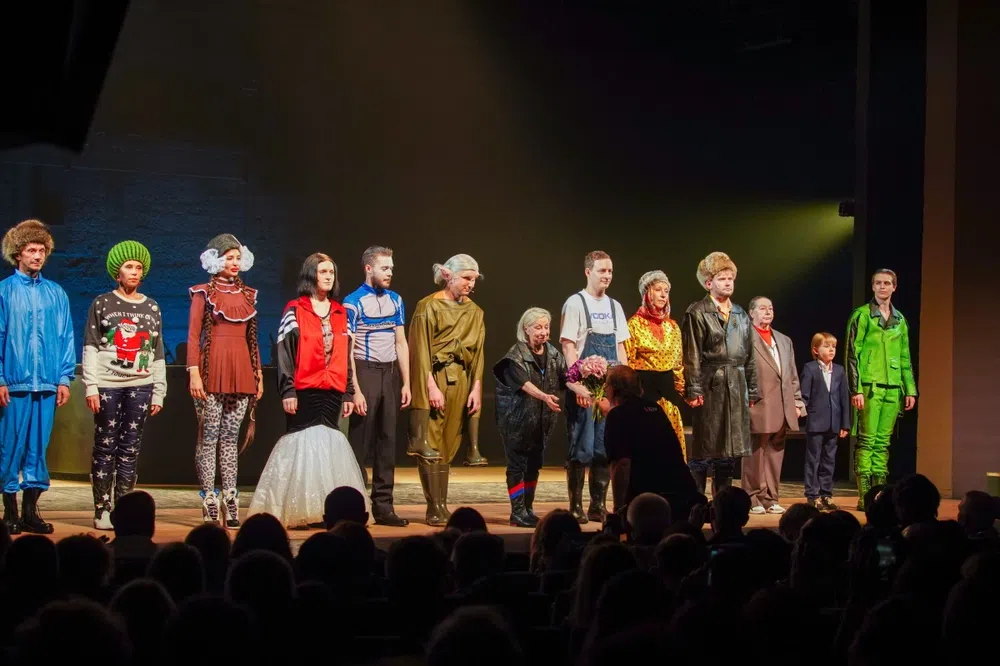
Once Akhedzhakova was already a grandmother, only Jewish - in the play by Martha Gorvitz based on the play by Lyudmila Ulitskaya “My grandson Veniamin”. But there was, of course, another national flavor and a text that does not claim to be a “voice of the young generation”. The fact that we will now hear this very “voice” was inadvertently announced by Viktor Ryzhakov before the performance.
The performance is short - an hour and a half. The authors are really quite young people. But the dog, which conducts the action and comments on it, a huge tambourine that rolls through the stage, a sudden kiss of two men, the final monologue of the actress in the light of three rays of spotlights, like figurative skating - all this already happened, and was hopelessly adult directors. And the point is not even that in the new performance of “Contemporary” the heroes are one -dimensional, and the proportions of the funny and dramatic are broken. The point is the general weakness of the play and the absence of a staged novelty. AND
Akhedzhakova was chosen not only for the sake of a beneficial role, but also because only it can somehow pull out this work. But all these are the deeds and concerns of the theater, and not the “Russian officers”.
And the fact that the theater remains on their sight, that the heroes are not invading their field, that they call to intervene in the theatrical problems of the prosecutor and fight against a large actress, just confirms the simple thought of the author of the play: the war is not over, it "for some reason is still there."
Viktor Ryzhakov over a year in the “Contemporary” shifted the steering wheel of the theater ship towards the young - his students and undergraduates. This seems risky by biased observers. But Galina Volchek once almost the first in the capital opened on another stage the directorial laboratory of the young, the talented Cyril Potoptov and Ekaterina Polovtseva then came to the light of the ramp. This strategy, as any laboratory work, needs time. There are no bright victories in the “Contemporary”, there is only a course to run into new directors. The world is changing, the animal-conservative part of our society does not want to recognize this, and the language in which it is time to speak of changes should be impeccably talented to be convincing.
July 23 - the final premiere of the season. But it is not known whether the performance will be held. "Officers" require the editing of the text.