
Translated material
Caution, nomenclature!
In the opposition
 Caution, nomenclature!
January 14, 2011 Yuli Nisnevich
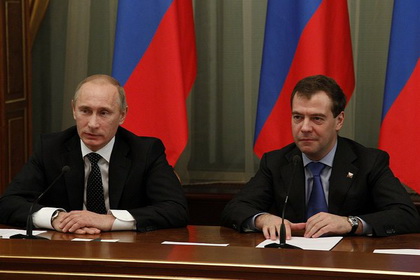
Recently, one of the most discussed has become the myth of the split between Putin and Medvedev and the clarification of which of them is more important. The very problem, in truth, seems absolutely illusory, since from which of the heads of the two -headed mutant it will be more important, the ruling political regime will not fundamentally change. But there is one “but” related to the fact that the increased interest in the topic of splitting in the ruling Kamarilla is due to the widespread opinion that any cardinal change in the repressive regime occurs either from above or in the conditions of the split of the elite and the transition of part of the politicians to the side of the opposition. And such a statement of the question is already fraught with potential danger.
First of all, it is necessary to understand that today Russia is controlled not by the elite in the value sense of this concept, but by the nomenclature, which is an organic continuation of the Soviet nomenclature. This marginal minority is a social environment in which there is a struggle for the dominant position between the clans groups, combined on the basis of related, educational or production relations, principles of fielding, national and social closeness. At the same time, devotion to the clan and its leaders is not a constant value. The ability to betray in time, join with the purpose of career growth to the clan that in the current situation won the dominant position, serves as the basis of vertical mobility in the nomenclature environment.
The nomenclature today completely seized the Russian state, privatized state power, appropriated national resources and uses all this for personal enrichment. At the same time, the nomenclature, like a cancer tumor, was struck not only by all institutions of the state, but also by the most profitable sectors of the economy, the structures of administrative management of all economically and socially significant institutions and life support systems. And so simply what she did will not give.
The historical experience and, first of all, the experience formed as a result of the collapse of the communist regime and the collapse of the Soviet Empire of Russia, which, as a new sovereign state in the coming year, has been twenty years old. This experience shows that the nomenclature is able to quickly regenerate after socio-political disasters and take revenge. This is especially true today, when a politically and economically corrupt state under the rule of the authoritarian and crap regime falls apart and steadily approaches a new socio-political cataclysm.
Recall that some of the Soviet party and economic nomenclature performed the driving force of the revolution of the 90s along with a small democratically configured part of Soviet society. This part, and, above all, the middle and just starting up the career ladder, the lower layers of party-state bureaucracy were interested in eliminating the osser-sustainable higher leaderships and party bons, since only this could accelerate their personal career growth and ensure a breakthrough to the leaders of government. The democratic movement and the conditionally progressive part of the Soviet nomenclature acted as partners in solving only one, a common task for them - the breakdown of the existing system of political and public administration.
However, the mutually beneficial, as it seemed then, the partnership did not last long. Already during the revolutionary events of 1991-1993, the formation of a new Russian state bureaucracy began, which quickly began to acquire familiar nomenclature outlines. Representatives of the Soviet nomenclature who came to power along with representatives of the democratic movement recreated in the presidential and government structures the organically inherent nomenclature methods and mechanisms of the culuar adoption of managerial decisions, far from disinterested interpersonal and group interactions in the process of preparing and making such decisions. The began regeneration of the Soviet nomenclature methods and mechanisms of public administration contributed to the following circumstances.
Firstly, one of the most serious strategic miscalculations of the new Russian government was massive use in all structures and at all levels of the newly created system of public administration of former officials of the Soviet party and state apparatus. The authorities proceeded from the fact that for the rapid launch of the new state apparatus there are no other personnel and another way, except for attracting the economic system of Soviet officials. Perhaps, in tactically, this was justified. But, as the subsequent development of events showed, it was naive to believe that the old party-state nomenclature with its “professional” skills can be forced to work in the interests of the country and the new government, and not in their own mercantile interests. In fact, it was not necessary not to deportize the state apparatus, which was already carried out almost automatically with the collapse of the CPSU, but its desovetization, or, more precisely, a denomerationalization that has not yet occurred.
Secondly, the few representatives of the democratic movement, originally included in the power structures, rely only on personal support of President Yeltsin. They did not pay due attention to strengthening their political support and the creation of a personnel reserve for the gradual replacement of nomenclature bureaucracy in power structures. Therefore, partially new in composition, but the old in the nature of the main mechanisms of functioning, the nomenclature environment quickly replaced the "democrats of the first wave" from the power structures as an alien element for it.
By the mid-90s, part of the former Soviet nomenclature became the nomenclature of the Russian and reached its main goal-she came to power and took possession of all levers of government. The democratic movement has ceased to be necessary for the Russian nomenclature as an ally, which has lost the revolutionary fuse and public influence, fragmented and discredited not without the help of their temporary nomenclature fellow travelers as an ally. Moreover, by this time, not only its state-bureaucratic, but also the economic component-the new Russian “business elite”, consisting of appointed owners, took shape and also got into a job. The turning point, which sharply accelerated the process of demarcation of the Russian nomenclature with a democratic movement, was the Chechen tragedy that began at the end of 1994.
The nomenclature has become a leading force that determines and imposes political and economic transformations aimed at strengthening and expanding its dominant position. The failed nomenclature revenge, as a result of which the state power and resources of the country seized direct heirs of the Soviet nomenclature, and predetermined that in post-communist Russia the ruling became the nomenclature and oligarchic regime, transformed with the coming to Putin’s power and his team into authoritarian and cuberatocratic.*
In addition, it must be understood that representatives of the nomenclature who today declare themselves the opposition are reactive opposition, whose opposition is due to their resentment that they were not taken or put out of the ruling team. They go into opposition not from real ideological beliefs, but only in order to return to power again at all costs. At the same time, reactive oppositions remain socially close to the ruling nomenclature and retain their main nomenclature skill - to betray this in time, considering this a manifestation of the highest political wisdom - and they will certainly use it as soon as they are invited or they themselves will return to power in one way or another. Therefore, it is necessary to welcome such figures to the opposition, but, on the contrary, the process of separation of pseudo -mass formations, led by former nomenclature ministers, deputies, officials of various stripes, which helps to cleanse the nascent opposition from harmful nomenclature impurities.
In order for the nomenclature revenge to not be able to repeat, one of the priority measures that must be carried out after the inevitable collapse of the ruling authoritarian and cobblestone regime should be professional lustration of the state apparatus. Namely: the introduction of a ban on working in the public service for those who, under the previous regimes, held the positions of the level of adoption, preparation and coordination of state management decisions. At the same time, it is necessary to change the personnel of the judicial and law enforcement agencies, as well as special services.
To get rid of nomenclature infection in the future, lustration alone will not be enough. It is necessary to create a qualitatively new system of training and retraining of personnel of public service, including power structures, and the formation of the state apparatus. It should be based on professional competition, include competitive selection and ensure the functioning of state authorities based on the principles of efficiency, transparency and impeccability in work. It is also necessary to create a special state body to combat corruption outside the system of executive and legislative bodies and fully realize all the establishments of the Council of Europe on criminal and civil liability for the corruption of 1999 and the UN Convention in 2003.
But even after the adoption of these measures, it will be necessary to remember the threat of nomenclature and its ability to quickly regenerate and revenge for a long time.
Yu.A. Nisnevich, professor,
Doctor of Political Sciences,
Professor NIU HSE and RUDN
* A detailed analysis of the process of the formation and development of the ruling political regime is given in the books of the author of the article “Audit of the political system of post-communist Russia” (2007) and “Vertical nowhere: Essays on the political history of Russia 1991-2008” (2010).
Photos of RIA Novosti