
Translated material
Green blood
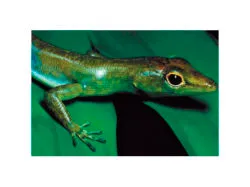 Do you know that there are lizards with green blood? Just a month ago, a report by Christopher Austin (Cristopher Austin) “Green Blood in Lizards: Hypotheses explaining the mysterious physiology” sounded at the International herpetological Congress. It turns out that as many species of scrots inhabiting the new Guinea can boast of bright green or blue-green blood, tongue, muscles and bones. These SCIKs belong to the genus Prasinohaema, described back in 1974, and it was green blood that gave the idea of the very birth name (from Greek. Rgasinus - green and haema - blood). Prasinohaema SCIKS are the only representatives of amniotes with green blood plasma, among the anamin, this phenomenon is slightly wider, found in several fish families and in several types of frogs.
Green blood plasma and tissues gives green pigment biliverdin. Biliverdin is an intermediate and toxic product of the decay of hemoglobin. As a rule, its excess in the body leads to a pathological state, jaundice (restoration of biliverdine enzymes leads to the formation of bilirubin). But the concentration of biliverdin in the blood plasma of Prasinohaema exceeds pathological concentrations for a person and other vertebrates by more than 40 times! Why did the New Zealand SCIM need to hit such an extreme? Christopher Austin put forward several assumptions. Firstly, this can serve as protection against predators. But, as the researcher found out, predators are equally interested in the sqing of the genus Prasinohaema and other lizards and, moreover, do not suffer from poisoning. Secondly, such a amount of green pigment can enhance the green color of the animal, which is a more successful mimicry. However, there are a lot of other lizards, no less green, and among Prasinohaema there are species with brown color. Thirdly, high concentrations of toxic substance can be protected from parasites. The last assumption turned out to be true. It turns out that often reptiles suffer from malaria and other diseases caused by blood parasites, and the variety of these parasites is quite large. A Prasinohaema almost never infected them. Biliverdin in blood and tissues plays almost the same role as Lariam for tourists traveling to tropical countries. This drug is prescribed as a prevention from malaria. Only in Lariam the active substance is different - Meplokhin, not biliverdin. And the blood of our tourists remains red.
Evgenia Solovyova