
Translated material
What the world looks like
The Tretyakov Gallery opened the exhibition "Wanderers: the image of the era" at the Art Museum of Samara
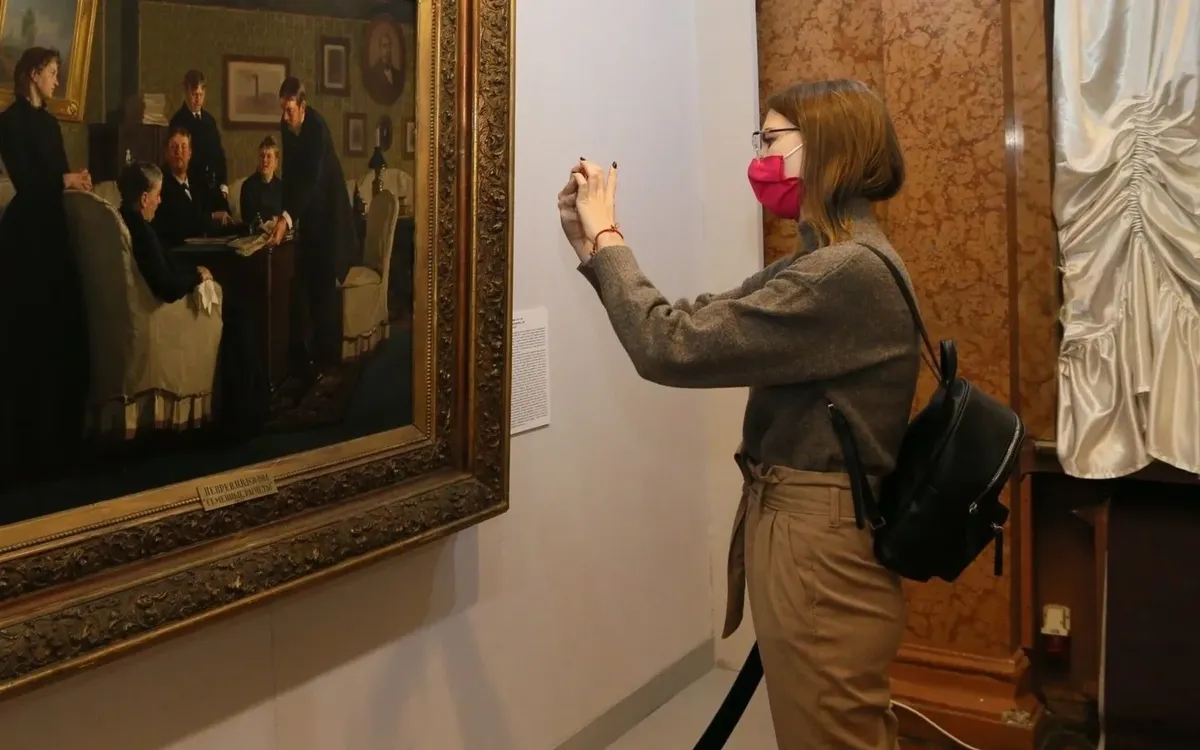
Forty paintings remind of the difficult fate of the movement, trying to be honest, and not just fashionable.
This happens-the artist puts up the work under the same name, and the audience and critics call it in their own way. There is nowhere to go - the vocals of the people enters the annals.
In 1882, at the exhibition of the Motra partnership, the Study appeared Nikolai Yaroshenko (1846–1898) - a portrait of a wary of a young man with a rare red beard, an unsalued mustache and in a large hat with large fields. A slightly stooped, the hand hides in clothes - why did the audience immediately defined him as a student, although he has no books, nor other attributes of knowledge? The gaze betrayed the student student, forcing the biographer of Yaroshenko, Vladimir Porudominsky, to talk about the “conspiracy, intense readiness” of the hero, “hard, wary, who decided everything and at everything ready, mercilessly and daringly looking directly into the eyes of the audience.”
Is it a typical person of the 80s or myth, created by connoisseurs of revolutionary Russia, in any case, this out of our days in museums today will not be shown, because the most famous chief prosecutor of the Synod of the Victorni in Russian history understood where the wind was blowing: “The students are unusually malleable for destructive theories ... The main contingent of nihilism is gaining from it.” Actually, the “nihilist” should be called “Study”, but it would be a uniform scandal for the picture, which became not only the face of time, but also one of the main portraits in the history of mobileness. It is no coincidence that Yaroshenko’s work now adorns the cover of the exhibition catalog in the Samara Regional Art Museum “Wanderers: the image of the era”.
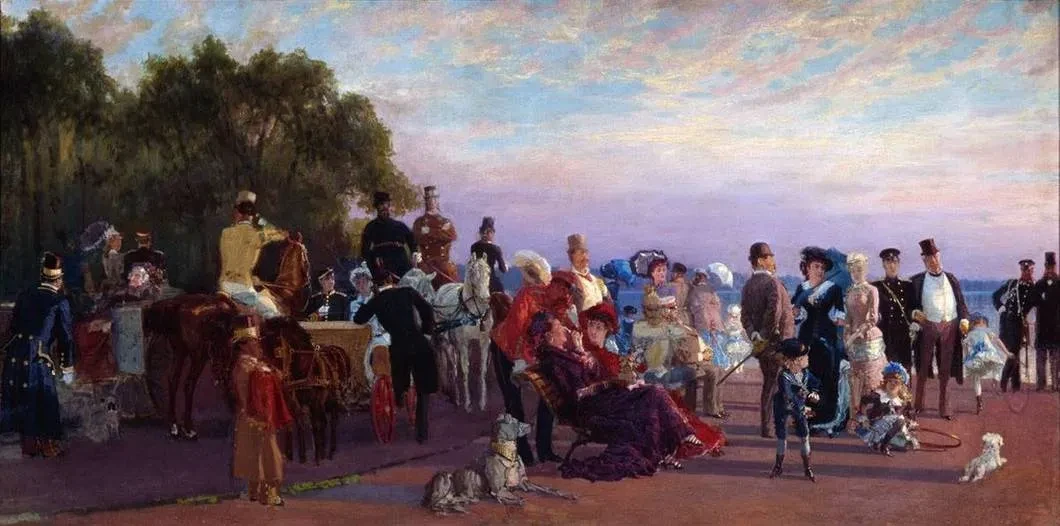
For Samara, the Tretyakov Gallery, who has already formally opened a branch in the city (it will fully work in 2022 after the restoration of the Kuhni factory), took 40 works from her collection. There are widely known here - like a portrait of the Tchaikovsky brush of Nikolai Kuznetsov, the canvases of Kramsky and Repin, Surikov and Nesterov. There are half -forgotten authors, such as Emilia Shanks or Sergey Korovin, the brother of the great Konstantin Korovin. There are no landscapes, only portraits and genre scenes, but they show few people seen. For example, “on the arrow” of Konstantin Savitsky: a society on the beach is an unexpected plot for those who perceive the Wanderers as authors of peasant scenes and stories from the life of small service people.
Exhibitions of the capital's museums in the province - events are not simple. And you can’t bring the masterpieces, something needs to be shown at home, and it cannot be hazelled-the viewer is now legible everywhere.
The fight against stereotypes is a good solution in a situation where two generations of people are found in the museum halls - some still look at culture through the prism of Soviet experience, others barely imagine the course of history, are ready to look for those who saw the king.
Do not exaggerate the power of art: it does not form generation, does not make revolutions, but it can clarify accents.
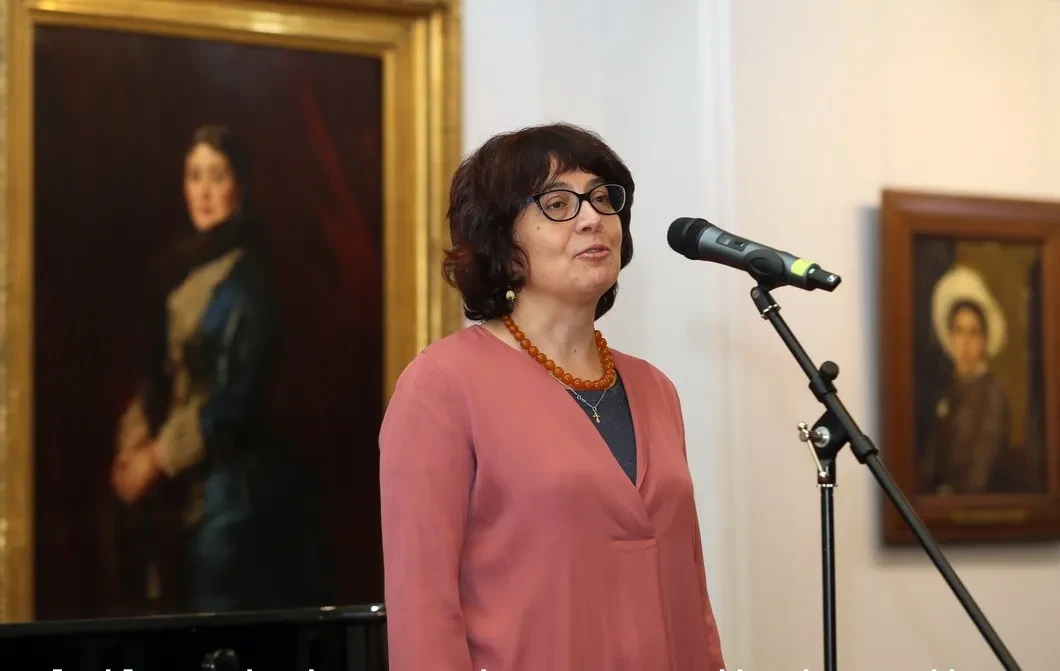
Svetlana Usacheva , curator of the exhibition, answers questions.
- How were the paintings selected, because among them are such unexpected things for the Wanderers, like “on the arrow” of Konstantin Savitsky?
- The task was to show different, including stylistic terms, work, to destroy the stereotypes of perception. One of the durable - the mobility by painting is quite dull, they have a monotonous theme, and they are not secular artists, especially Savitsky, which is not entirely true: we have a whole section of a rather secular character.
The story of the painting “on the arrow” is interesting: Savitsky worked at that moment on the order of Tretyakov, a very serious picture, lingered in St. Petersburg to finish it, and at some point went to rest, he liked the plot: a crowd, sunset ... It is difficult to call it a pleiner, but there is something French in it.
- You can imagine what Stasov said about this picture.
- Nothing. He simply did not see her. The picture remained unfinished and did not leave the walls of the workshop. Later she ended up in a private collection and already from there got into the gallery.
Any exhibition is designed for a certain space. This one was made specifically for the Samara Museum. We wanted to show two current genres that the Wanderers changed both in content and style: a portrait and a household picture. As a result, a historical and everyday picture appeared. Modernity before our eyes became historical, and in this process everything was interesting - first of all, everyday life.
- You bring them closer to the work of impressionists, who were also fascinated by everyday life.
- Why not? In this sense, our artists are more limited by the academy, we had the only educational institution. The Moscow School of Painting, Sculpture and Architecture then did not have much influence, its flowering-the 80s and 90s. They were all “faithful academics”: no matter how they relate to Alma Mater, they are all her pupils; Traditions - a ceremonial portrait, small Dutch - all this is alive for them, they respected the academy, even when they were in the opposition. At the same time, these are artists who could not help but react to modern trends. Here are Vinogradov, whom we show, I would not dare to call him an impressionist, but this is also light and air, a desire to admire, what the world looks like, and not just the desire to show the scene from the life of the workers.
-His early scenes from folk life sometimes look rather salon, sometimes something candy-shaft is visible in them, he sometimes draws like a salon Mjujik.
- It was all at the junction of styles, the Wanderers were not the same as painters, as it sometimes seemed later. Another task of the exhibition is to reconsider the stamps associated with the Wanderers.
- Stamps, largely generated by Stasov’s violence against the movement?
- I would not call it violence. Stasov is a dramatic, expressive person, incredibly sincere in beliefs that can also cause rejection.
- And they called. Even with the Wanderers themselves.
- Yes, they were ambiguous of him, he was made in Soviet times with an icon. But the mobility was also treated differently-this is shown by a selection of quotes of contemporaries placed in the catalog. What did many did not like the portrait of the Tchaikovsky work of Kuznetsov?
One of the daughters of Tretyakova, Alexander Pavlovna Botkin, wrote that the portrait ordered by Vladimir Makovsky, Tretyakov was unhappy, and he ordered a portrait of Kuznetsov. But he, in her opinion, turned out to be not very successful - gloomy, does not convey the charm of Tchaikovsky, a living person. The Tchaikovsky brothers were friends with Tretyakov, they were not just entering the house, but they were closely connected with him. But since Tchaikovsky soon died, the perception of the portrait has changed, his drama and even gloom began to be perceived differently, he became canonical. And the other daughter, Vera Pavlovna Ziloti, on the contrary, noted the physiognomic similarity of the portrait with the original and the fact that the spontaneous sense of music was conveyed in it.
- After criticism of the “world of art”, it is customary to treat the Wanderers as a conservative and even retrograde phenomenon.
- This is true: any community focused on specific goals and ideals, especially if it is modern, sooner or later it exhausts itself from the point of view of the successors who see the picturesque past in it, and not their progressive ideas or aspirations. However, the idea of the Wanderers was artificially formed already in the Soviet season.
- Does the viewer remain a captive of these ideas formed in Soviet times?
- I never consider the viewer a prisoner. He always has the right to choose, the right to his own judgment; Sometimes in a good sense of the word naivety, inexperience (Stasova did not read): he sees what he sees is bright emotions, interesting characters, what he might like, or maybe not. But immediately it becomes clear:
Wanderers are not something monotonous, they are rich and diverse.
In this sense, rather, it is necessary to rebuild the "enlightened", the professional part of the community. In any case, they occupied their very worthy place forever.