
Translated material
"I do not like to understand the viewer"
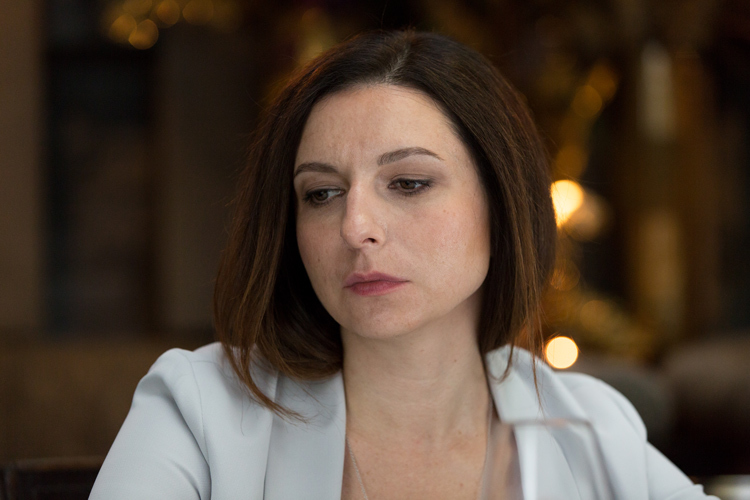
- Let's start from the very beginning ...
- It all started three years ago. At first there was a set of notes, they did not develop in the same story. Fragments of phrases, kaleidoscope of some impressions ...
- You already understood at the stage of sketches that you want to make a film as a director?
- You see, these were not even records, I did not write anything then. I only recently started writing something at all, because I realized that I forget things that could come in handy. And before I have never done this, in my head a warehouse of images. I am a visual person: if I remember some kind of picture, then I can then remember, and what emotions I had connected with it, and what was the situation when this picture arose. And now I had some reasoning about what it was when you see a dream and this dream seems more real than real life, and you wake up with this feeling.
Then we met in Los Angeles with Mike ( buy.-Ed. ). Sergei Bespalov introduced us, they then worked together , and we began to discuss it. At first there was just a desire to do something together. Then there was a reference to “Last year in Marienbad”, then I had this cyclic structure of the film-circles, as I call them-and when we started working, everything somehow fell into place. We worked for a year, probably. They wrote, remade. But, in general, having passed four drafts, we returned to the original. The original idea resisted attempts to move it somewhere to the genre strip.
- So, did you write from the very beginning in English or in Russian?
- We had an attempt to translate the script into Russian ... Financial circumstances sometimes dictate where shooting will take place ... So we had an attempt to adapt this story to the Russian language, and I did not like it at all. It would generally be a different movie. Russia has its own cultural code, quite bright, and in America it is also present. This is what is in the air. And nothing can be done about it. In general, the first question that they ask me all the time is “Why did you write this scenario in English?” Then I am lost. Why not?
Another question is-was it possible to shoot this not in New York? Yes, it was possible. Could it be removed in Europe? Surely. But each place brings its own atmosphere. And to give one place for another wrong, I did not want to. Well, yes, in the film of New York as such there is no, the city itself is not shown. But for me, he is absolutely New York, in his filling text, New York actors and the atmosphere of those objects that are in the film. There is still a certain Ommage Harold Pinter and David Metha, playwrights writing in a style that is interesting and close to me.
- And what is this atmosphere? How do you define it for yourself, describe it?
- I'm afraid I can’t reproduce her in words. This is something in the air. If I give me a specific task-for example, I will need to make some scene-I can find those small details that serve as differences and give the naturalness of the whole situation. Take at least how the table in the restaurant is set. For example, in New York you are immediately poured a glass of water with ice. This never happens with us, people even order slightly different things: for example, the famous freshly squeezed juice, Fresh. In other countries, this is not the norm, this may not even be prepared.
 © Hype Film
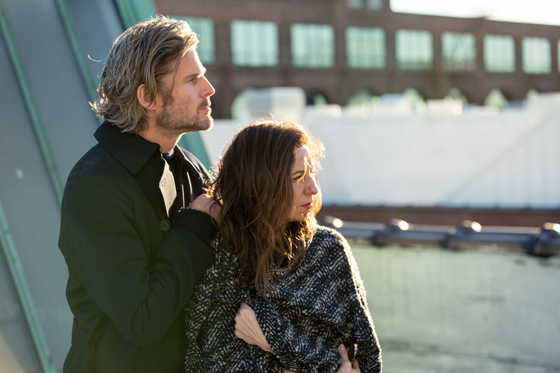
- This story takes place not just in America, a young and fast country, but in a modern super -speed, living metropolis. And the heroes behave like people of the Old World, the old order: worn -out relations, a blurred look at life ...
- This Oldskul was consciously created. I wanted timelessness. I wanted to avoid belonging to momentary, despite the fact that they are all there with iPhones in the frame. This is an attempt to bring heroes into such a dependent phase of existence. And if we talk about the crisis of relations ... It seems to me, depending on the time, language, speech changes from the era. The situations themselves, the very nature of the violation of communication between people do not change much. The question here is how exactly you want to tell you what language you choose. In this story, I wanted to do everything in a classic way, deprived of vivid time.
- And where did you get the dialogs - from real life or, so to speak, from the space of culture?
- Well, the company's conversations at the table are practically documentary. I was in similar situations: it seems to have gathered friends to finally talk-and at some point you catch yourself on the fact that there is a painful melancholy: no one wants to say that he is really excited. The longing in the relationship between the two protagonists of the film is a slightly different specificity - here, in the presence of attachment and love, there is a complexity of communication: I do not want to talk about my feelings, because it will result in a scandal. And I don’t want a scandal, so I will better keep everything with me. And then everything pours into irritation, which is actually irritation from the impossibility of talking about your feelings.
- It turns out that there is no emptiness between the heroes, as it seems at first glance, between them is an atomic reaction?
-Between them-how will it be in Russian? - Frustration . Inability to find a common language. They all the time exist in different time flows.
- That is, Middleground is not a ceasefire, neutral land, but a conflict zone?
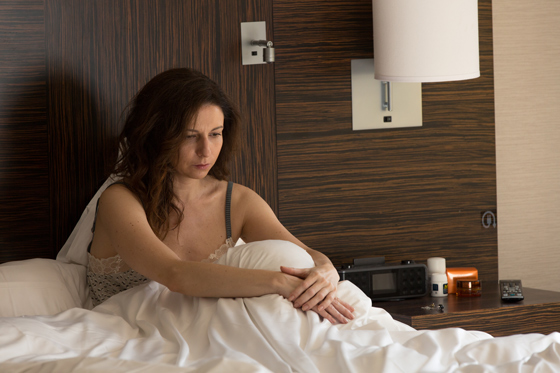
- For me, Middleground is more related to temporary categories. This strange hotel is a place where it is precisely temporary flows. I see the life of each person as a separate line of time; At one point - in the scene where two blondes are fighting - these flows intersect.
 © Hype Film
- Tell us more about your work with the temporality of the characters. For example, how do you measure this subjective time of heroes?
- I think that the inner voice that is in each of us speaks at all at different pace. This speed is reflected in some external things, and from here the character is born, his temporary stream: for example, the speed of response to the replica is often what makes the scene. Different professions are characterized by a different tempo. Also, the character coordinates of the character, his personalities are set phrases, the hero’s logic is set by dialogs. Here we again return to the answer to the question why I have English speech in the film: in each language there are certain speech settings, habits to a certain image of the phrase.
But if you remove the outer layers and come to the point of what is happening between people, then about the same thing happens. Roughly speaking, here we have people who are in the bourgeois coordinate system, who have life products that are not burdened with financial problems, but this nevertheless does not bring happiness to them. But if we want, we can play a similar role situation in the factory. Or between people who own a small provincial restaurant; They will simply have a completely different dialogue, but the problem will remain the same.
- The directing in the “fragments” is quite functional: both the operator and installation solutions are clearly strictly subordinated to the logic of the dramatic basis, the specific cinema means clearly serve one task - the demonstration of the conflict between the heroes, the illustration of the voltage lines passing between them. No visual poetry, no excessive aesthetics - although Fedor Lass is just known for his tendency to operator improvisation, to catchy, even glossy, beauty. And here he only carefully sways the camera, turning the hotel into some kind of “Titanic” ... Did you deliberately restrained it?
- This film was born in my head right with a picture. And every scene - thanks to Feda Lyessa, who listened carefully to me - was an expression of this picture. I do not like unnecessary beautifulities, it seems to me that everything should be subordinated to the idea. In each scene there is a separate thought that you want to convey-and it is not necessary to go somewhere to the side. Another thing is that there are some poetic images here, but again-if necessary. Because in this story everything is complicated, its structure is complicated, and add just artistic symbols there - it would be too much. As for influences - I can not say anything. There is a movie that is closer to me, but in principle I do not operate with references and try to find some of my own words. And I do not like to watch a lot of films before I start doing something. Of course, the whole process of creativity is permeated with some quotes and styles, because everything is already so intertwined that all this is in the air. It seems to me that art is a common space, a common field of creativity. I have my own internal criteria for style and adequacy, I try to adhere to them to ... I am afraid, I have such a fear-to overdo it with some things, for example, to make more open tricks to explain to the viewer what you definitely mean, but I don’t like to explain, I do not like that everything is chewed. They often reproach me for this, including as an actress - they say: she, they say, does not play anything. And I just really do not like this - so that the viewer understands exactly what you mean (laughs) .
 © Hype Film
- I will paraphrase the question that I tried to ask at the beginning of our conversation: why did you even go into directing? This story was so important for you that you decided to do everything yourself?
- Because being only an actor means to drive yourself into the framework. In addition, in the acting profession, all your communication with the viewer ends on the site - and then the installation, then the directorial vision. I also went into directing because I can do what I am interested and close to me: as an actress, I refuse many projects - they do not fall into my coordinate system. And I want to tell stories. When you are responsible for everything, this is a great responsibility - but also more control. Who is a person who is engaged in creativity? A certain conductor: it reminds people, which should not be forgotten. Through those emotions that should not be forgotten, people remain people ... Well, these are all such banal things ... The point is to establish energy exchange with people who watch a movie or a performance. I naively think that people should remember that there is something in common between us.
- And how do you see your place in the Russian film process? Do you generally think about your film in the coordinates of Russian cinema - or you and you exist, rather, in a global, international context?
- I don’t know where to put it. And the rest have the same problem. Start with what kind of cinema is it Russian or American? Some Western festivals wrote to the producers: we really liked the movie, but we do not know where to apply it and in general why it is Russian cinema. For me, it is generally very strange that you need to cling somewhere and belong to something. I do not like when people are laid out on the shelves, and I would not want to be on such a shelf.