
Translated material
Open city
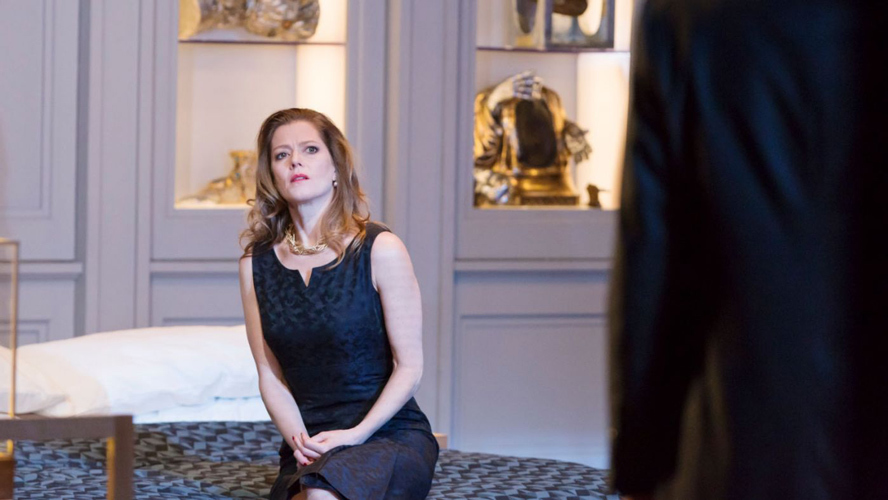
Holland program Festival is traditionally formed under the leadership of the artist - among others were the directors of Ivo Van Hove and Pierre Od. The exception was the programs of the last two years (including this year), which were collected by the curator Ruth Mackenzie. The curatorial approach has not yet taken root, and since next year the festival returns to the usual model. The artistic leadership of the 2019 festival is carried out by the director (including opera) from South Africa, William Cantridge and the choreographer from the Congo Faustin Linekul. The peculiarity of the moment was that the artists abandoned the usual four -year contract (the administrative dream of most Russian artists), as this interferes with their artistic practice. Therefore, they hired two at once and only for one year. Both have already cooperated with the festival, both are stars, and, in addition, management hopes for their unexpected collaborations. The fact that both come from Africa creates a geographical accent in the program of next year.
The Dutch festival is not limited to any genre. But historically (or conceptually), the musical program greatly dominates. This is not the richest organization and rarely fully finances the projects included in the program, but is successfully included in co -products with other theatrical institutions. It is not included in the largest budget and therefore most often without the “right of the first night”. But it compensates for this with a rich program and fantastic cordiality and attention of the public.
This year, the status of Artist in Focus was composer George Benjamin. The festival performed his new opera Lessons in Love and Violence in the production of Katie Mitchell, the world premiere of which a little earlier took place in the Royal Opera in London, as well as the opera “written on the skin” in concert performance. Benjamin himself provided piano support for Fritz Lang's film “Tired Death”, several of his concert works entered the Holland F Estival Proms project.
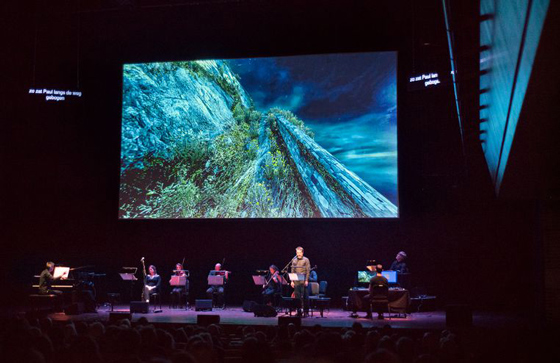 © Els Zweerink Scene from the production of Dear Esther
The musical poster of the festival included, in addition, the music of Morton Feldman and George Friedrich Haas, the modern Korean opera, the Musical Theater of the young opera radical Caliko Biiteo and Honored Novator Christoph Martaler. Kronos Quartet Day introduced several collaborations of this team with musicians of different genres. The soundtrack from the computer game “Dear Esther” was performed alive and turned into a theatrical production. Dimitris Papaioanna with his first performance of Wuppertal theater “After Pina Bausch” became the headliner of a diverse dance program.
Of course, the Dutch festival - and his management recognizes and declares this - tries to find a way out of different public. He explores new opportunities and new formats. However, the main mechanism of conquering a new audience is called programmers. And they have a hard time in the city where they have endless competition, especially when it comes to music.
For example, in parallel with the festival in Amsterdam, concerts of the prestigious royal orchestra Consetgabau were held with his new artistic director Daniel Gatti for the remote control and the famous soprano Evo Maria Westbrook. Gatti tested his performance by Wagneri Tetralogy “Nibelung Ring”, which he will conduct in Bayroit in 2020. The announcements report that Gatti will become only the second Italian in Bayroit. His temperament of the Italian motorist on the same days could be spied in a series of master classes for young conductor . However, his Wagner, in which he contrasts formal strings with a relief, even deliberately theatrical wind and shock, is associated, rather, with calligraphy and oriental painting. The ugly harsh voice of Westbrook, which at the same time possessing the striking technicality and mobility, performed the function of another solo instrument that writes beautiful and not quite understandable signs in the sounding space.
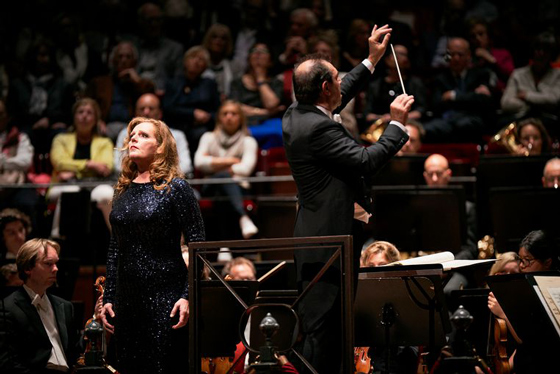 © Milagro Elstak Eva-Maria Westbrook and Daniela Gatti
One of the central music points in the festival program was Holland F Estival P Roms . Proms is a reduction from Promenade Concert S (concert format popular in public parks in England of the 19th century). Today, the term is mainly associated with the festival of classical music in the UK BBC Proms , the concept of which combines superiority of the musical product and the fundamentally democratic organization of the events themselves, the lack of formal requirements for the public and even cultivating public expressions, which are more likely to be associated with areal events or pop concerts (this year with the public PROMS will be encountered by the orchestra. Theodore of Kurentsis).
The Dutch festival used the same format, uniting on the site of the ultra-re-sectabable consumerbau (the day after the Royal Orchestra and Gatti) four multi-shred concerts laid by mini-offs in the foyer. The chairs of the pompous hall were removed, the stalls are standing (or you could sit on carpets and puffs). The program included the neo -academic composition of Daniel Bjarnason for 12 valtorns and piano, in which the piano played the role of a resonator, creating an atmospheric “cosmic” sound with curious string overtones; World Music with a female choir from a picturesque Moroccan city of Shawven; traditional European symphonic evening with works by George Benjamin; The super -technical tribe of David Bowie and his final album “Blackstar” .
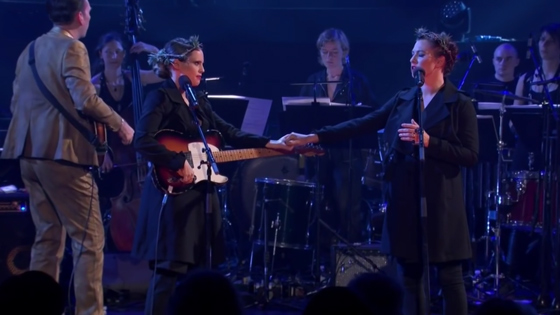 © BBC Tribyat David Bowie
This simple multicultural and inter -armed plan could leave indifferent a resident of such an open city as Amsterdam, if not for the impressive quality of each components. The Moroccan choir, performing not only traditional, but also new works, did not make any concessions to the hospitable European ear and uncompromisingly treated the obedient audience with a difficult “flat” vocal. Quite a star Dutch composition provided the level of pop rock. And Benjamin's music was performed by his favorite RFO orchestra.
The festival musical poster included, among other things, the unexpected unification of the honored provocative Dutch Theater Group De Warme Winkel with the no less well -deserved chamber chorus of Nederlands Kamerkoor around the figure of the 16th century Italian composer Jezualdo and Venoza. This team composed its version of the "artist from outside and from the inside." Several episodes from the life of Jezualdo (the brutal murder of his wife’s wife is especially emphasized) was mixed with the unremarkable composer himself (and performed by Kamerkoor -his time for the last) music of his Madrigalov, mainly from the last two books, where the letter becomes so difficult that it almost already seems to be dodecafonia.
The statement of the authors of the performance could remain at the level of banality. But the performance nevertheless leaves some witty comments on the theme of theatrical action (which authors are similar to the religious one)-that it does not lose either in horror or beauty, even if it refuses to play hide and seek, demonstrates ketchup blood and immature bodily tortures, and that the value of theatrical experience is somewhere outside of simple representative and reliability. The unchanging quality of theatrical craft allows you to easily switch to the level of perception of ideas, even if they are not outstanding. And guarantees the hospitality and attentiveness of any public festival.