
Translated material
The experience of the Mandeles
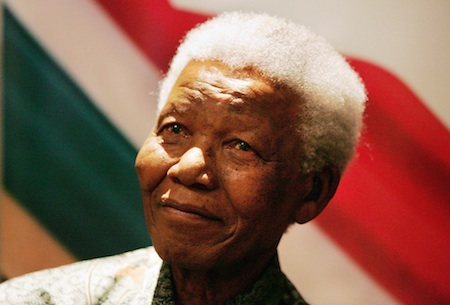
They talk and write about Nelson Mandela - often in a “glossy” style. Indeed, his experience is remarkable and will cause close interest for a long time. As a many -year prisoner became a peacekeeper and a Nobel laureate, who took off his predecessor at the presidential post by Frederick de Clerk - his country from international isolation, quickly (and with minimal costs), dismantling the apartheid regime.
But the real experience of the policy usually does not correspond to “glossy” schemes - all the more important is its close and comprehensive study. And here we can note several remarkable features.
Firstly, Mandela was not always a peacekeeper and supporter of non-violent actions. When the authorities not only did not want to make concessions to the African majority, but, on the contrary, tightened the apartheid regime, this uninocent, in general, the person became the leader of the armed struggle, for which he was sentenced to life imprisonment. The demonstrative rigidity (and cruelty) of the authorities leads to the radicalization of politicians who, under other circumstances, could be among moderate ones. But the same rigidity is a dead end-the mass of the tactical successes of the South African authorities, which built in their own way the logical political system, which had powerful power structures, still did not save from strategic defeat.
Secondly, any process of breaking the system is dramatic-and the “minimum costs” that experts are talking about, turn out to the tragedies of human destinies. Yes, events in South Africa did not develop according to the scenario of the civil war, and the African community managed to limit their own radicals-among whom was the wife of the Mandela, with whom he divorced because of the political discrepancies that had gone too far. But still, many white inhabitants of the country who have lost the privileged status perceive Mandel as a “terrorist”, and de clerk as a “traitor”. And this is the same reality as the obvious successes to overcome the heritage of apartheid.
Thirdly, the great historical merit of the Mandela is that he did not turn into Mugaba-that is, into an authoritarian leader, with all his might clinging to power. Against the backdrop of the collapsed economy, Zimbabwe South Africa is a completely successful country, which has recently been part of the BRICS group. The sad African tradition was a lifelong presidency, which reached its tragicomic climax in the figure of a scary emperor Bokassa. Mandela showed how to leave with dignity after the first presidential term. And he created a precedent, which is now being used in a number of African states (though with varying degrees of success-somewhere the transfer of power passes relatively calmly, somewhere inter-communal conflicts or even war flash). The depersonalization of power helped South Africa to avoid the dictatorship - although all the presidents, starting with the Mandela, are members of the African National Congress, there is real pluralism, competition of leaders and ideological movements inside this party. And the government of one of the provinces of the country-West Kapskaya-is headed by the representative of the White Community and the leader of the Opposition Liberal Party "Democratic Alliance".
Nelson Mandela, during his lifetime, became a symbol of modern African democracy - fragile and vulnerable, contradictory and, at the same time, inspiring hope. His experience does not guarantee success in the long run, including in South Africa, where new generations of the African majority can raise the question of revising the “rules of the game” in their favor, within the framework of their own understanding of justice. And the rights of a white minority are forever impossible to guarantee. But Mandela gave African democracy a chance - and it already depends on his heirs how successfully they use it.
Author - First Vice President of the Center for Political Technology