
Translated material
Such different holidays
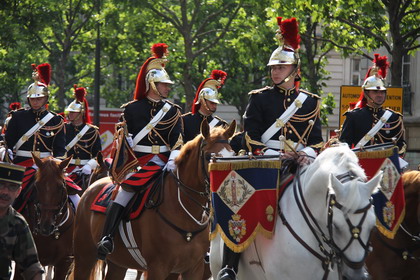
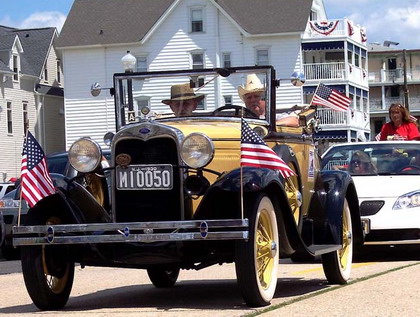
Last week, July 14, France celebrated a national holiday - the day of the capture of the Bastille. And ten days earlier in the USA - Independence Day. The most important holidays in these countries, by which there is no division into the so -called state and “loved ones” - this, in the modern political science language, the consolidated position of society. And the capture of the Bastille, which marked the beginning of the Great French Revolution in France, and the proclamation of the independence of the American states from England symbolize for people inhabiting these countries, the same thing - freedom. And this very freedom is still at the level of the main priority.
In New Russia, such a holiday could be the protection of the White House in late August 1991. But did not. At first he sicked doubts in the October rebellion of 1993, then laid the bloody shadow of a obscure and losing war in Chechnya, then democratic power was largely discredited by the 1996 elections, and the established oligarchic power and the related criminal analysis pushed out of the “freedom of freedom”. The arrogant and cynical decade of the zero lifted the PR base for this disappointment - the “dashing nineties”, and to the noise proclaimed its “souvenir” democracy, replacing the freedom of authoritarian political stability, the loyalty of subjects and upholding corporate interests.
The old holidays began to look for a replacement. Indeed, in the USSR, it was considered quite organically the main holiday on November 7: on the one hand, the day of the liberation of the workers, on the other hand, the establishment of the dictatorship of the communist regime.
In search of identification, both the Day of Russia and the Constitution Day did not work out. They looked deep into centuries and came up with November 4 - the Day of National Unity, which caused so many strife that, I think, the authorities already understood its mistake, but I have not found an alternative yet.
For this is a difficult matter - the installation of an artificial implant in a popular consciousness. It may not be snooped out and be torn.
In the 90s it was difficult, restless, but truly. In zero, this authenticity disappeared. In everything. Everything became one continuous imitation, an artificial veil, a smoke curtain, under the cover of which “deeds are done” and “issues are solved”.
The country, not having time to acquire, has lost its taste for improvisation. “All this jazz” drowned out a phonogram of total popes using “new technologies”.
In fairness, it should only be noted that for all sociological surveys for the vast majority of Russians, freedom is not a priority need and far from the main priority. They do not associate with her a straight, fair and safe life. They have too small, one might say, almost no experience of life in the conditions of this very freedom, and it is far from simple and not positive for many. Therefore, the Russians are not ready to sacrifice even a minimal well -being and albeit only a ghostly feeling of stability for the sake of even more ghostly freedom, which, among other things, threatens them with possible new shocks and the loss of a clockwork tint in their hands.
Russia knows how to endure, but not to defend. Indeed, in France and the USA, how many reasons were and remains to discredit democratic power: from Jacobin violence to the segregation in the United States, which remained until the 60s of the twentieth century.
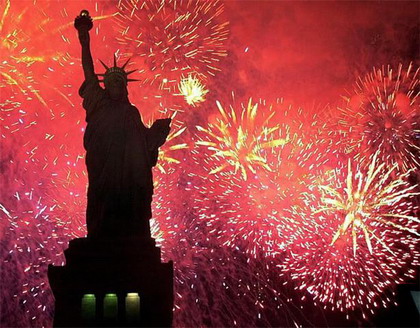
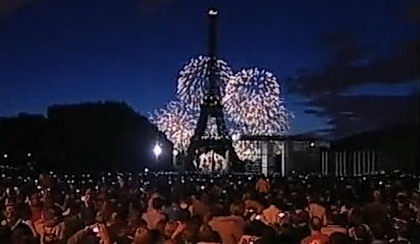
By the way, it is no coincidence that France on July 14 became a national holiday only after almost a century, until the French defended the conquered freedom in several revolutions and wars and did not understand that it was its acquisition that remains the main event of their history.
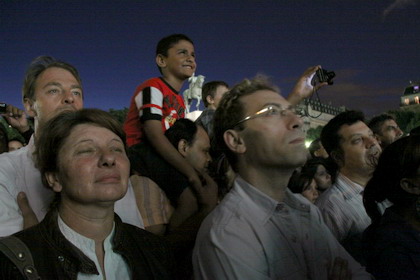
And now every time on the anniversary of the capture of the Bastille in the Square of the Republic, Parisians are simply dancing.
Photos of the hedgehog, www.anglablank.photographer.ru , www.fargate.ru