
Translated material
Colta.ru
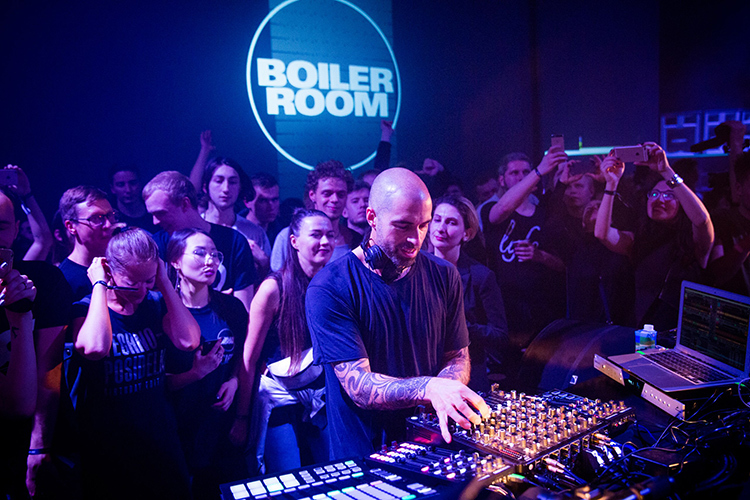
Thursday, ten in the evening, the surroundings of the Kursk station. A string of youth flows into the inconspicuous opening between the houses near Kostomarovsky Lane. Where they are in a hurry-in the courtyard of a long gray Soviet building, disfigured by multiple squirrels of air conditioners-about a hundred people who are waiting for something from the barriers placed by the labyrinth, on the other side of the supported by the guards. The gathered here in the prickly February frost is waiting for their opportunity to get to the closed party of Boiler Room , traveling around the world and once again reaching Moscow. The lucky ones who passed the cordon are in high spirits, not having time to enter the gray building - here is also a human nod. “I have a temperature, but I could not help but come - I love techno so much! - enthusiastically shouts a low blonde in black at the entrance to the acquaintance. - When are you back to Nizhny?! " His quiet answer cannot be heard due to bass breaking out of the opening door. “Okay, come on, see you” - the blonde shouts a boorish rhythm, rushes to the entrance and before disappearing in the opening, turns and solemnly exclaims: “We break this city!”
 © Boiler Room Mikhail Shtangel
The story of the Boiler Room , which is now called Uber 'OM in the world of electronic music, began in 2010 with an unheated boiler room in East London. In it, the founder of the project Blaise Belville began to hold parties weekly with familiar DJs, who, according to him, were more like teenage party in the bedroom. NOU-HAU Blaise Belville, which led to the fact that the Boiler Room brand became famous from California to Kamchatka, consisted that he installed a webcam in front of the turntables and launched a direct video broadcast of the Internet party. A few weeks later, more than a hundred people connected to the broadcast. Now the total audience of Boiler Room , which has turned from a party of acquaintances into a global company with offices in London, Berlin and New York, is 170 million people a month. They look at direct broadcasts of closed events that Boiler Room arranges 300 pieces per year in different cities of the world, and listen to the recorded performances of the heroes of underground electronics playing at these parties.
Boiler Room does not sell anything.
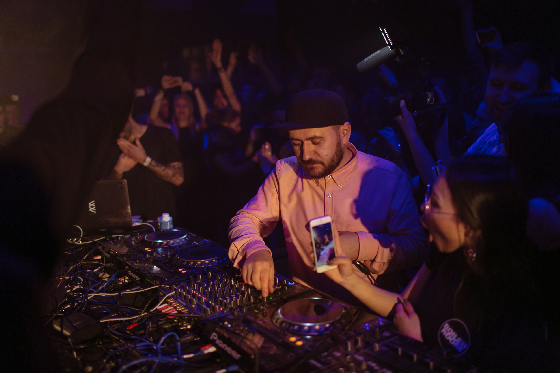
The Boiler Room success recipe is a bizarre combination of underlining and transparency, which irresistibly acts on the psychology of a modern person living between reality and virtuality. To the parties of the Boiler Room , on which non -forces rattles, only a limited number of chosen ones are allowed: hundreds of lucky ones from the number of thousands of registered are chosen randomly. At the same time, their dancing behind the DJs and musicians see hundreds of thousands of eyes, connected to the broadcast. Including from such corners of the planet, where hundreds of kilometers are to the nearest club. At the February Moscow Party, the main characters of which were the new British star Maya Jane Cowls, the German veteran of the tough bat, Chris Libing, our techno-auto Anton Cubikov with a modular life project of Juras Lietus and the favorite of the regulars of ARMA Nikita Zabelin, a little more than a thousand people hit. 850 thousand spectators from 120 countries observed them from the screens of their monitors and smartphones.
Live-set Juras Lietus Anton Cubikov on Boiler Room & Ballandine's True Music: Russia
Boiler Room has a special relationship with Russia. “There are countries in which there is a lot of interesting things for us, but there is - where we have a large audience,” says Mikhail Shtangel, head of the Berlin office and music director of Boiler Room . - In Russia - both. We always felt interest from Russia. The very first Berlin broadcast had spectators from Russia: one from Moscow, and the other from Sakhalin. The Russians themselves organized the Boiler Room “VKontakte” and developed it - now there are almost 65,000 subscribers in it. And most importantly - there is an incredibly interesting underground music. Over the past year, I traveled 35 countries, but I have not seen anywhere that is happening. Therefore, we are constantly, two or three times a year, we come to Russia. ”
Seth Nikita Zabelin on Boiler Room & Ballantine's True Music: Russia
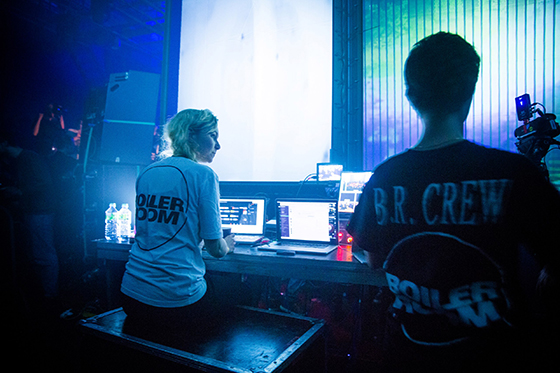
33-year-old Mikhail Shtangel speaks confident Russian, because he is from Moscow. In 1991, he went to live in Germany, but did not lose touch with Russia. Starting to organize parties with unusual electronics in Berlin, he brought musicians from Moscow and St. Petersburg to them. Having become the leading Berlin promoter and the curator of the large festival of experimental music CTM , Mikhail Shtandel drew attention to Boiler Room at the dawn of the project, when he had about 3,000 fans on Facebook. “I called Blaise and explained what I can do in Berlin what they are doing in London, but much more,” recalls Mikhail Shtangel. “I was the first to come to Boiler Room from the side.” Then there were three of them in the team - Blaise, producer and trainee. We started in 2011. "
 © Boiler Room
Now 50 people work in the London office of Boiler Room - management, producers, designers and programmers. In New York-10. Under the leadership of Mikhail Shtangel in Berlin-15. And there are still local partners in countries that are especially important for the development of the project-in Japan, Mexico, Australia. In Moscow, such a partner is the journalist and promoter Andrei Zailer. However, Mikhail Shtangel insists that Boiler Room is not a business, but a cultural platform, the purpose of which is propaganda and development of underground music, and employees of the company are not hired workers, but part of the family. “We are not Vice or Fox News . There are people who traded vinyl in stores for five or six years ago or put posters at their parties for five or six years ago. This culture is dear to them. They understand where our roots come from and why we are doing this. ”
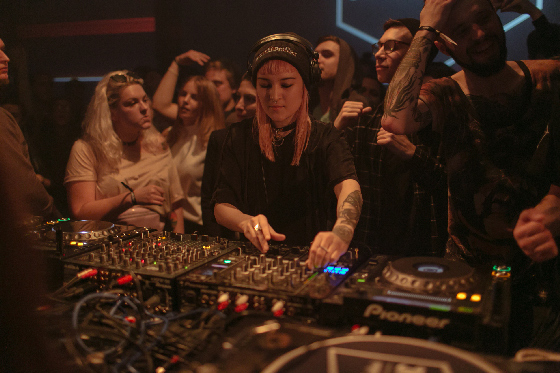
Seth Maya Jane Colez on Boiler Room & Ballantine's True Music: Russia
Boiler Room organizes and broadcasts to the whole world something more than parties that are difficult to get to. Mikhail Shtangel emphasizes that each of them is dedicated to the local underground phenomenon, and calls them snapshots of musical culture: “We make focus on a certain musical scene or movement in the country, which at the moment seems the most interesting, necessary and important. Each time we hope that we can return to this country and show the next story. But this is not possible all the time. ” In fact, the Boiler Room is the governor of the MTV audience in the 21st century, the only global television channel that makes it possible to light up underground artists and shows what musical ideas boil in boiler house, Mexico, Australia, Europe and the USA. Soon China will be added to these countries. Boiler Room managed to become Glound, that is, Global + Lalala - that marketing formula on which they tried to build a MTV strategy when restarting it three years ago . And, unlike all the current musical television channels, the Boiler Room does not show teenage reality shows and commercials.
Chris Libing on Boiler Room & Ballantine's True Music: Russia
However, it is impossible to make a project dedicated to underground musical culture without financial support for large international companies. Boiler Room is able to successfully work with brands of Ray level - Ban , Budweiser , Adidas , etc. The February visit of Maya Jane Colez to Moscow was one of the three stops in the world mini-tour organized with the support of Ballantine's . He is dedicated to the release of her new album, which will be accompanied by remixes on the tracks of the British made by musicians from South Africa, Spain and Russia (the latter is represented by Nikita Zabelin). The solemn final of the three-part project is scheduled for March 8 and 9 in Madrid-it will consist of not only Gala Vaughters, but also from the intriguing forum dedicated to the discussion of the obscure future musical industry.
 © Boiler Room Maya Jane Colez
“The fundamental problem of music is that people love her very much, but they are not ready to pay for it. Not only in Russia, ”says Mikhail Shtangel. - Boiler Room does not sell anything. The entrance to our events has always been free. There are several projects during which we sell tickets - but these are 10 events out of 330, which we do per year. It is difficult to earn money on underground music. Therefore, it is very important for us to have partners who believe with us to the value of this culture and help us talk about complex musical phenomena. Brand support gives us much more opportunities to work with artists and increases the power of our video broadcasts. It is important that in the center of our projects there is always a cultural phenomenon and that our collaborations with brands are opening new opportunities for musicians. ”