
Translated material
Black and white tape
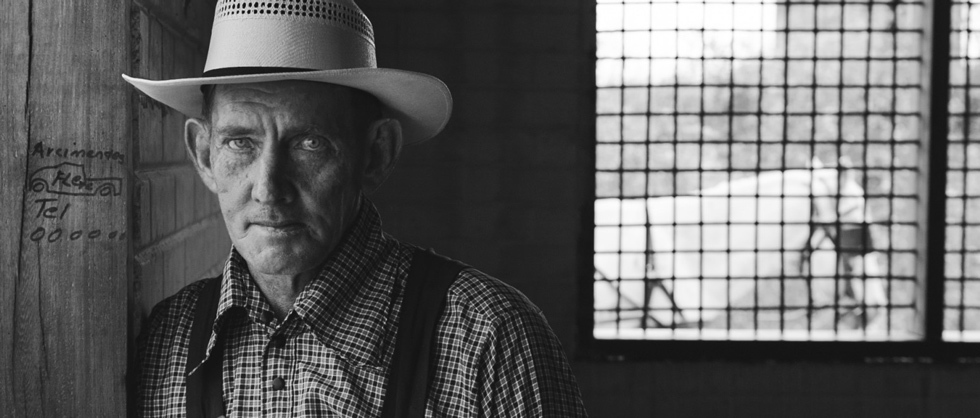
In the Moscow CDC , the “salamanka” Alexandra Kulak and Ruslan Fedotov, a poetic 41-minute dock about Mennonites, is going on all week. This is not only a unique case of rental of informal cinema, but also just an unexpected example of a Russian film, shot in accordance with world trends - and at the same time free from complexes and prejudices. We already wrote briefly about Salamanca, but now we decided to peer at it more intelligent (especially since the rental of the film will end on February 14).
The Mennonite colony is somewhere in Mexico, forced time, the Luddite idyll: no TV, no gasoline, no electricity. Pissile children, the same faces, late dinner with kerosene. Children eat noodles. And the quiet rustling male voice behind the scenes begins the story of the former, about what was a long time ago, about the only choice that the invisible protagonist of this film made at about the same age as these children. The choice is no doubt, not to think, to accept fate, duties, to abandon the garden of still unknown earthly pleasures for the sake of faith in a reward in heaven.
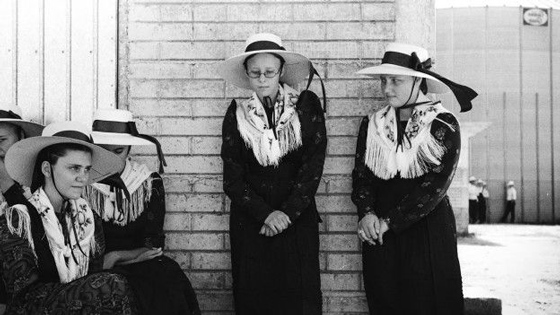
Although the paradise is he. The camera, in Malikovsky, falling to the ground, then to the faces (the authors' love for lower angles and close-ups is clearly noticeable here), peering into ascetic routine and the ritual monotony of bucolic life among a dense tropical flora, plays with the viewer a ambiguous game of biases. The visible (and for cinema, as in principle, for a person of a post -consumer society, in which the optics of the naturalist took the place of the divine eye, the appearance is identical to reality) here presents us with a typical idealistic picture of the found paradise, harmony of all, saving uniformity and order, smoothly and organically flowing out of the house, from a house that connects into a single universum universum People, horses and cows, land and trees, sunsets, youth, old age ETC.
On the other hand, monochrome imposed on the image every secondly makes it clear to us: all this ascosis is, first of all, the result of electoral vision, filter, deliberately imposed on the original multi -color of the world by not colonists of salaman, but the authors themselves, suitable for the material with a set of prejudices and expectations, openly format it to squeeze it into a stamp that is understandable to the audience.
 © Artdokfest
And with the third - a voice, a monologue of a fictional character, anonymous, instilling in one or other bodies - those that currently appear on the screen, on the bodies of the father, sons, teachers, schoolchildren, carpenter and so on. He tells the story of doubts and choice, a story composed as personal - but almost documentary in his versatility, one for all, common not only for the inhabitants of this and other similar communes - but also for all of us. Debt or pleasure? Circular bail or free will? Roy or atoms? We or me? This story breaks the apparent integrity of the screen image of the salaman, not arguing with it directly, but effectively translating the “document” into the area of the speculative one, into the area is not even fiction, and the latter (the latter is especially valuable: after all, a movie with letters of metaphor is usually unavailable).
Talking about the conscious choice of non -freedom, the film Fedotov and the fist, on the contrary, shifts at ease through definitions and barriers. "Salamanka" - the movie is not quite documentary, but not playful. Not a complete meter - but not short. Her poetics swims somewhere between the cinema essays of Chris Marker (but the figure of the author-Reisiner is replaced by the voice of a fictional narrator, a prostrate protagonist), Werner Herzog Werner Zelevo (so beloved by a dicky, the inner truth of the material is articulated not by introduced details or adjusted episodes, but literally, in a voice) The ribbon "Michael Hanke (it seems that the monologue of the lyrical hero is composed by the authors of" Salamanka "literally under the impression of this film). However, the source of inspiration is not important here, just as the degree of truthfulness of all material is not important. “Salamanka” is precisely the “feature film”, and not the ethnographic document, it is more than this particular colony and its inhabitants, it is not about some strange sectarians living in their strange life, he is about people, that is, about us. This little movie with its touching fiction speaks more about reality than many “Film Films”: if the authors of Salamanki are added in trifles, then this is precisely that lies that helps better understand how a large truth, which is not subject to a separate storyteller is arranged.