
Translated material
Colta.ru
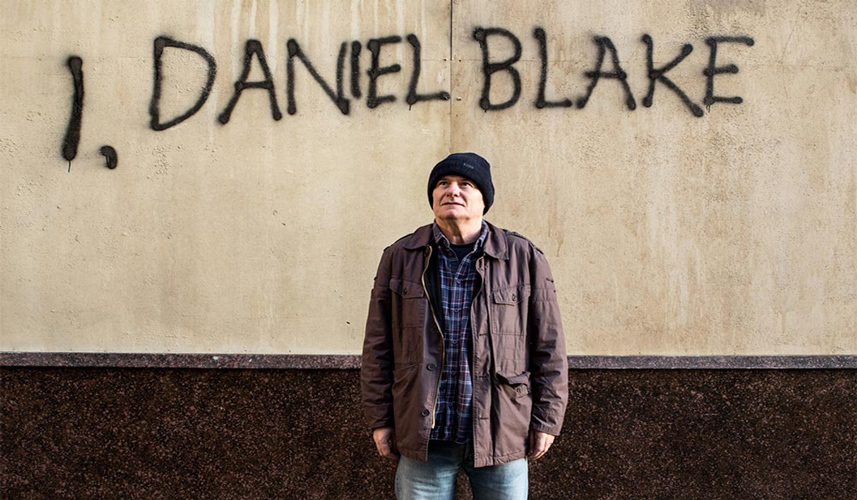
Today in Moscow the XVII festival "New British Cinema" begins. The central figure of his program is, of course, Ken Lowie, the anniversary (this year he turned 80) and a social cinema veteran, who suddenly returned from his resignation (a year ago, Lowo announced his recovery) with the film “I, Daniel Blake” - and unexpectedly for everyone received gold in Cannes for him. “Blake” will become the film of opening Britfest (and at the same time will be released in Russian rental). Also in the program of the festival is the good dock “Ken Loach: Life and Films”, which in detail and boring explains not only the history of the creation of “Blake”, but also the phenomenon of Louch, which, before leaving for the lyrical and costume historicality “Wind that shakes the heather” and “Hall of Jimmy”, was generally considered the last socialist realist.
Daniel Blake is a 59-year-old carpenter who recently survived a heart attack. Doctors forbade him to work, and he must receive unemployment benefits. But the British bureaucratic system reasoned differently: they do not give a pension to his grandfather, but forced to look for work and keep reports on her search for 35 hours a week. Never holding a smartphone or a computer mouse in his hands, Blake is in constant stress, as he cannot fill out an elementary questionnaire on the labor exchange.
In June of this year, Ken Lowu turned 80 years old. A month earlier, he received the Cannes “Golden Palm Branch” for his film about Daniel Blake, the jury put the choice of many critics: “Again social cinema”, “Darden would have worked better.” The main attractive quality of the picture is not its slightly wiped topic of the confrontation of a person with a capitalist machine (she was also dedicated to last year's “market law” Stefan Brze, for a role in which Vincent Lyndon received a prize in Cannes), but the amazing plausibility of everything that happens on the screen. “Daniel Blake” is primarily realism and in the second - social. In the traction, absolutely serious, devoid of cynicism or sarcasm, the narrative about the hard life of the carpenter is immersed with the head, you believe each of his word. This is humanism in a square: a portrait of a person written by a person. The same neorealism, who is still familiar from the films of Wittorio de Siki, is framed by the Kafkian bureaucratic absurdity. The indifferent politeness of social workers, the aggressive stupidity of the guards, the inadequately severe reaction of the police to harmless graffiti. Ken LoCho invites the viewer to survive the experience of the “lower classes” of social strata, deprived of any rights.
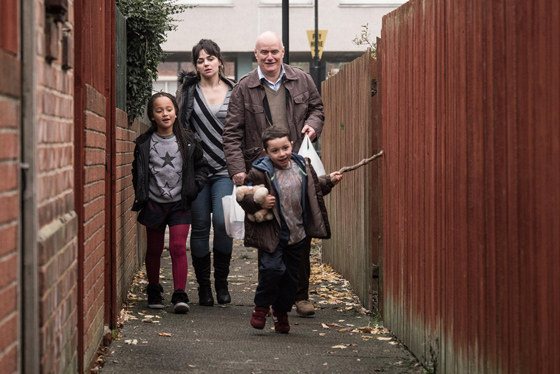 © BBC Hard from the movie "Me, Daniel Blake"
The almost permanent colleague of Ken Louch Paul Laverti wrote the script “I, Daniel Blake” in real history. The drama about the elderly non-conformer turned out to be much more clear, angry and convincing than Louch's recent films, as if the rage of the 60s woke up in him. Actually, the second “Blake” protagonist - Katie, a lonely mother from London, who recently received a social apartment on the outskirts of Newcasl - is very reminiscent of the heroine of his old, shot for the BBC film “Katie Home” (1966), who once had an absolutely crushing effect for the BBC.
Blake meets Katie in the social assistance office and literally takes under his wing. The recently widowed carpenter and a young pretty cleaning lady, perhaps, would have made up a good couple, but not in this movie, so reminiscent of a real life. Katie constantly starving for the sake of his children will prefer to go to the panel than to become a burial for Blake. Blake is too good for this world. His tragedy, first of all, in crystal honesty (if Blake were a little more cunning and dodging, he probably would have guessed to deceive the state car). And this, perhaps, is the most vulnerable place of the film - such a maximum idealism of the hero is somewhat likened to a cinema with a fiery leaflet.
With a leaflet, with agitlacate, the films of Lawch have always been compared. In the documentary, Louise Osmond “Ken Loach: Life and Films”, which will also be shown on Britfest, there are excellent archival shots - the British public discusses “Katie, return home”, and today a heartbreaking social drama about the housing issue. Filmed with the participation of 60 actors, the film ( BBC management Twice removed him from the air) looked like pure documentary. For the British public, this was the first clash with neorealism brought to extremum, and, having learned about the game nature of the picture (however, the final scene in which social workers selected children at the station, which became homeless Katie, was shot in a real setting of the railway station with real passengers as a crowd), many spectators felt an object political manipulation. The instructions for organizing the rebellion were also called his other film, “Big Flame”, which in an equally plausible, realistic manner spoke about the strike of Liverpool dockers organizing advice requiring the nationalization of industry, and after devoted leaders and fellow travelers, defeated by the troops and sent to the port.
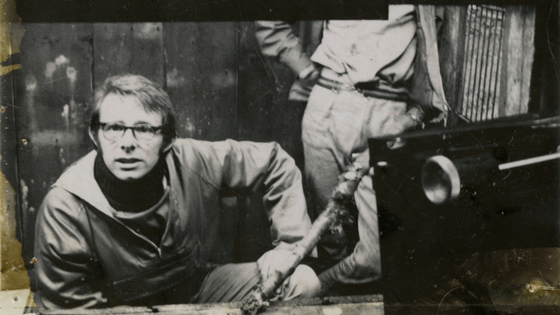 © BBC FILMS Hard from the movie "Ken LoCh: Life and Films"
However, Lowo was not always so fiery left. The film describes in sufficient detail the evolution of the director’s political views-from the relatively indifferent young man-theater, who grew up in the family of the Right Shakhtar, to Levak, who does not trust either the Laborists or the trade union bureaucrats (the betrayal of the trade union functionaries is dedicated to a series of documentaries of the early 80s “The issues of leadership”; Labor Party until the 90s). The radicalization of Lawch was largely facilitated by acquaintance with Jim Allen, a playwright worker who worked as a dock and a controller in the bus before sitting down a desk.
In addition to the political background, the Osmond film also talks about the creative method of the director. Kilian Murphy, David Bredley (playing the boy who played the main role in the “Kesy”) and Lowo himself describe in detail his methods of working with actors. The through the scattered facts of the biography and the memories of friends, colleagues and acquaintances, the story of the creation of “Daniel Blake” becomes a through plot - the tired and patient Lowo returns to the directors after the conservatives came to power, cautiously complains about a possible loss of grip, and in the final stands with the Cannes reward in his hands.