
Translated material
Chaos Mers
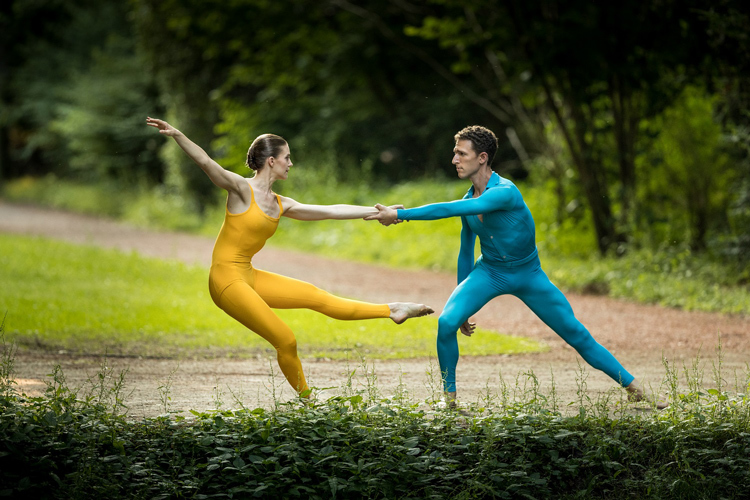
Cunningham came to the world of modern dance almost like Lomonosov in science. The guy from the small town of Ventralia, Washington, with a population of about 15 thousand people (urban-type settlement by Russian standards), the middle of the three brothers, the Merce gravitated to dancing since childhood, therefore decided not to follow in the footsteps of his brothers, but he moved to New York and at the age of twenty, he got into the dance corpolar-not for any reason. March Graham, member of the Great Four, a group of founders of American dance Modern. The worship of the authorities was not characteristic of Canningham - rather a dancer than a choreographer (“I am a dancer, this is enough,” the interviewer will answer the question of what to call him). A few years later, he will present in the US capital, along with composer John Cage, his first solo concert, where he will show the first achievements of his own style based on the principles of Aleatorics, with his branded sharp, “unconscious” movements.
The key characteristic of dancing that Cunningham performed and put, was fragmentation. Documentaryist Alla Kovgan, as if continuing the idea of an American, in the same way builds his film about him. The kugan is not enough typical angles of the “talking heads”, characteristic of foreign Bayopics about famous people. It fills the film with video materials obtained from closed archives of the Canningham personal biographer, which has recorded the events of his life since the 50s, fragments of interviews of the choreographer in different years of his activity, small animation inserts connecting the entire Found Footage (reception spied on the Dock Coben: Devils of the Installation of Brett Morgen), as well as records and reconstruction of the most famous dance numbers set by the hero. This is a variety of material in which the defendant himself, declared in the name, does not appear so often, allows you to take a look not so much at the Merce’s life in the battered format “Born - lived - worked - achieved - died”, how much on his products, on his heritage.
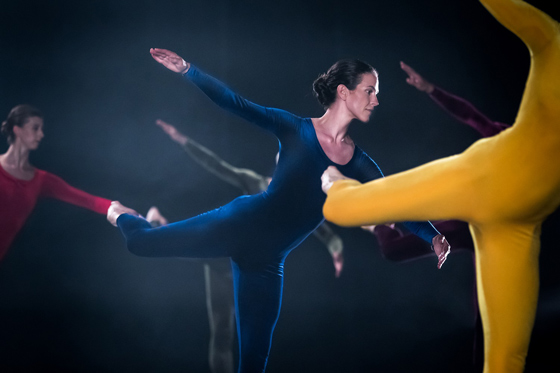 © Arsam International
It is noteworthy how the Kolkan from different angles looks at the unique dance of Cunningham and his social communications: the Merce preferred to save words, but not a second spared the body that spoke about his person. Glory, money and understanding of the public did not immediately come to the dancer and his troupe; It used to be that tomatoes flew into the dancers after performances, looking at which Merce lamented: “It is a pity that it’s not an apple, I'm very hungry now.” However, the lack of success did not change the principles that the American was guided by in work. Cunningham's fundamental theses are to remain yourself, not to try to repeat after someone, not to think, but to act. In his choreography, music does not move in the body - the body moves autonomously, in all directions. The boycott of smoothness and rhythm, the almost complete absence of harmony with musical accompaniment caused indignation and amazement of the public, but this was exactly what became the hallmark of Cunningham and his troupe. Pina Baush, who said, was also guided by the same thing: “I am the least interested in how people move - I am interested in what moves them”; It was the film “Pina” by Vim Venders that became a source of inspiration for Kovgan, who decided to make his cinema in the spectacular 3D.
The sharp corners of the Kovgan in its chronological narrative carefully convey: communication with composer John Cage, a long -term associate of the choreographer, with whom, in addition to the workers of Canningham, romantic relations - remains behind the scenes. “I was not interested in Merce Cunningham as a person or as a person. I was interested in his work, what I can do with his troupe in 3D, ”Alla says in an interview. And “Cunningham” is really a movie, first of all, about the dance itself, and only then about the choreographer.