
Translated material
Algae and stumps of shrimp were useful for a new hemostatic material
Chemists from RCTU named after D. I. Mendeleev synthesized new material based on biopolymers of chitosan and alginate, as well as silver nanoparticles, which can not only effectively stop bleeding, but also has severe antibacterial activity. The article with the results of their work was published by the International Journal of Polymeric Materials and Polymeric Biomaterials.
To stop bleeding, a hemostatic material is needed, which can be easily fixed on the wound and so, on the one hand, is isolated to accelerate the healing, and on the other hand, ensure the removal of liquids and protection against infection. There are many different hemostatic materials, but most of them are focused only on a quick stop of bleeding and is poorly suitable for longer treatment. Russian scientists have proposed a new material of three components: alginate and chitosan - biopolymers secreted from algae and crustacean shells, respectively, as well as silver nanoparticles. At the same time, the latter received not a standard chemical method, but with the help of biological synthesis: the granules of the nano -ruble produced mushrooms that were grown in an environment rich in silver ions.
“Based on the alginate, hydrogels are created - sponge insoluble in water that can gain and give large volumes of liquid,” says the first author of the work, associate professor of the RCTU named after D.I. Mendeleeva Maria Gordienko. - But so that these sponges do not dissolve in water, their structure must be sewn using sewing agents, which most often act as different toxic chemical reagents, and we replaced them with chitosan. It forms ties with the alginate, which leads to the formation of a gel that retains its stability when immersed in a solution. In addition, chitosan has an antibacterial effect, helps to bind blood components and healing of wounds. Finally, silver nanoparticles give the gel an additional antibacterial effect - so, in total we received new hemostatic material with high biocompatibility and well -expressed antibacterial properties. ”
Synthesized gels look like a porous sponge up to 5 mm thick. They can be applied to open wounds to quickly stop bleeding and simultaneously protect against infection. At the same time, the sponge is able to absorb large volumes of liquids secreted from wounds, maintaining its mechanical stability. Then, if necessary - for example, if the surgeon needs to conduct an operation and sew the wound - the sponge can be easily removed.
The main innovation of Russian researchers is a multi -stage process of synthesis, which had not previously been used for hemostatic materials. First, they received a soluble hydrogel of the alginate with silver nanoparticles, then cryeostructured it - that is, they cooled the material up to –20 ° C as a result of which the primary system of channels formed inside the sponge. Further, the material was made into contact with the chitosan solution and, with a gradual thawing of –5 ° C, chitosan molecules were associated with alginate and so sewed the system into an insoluble mesh sponge. Further, the mixture was again frozen to –20 ° C and dried with sublimation to get the final material.
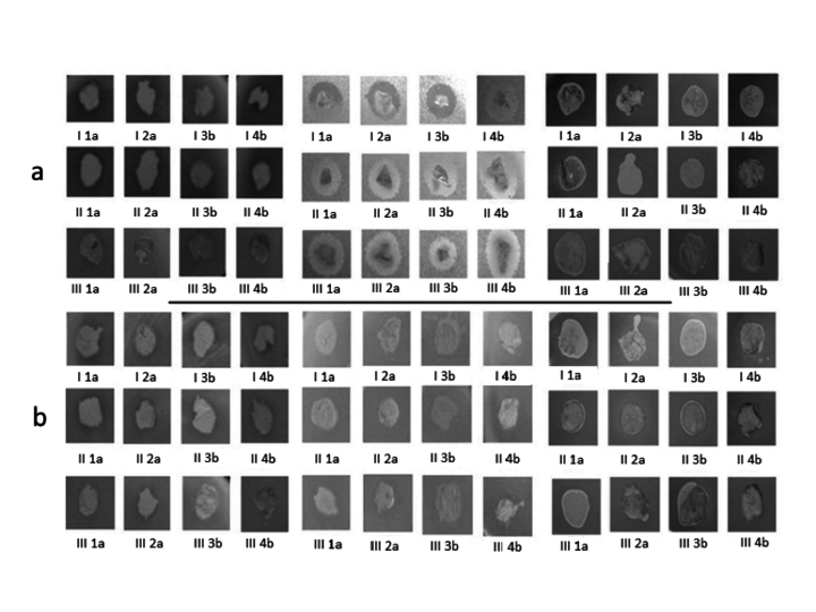
In a series of experiments, scientists appreciated the prospects of new material to stop bleeding. It turned out that its porosity is up to 50 %, that is, half of the total gel volume accounts for the total volume of all pores, due to which it effectively absorbs liquids. At the same time, alginate chitosanic gels remain insoluble and mechanically stable at the values of the pH and the temperature characteristic of the wounds, therefore they are suitable for these conditions. Finally, the antibacterial properties of gels were separately studied. They were placed in Petri cups with three typical cultures of pathogens (golden staphylococcus staphylococcus aureus , pseudomed Pseudomonas aeruginosa stick and Bacillus cereus wax bacillus). After 24 hours of the location of gels among bacteria, scientists estimated the sizes and shape of free zones around the samples: the larger the size of the zone, the stronger the antibacterial effect. It turned out that algina-chitosanic sponges with silver nanoparticles have pronounced antibacterial properties, while they have no sponges without the addition of silver.