
Translated material
Programs with stars
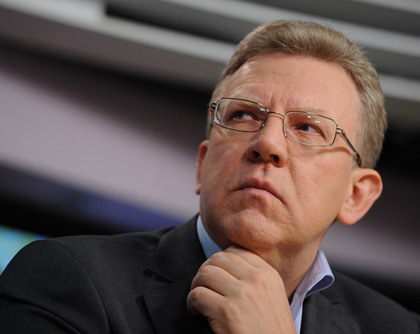
The head of the Civil Initiatives Support Fund, the former Deputy Prime Minister and Minister of Finance, Alexei Kudrin, gave a lengthy interview with the newspaper Vedomosti, in which he spoke out of a wide range of questions-from elections to the coordination council and prospects for the revolution in Russia to a detailed analysis of the activities of the Medvedev government and the need to transition to a funded pension system.
Kudrin denied his return to Putin’s team as the head of the Megaregulator and confirmed that he was meeting with the president and discussing political issues with him, although recently such meetings have been taking place less and less.
We will leave, however, political issues to political observers and turn to criticism of the Kudrin macroeconomic policy, which is pursued by the president and the government. Exactly so, since “both of it are conducted: both Dmitry Medvedev and Vladimir Putin. The government is preparing measures, and the president agrees with them. This is a very important point. It happens the other way around: the president makes a decision, and the government meals mens a time. ”
In principle, Kudrin's views, as well as his claims to economic policy, have been known for a long time, and nothing fundamentally new in an interview sounded. Nevertheless, several points deserve attention. One of the most exciting post-election plots in the Russian economic policy was the struggle for the fulfillment of the pre-election promises of the Tandem (both participants showed “miracles of unheard of generosity”). The key question was the question of how the government will shorten both the grandiose defense program and the declared social expenses, without violating the “budget rule” - “cleaning” the budget from oil outputs invented by Kudrin.
Kudrin, speaking of the education program, explains what kind of exit the Medvedev government found: “After all, no one hides that this program is not provided with resources. Look at the transcript, this was discussed directly at a meeting of the government, where it was decided to look for the declared resources. The government is counting on additional income. Money issued partially does not give a result: if the school is half built, the educational process will not begin at all. In hardware, such programs are called stars. This is when you put an asterisk and imply funding only in case of income ... we knew for sure: what was announced, it will be executed. When the money is clearly defined, then a greater demand for the result. And when the tasks are set, but it is allowed that there may not be money, then all the performers are disorganized - no one really expects to achieve the goal. They work like this: there will be money - there will be a result, there will be no money - and there will be no result. ”
The Medvedev government -adopted method of budget planning threatens to turn into very unpleasant consequences for the economy, but it creates a nutritious environment for theft and corruption. As Kudrin rightly noted, in a half -built school children cannot be taught. It’s impossible to travel along a half -built bridge, produce high -tech or “breakthrough” products at a half -built enterprise, pull the power transmission line on a clearing out of a clearing out of a clearing. But attributing a couple of hundred kilometers to the unfinished clearing - very simple.
There is no doubt that the programs with sprockets will become more and more in the country every year, especially if the slowdown in the world economy will continue and affect the state of the Russian economy.
But even if the “manna of heaven” in the form of stably rising oil prices will continue to fall into the country generously, there will be few to make the mining. Why, it was written and said repeatedly, but it is still worth repeating. Speaking about the Army rearmament program, Kudrin notes: “The defense industry does not need so much money also because industry simply will not be able to fulfill such a voluminous order in such terms.”
Kudrin understands what neither Putin and Medvedev, nor ardent supporters of state investment and modernization, as the current prime minister understands her, does not want to understand. Firstly, a plant capable of producing ten outdated aircraft a year will not produce twenty modern, even a billion dollars in a year. And secondly, an excess of investment, especially state-owned ones, leads only to overheating of the economy, inflation, exacerbation of the struggle for resources (labor, access to communal networks and other infrastructure) and, ultimately, to the displacement of private investors by the state.
The question of whether Putin-Medvedev’s economic course will be effective enough to fulfill the tasks of modernization and reindustrialization, put the country on the rails of innovation and attract investments, it seems that in the current circumstances there is no one on the agenda, which once again reminded of Kudrin’s interview again.