
Translated material
Formula of freedom
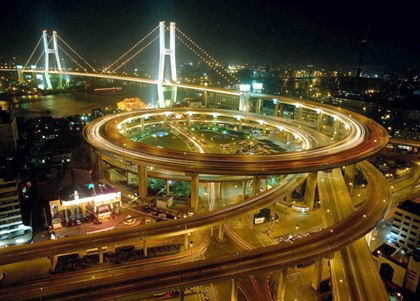
The trouble is not only that we are embarrassed to ask when we don’t know something. The trouble is that we are not asking for those.
We ask about the business of 30-year-old consultants who have not created a single company and have encountered competition only when applying for a job. About politics in experts who did not participate in any election campaign. About freedom of speech among journalists. About the love of the divorced. About freedom among philosophers ...
The result is predictable.
Philosophers, for example, love to speculate about freedom as individualism - about freedom from the team. But everyone who stood in traffic jams knows that these concepts are in different planes. There is no question of any collectivism in the traffic, everyone locked himself in his tin box, and everything that your solidarity and self -awareness may have enough is to fate out after your owners flying past with flashing lights and “grunts”. But with freedom in traffic, everything is in order too, right? The prisoner at least knows when he leaves prison; The driver usually has no idea when he breaks out of the cork.
I’m even afraid to think about who we need to ask about love (probably writers), but the economists need to be asked about freedom.
And then instead of philosophical puzzles such as “conscious necessity” (and how, for example, to be with the freedom of a large number of individuals who, in principle, are unable to realize anything?) You will receive a clear and, most importantly, technological, applicable formula in practice: “Freedom is an excess of infrastructure”.
We can act - and even think - only within the framework of the existing infrastructure (including intellectual). The lack of infrastructure - from roads and electricity to systematized knowledge - objectively deprives a person of the opportunity to consciously set goals and achieve them, which in fact turns him into a public animal.
Why put in jail when it is possible to deprive mobility of the disorganization of transport, poverty or fear of the police, and even debilize a combination of decomposed, turned exclusively into business education and effective propaganda?
Freedom of speech is necessary, but that it from the moo in the kitchens has become a word that it could be heard and begin to act - he also needs infrastructure.
The restriction of the infrastructure strangles freedom no less effective than police terror, but more reliable, because it does not cause resistance: one can dream of eradicating the “wrong cops” (although in our country the state seems to openly proceed from the presumption of the complete lack of honest police officers), but you can not even dream of building a road itself. This is more difficult than punishing a specific criminal in uniform; Civil society is not within the power.
You can adopt in detail the laws on the provision of all conceivable and unthinkable rights, but without the infrastructure that ensures their execution, they can be printed in rolls and without text.
A classic example is Latin America. The constitutions of most of its countries are more developed and democratic than that of the United States - only a significant part of the population cannot even read them. He does not know how.
Therefore, freedom is not a solemn declaration of politicians and public figures and not even “good laws”.
These are empty spaces at the Dallas airport, which can be loaded with new flights at any time, even to Mars.
This is an opportunity by honest labor, and even not particularly tearing, earn on a ticket to Vladivostok.
These are roads by which you can go in any direction and get to where you need, and the transport necessary for this.
These are crowds of people on the streets of Chenddu (the capital of Sichuani, a little less than Kyiv and Berlin) on scooters and mopeds that do not pollute the air, instantly start and instantly stop because they work on batteries. Cundu moved to them in less than 5 years: the authorities took into account that the fuel is getting more expensive, the Chinese are still poor for the masses, and an electric scooter or electric pip is available to those who cannot spend money on gasoline. And the monopolism of energy is restrained by the state, and in China they are not able to strangle the economy and society for their appetites.
Paradoxically, freedom is non -resident in essence, because the redundancy of infrastructure pays off only in the strategic perspective: at each individual point in time, this redundancy is wasteful.
But it is she who makes us free.
And Russia is not so much because of the deprivation of people of rights-from social to political (so the absence of a living minimum guaranteed by the state de facto means the lack of the right to life), but due to the lack of infrastructure that allows them to implement.
And therefore, the state that we contain and which we so far suffer should not only freedom of speech, an honest court and the restoration of the social sphere. First of all, it owed us the mass construction of power lines and roads: not only wealth comes along them, in accordance with the Chinese proverb, according to them, although a little later, freedom comes.
Zyuchzhaigou, 2008
Author - Director of the Institute of Problems of Globalization, Doctor of Economics