
Translated material
Moscow is torn
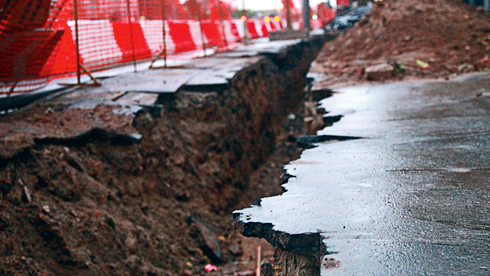
Novoslobodskaya Street says that this is some kind of "My street" program, but what is it mine? Since May, there is no rest, at first everyone excavated on the road, then on the sidewalk, noise, everywhere there are fences, ”Anna Valentinovna, who walks her dachshund in a small square in the center of Moscow, displeasedly. Plastic fences reached this square, and most of its shops were occupied by workers. Near the houses are mobile electricity generators that smoke and rubbing. Repair on Spiridonovka can be considered close to completion: in most sections a new tile is already laid - large, unlike the previous - small. True, residents are wondering: why it was necessary to change the coating right now, because the repair was carried out relatively recently. With the asphalt, which, according to the locals, was also in good condition, but again went under replacement, the builders will have to tinker longer. “Porsche Kayen” turns off the street to the street, the car gets into the yellow mesh fence, and its driver seems to be quoted by Foreign Minister Sergei Lavrov ...
Workers and foremen communicate non-amusing, say that the repair is planned and goes according to the program “My Street”. "It will be better, why everyone complains?" - Throwing one of them.
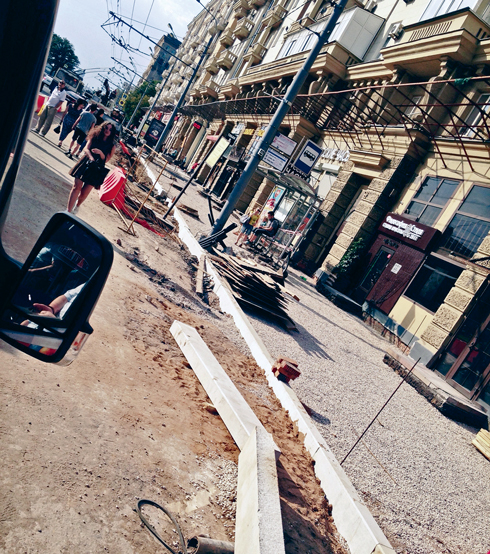
Leningradsky Prospekt 
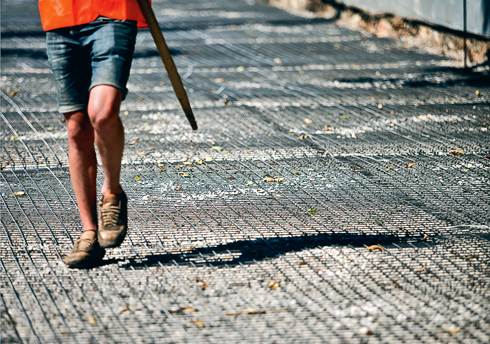
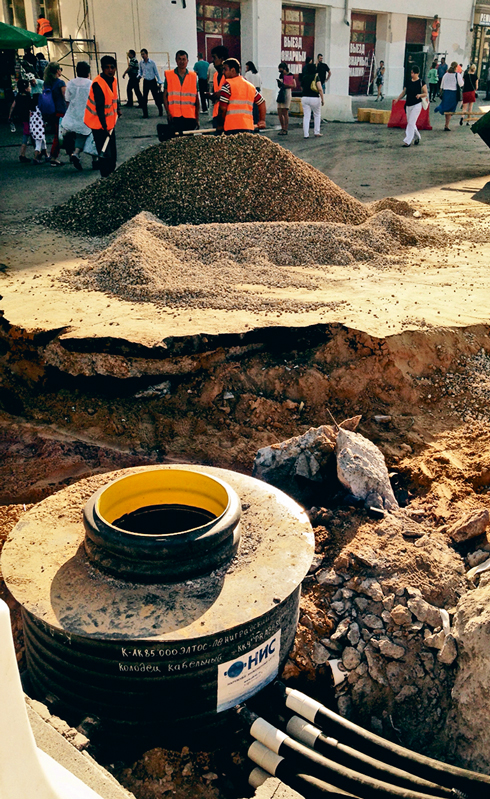
The Sokol metro is in total for repair as part of the My Street program fell 33 metropolitan streets. The city hall is so painted by its advantages: “To make Moscow streets recognizable, increase the availability and safety of streets, ensure comfortable conditions for relaxation and improve the quality of their improvement, overcome the imbalance between pedestrian, bicycle and automobile traffic, and streamline the parking space.” “Recognition” began to be increased primarily the streets of the Central District. The city hall assures that 235,833 residents of the capital were chosen their list, and the streets "after improvement will be played with new colors, they will become more convenient and more comfortable for Muscovites." In May, the administration conducted 9 auctions under the program - the cost of work amounted to 2.1 billion rubles (a third of the budget of the middle regional city).
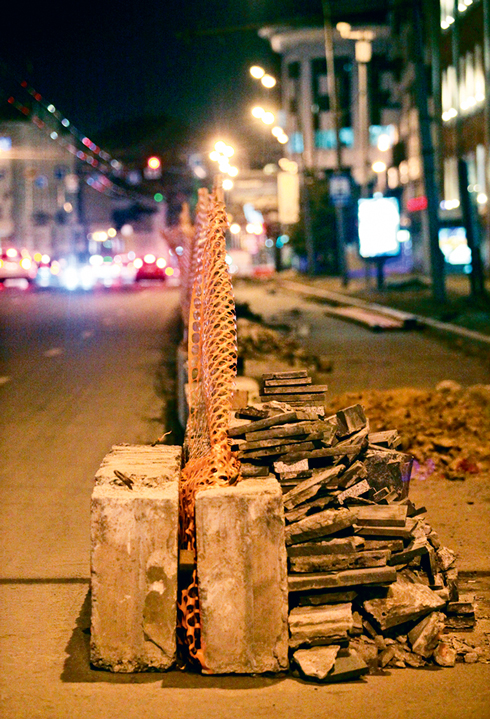

What is changing? They go under the ground of the electric wire. A terrible look of black barrels are wells for cables. Only lights will now be located on the pillars, the pillars themselves are new. The sidewalks become wider, and the passing part is already. The tile also becomes larger - three times longer and twice as wider. The seams between the blocks on the sidewalk will be less, which means that pedestrians and cyclists are more convenient to move. Such advantages indicate city officials. It is unclear, however, what prevented the use of this tile earlier.
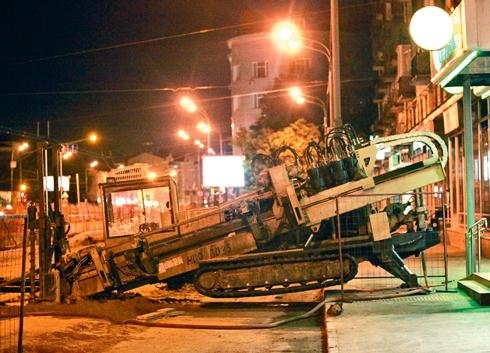
Lesnaya Street is also unclear why the city hall did not immediately take up the reconstruction of the triumphal square, which was blocked for repair during the opposition shares of Strategy 31. As soon as the rally activity ended, the space was laid out with Sobyaninsky Tiles, and in the spring of 2014 the city hall announced a competition for the reconstruction project - architects from the Moscow Bureau won it. Now a small pond and a square with a colonnade will appear on the triumph, romantic and again does not have to rallies. Work on the square began only this year, and their cost will be 340 million rubles. Here, the Moscow authorities through the lips of the mayor Sergei Sobyanin openly designated the City Day as a deadline.
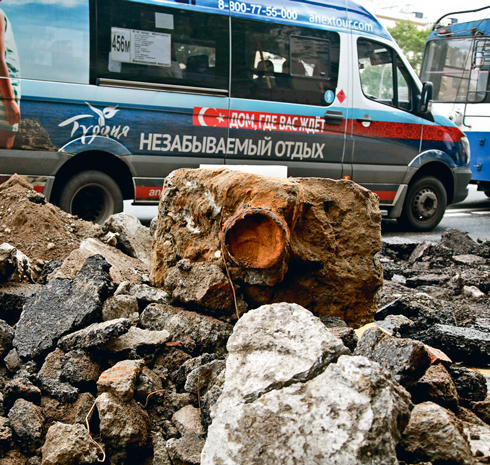
According to the head of the City Projects Foundation Maxim Katz, the Moscow government recognized the experience of converting urban spaces on Malaya Dmitrovka and Pyatnitskaya Street, where pedestrian zones were also expanded. “People began to go out onto the streets, walk, they began to open a cafe,” he lists. The urbanist does not believe that the closure of the carriageway for motorists will increase traffic jams, on the contrary, according to Katz, they will be less - the city hall will solve this problem with the reconstruction of the streets. “People begin to choose a detour or begin to come to work or rest in the center by public transport, especially when difficulties with parking lots arise. It’s nice to walk along such streets with wide sidewalks, you don’t have to make your way along a narrow road, so the townspeople preferred cars - it was inconvenient on the street, ”Maxim Katz convinces. According to the director of the Institute of Economics of Transport and Transport Policy of the NIO-STSHE Mikhail Blinkin, after the reconstruction of the Muscovites, "they will have to forget the touching habit of coming from the outskirts and leave cars on the central streets."
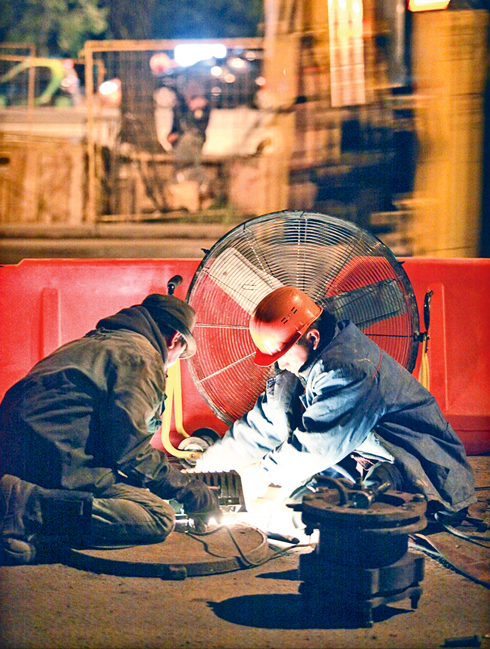
Near the Belorussian station, Urbanists - for Mikhail Blinkin explains that what is happening with Moscow streets should not be called a repair: “This is a very serious work on their revision. We are talking about the distribution of space under the movement of cars, pedestrians. This is the right program, the time for its execution is also selected successfully. In summer, minimal traffic, especially low in July-August, autumn traffic is much more intense, ”says the scientist.
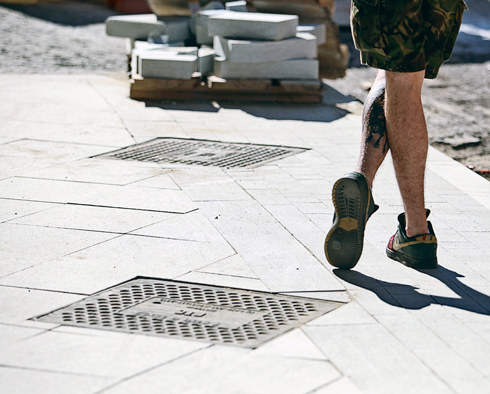
Myasnitskaya Street, according to Maxim Katz, "temporary inconvenience cannot be an argument against reconstruction." “But the implementation of the program is not very effective both from the point of view of costs and from the point of view of the quality of work. Everyone, apparently,, according to tradition, has developed since the Luzhkov times, they want to be in time for the City Day. If it weren’t for this, the work could be planned better, the deprivations of Muscovites would be less - everything could be done gradually until the beginning of November, without haste and high quality, ”the urbanist explains. “Of course, they say that the bags of money are buried, but unlike the program for the reconstruction of transport and transition units, which is not clear how it was performed, the city is waiting for changes,” the urbanist concludes.
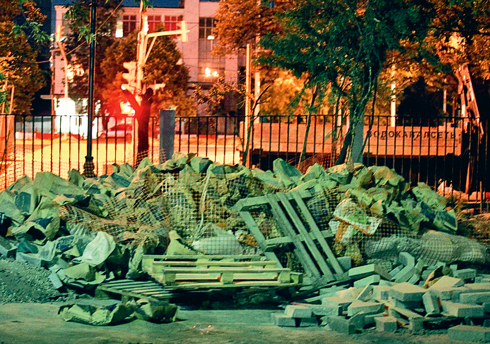
In the metro area "Dynamo" 
“How much does the city need this in a crisis? Revenues fall, reductions are underway in budgetary institutions. There is no need to replace borders and asphalt, we do not need the curb of the whole of Moscow! It would be correct to convene a commission from municipal, city deputies and State Duma deputies from the city, but the city hall did not, ”the communist is belligerent.
The leader of Yabloko Sergey Mitrokhin is even more outraged: “To jump through the dug streets, dodging construction equipment, is now a new fun of Muscovites thanks to Sergey Semenovich” (
This refers to the mayor of Moscow Sergey Sobyanin. - NT ). “The normal passage for pedestrians has not been organized anywhere. On butcher, people have to literally cling to the fences so that they are not knocked down by cars. Complaints are a mass, especially from the elderly. The city hall is not worried about the inhabitants, but their PR. Otherwise, all these construction sites would be agreed on public hearings, warned in advance, put detours and organized temporary pedestrian paths, ”says Mitrokhin. The head of Yabloko assures that the party anti -corruption center is already following the reconstruction: “The same areas are constantly remaking in the city.”
The New Times sent requests to the Department of Transport and the Department of Housing and Public Utilities and the improvement of the Moscow City Hall, where he asked to clarify how long ago planned repairs were carried out on the streets, which are now reconstructed as part of the My Street program, and what are the normative life of tiles and asphalt to their replacement. We tried to find out from the transporters whether the streets were repaired to deteriorate the road situation in Moscow and how the reconstruction of urban transport influenced. The administration of the capital did not respond to requests at the time of delivery of the number.
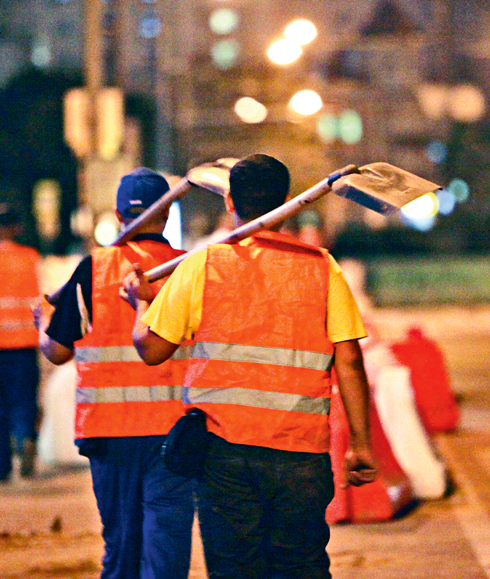
Photo: Alexandra Zotova, Lyuba Antonenko