
Translated material
The choice of friends
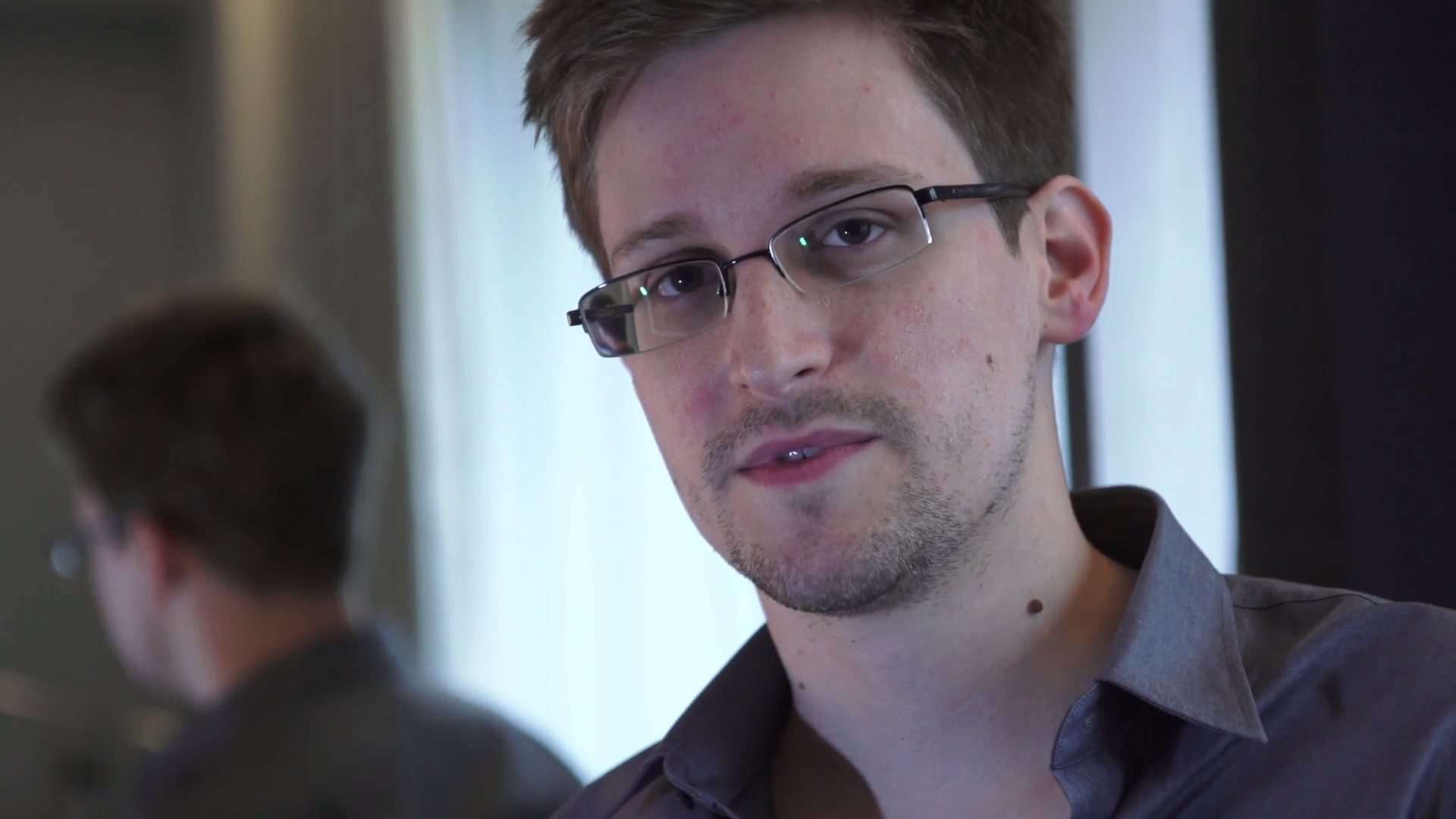
When it became known that Edward Snowden flew out of Hong Kong to Moscow, a wave of rumors covered the capital: a former CIA officer was about to ask for political asylum from the Kremlin, no, Moscow is only an intermediate stop on the way to Havana, and Havana is not a final point, since he is sent to Venezuela or Iceland. After his landing in Sheremetyevo, it turned out that Snowden asked for asylum in Ecuador.
Meanwhile, already immediately after departure from Hong Kong, it became known that the WikiLeaks team helps Snowden and that even in flight he was accompanied by activist Assange Sarah Harrison. This to some extent explains the choice of Moscow as a direction for departure from Hong Kong: in the end, Julian Assange is the host of his own show on Russia Today, and he would have enough contacts to agree with the Russian authorities about Snowden.
However, just the contacts of Snowden and Assange with the Russian authorities made civilian activists around the world before a very difficult ethical dilemma. However, like the very idea of using the Kremlin resources by those who are today the main exposure of the United States policy.
Russia Today, for example, focusing on human rights violations in the United States, gives Western activists and human rights activists more space on the air than the main Western television channels, but at the same time the presence of these activists on the air of RT allows the propaganda television channel to increase the audience and influence. Is the game of candles worth?
As a Russian journalist, I fundamentally do not give comments to Russia Today, but I'm afraid that such a simple solution is not suitable for everyone. Ten years ago, Russia helped to publish a book to the British dissident, a former intelligence agent of Mi-6 Richard Tomlinson, for whom, as it is now for Snowden, his native government hunted around the world. Thanks to the mysterious publisher in Moscow, about which no one heard both before Tomlinson’s book The Big Breach, and after, Tomlinson's revelations were published, and it was worth it: a lot of unpleasant things about British intelligence became known to the public.
Does this mean that American dissenters, facing a very real prospect of going to prison for turning to public opinion, can use the help of countries such as Russia, with problems in the field of human rights that did not dream of the United States?
The general principle, it seems, is not here.
The SVR, it seems, did not win anything when she helped Tomlinson's book, except, except that, may have pleasant emotions with several generals. They were able to make fun of the British great, but this is related to the games of the special services with each other. The company, by and large, has no dealing with this - but important information has become known.
The situation with Edward Snowden, however, is much more complicated. It is worthwhile to remember that the scandal around Snowden's revelations is already exploited by Russia and China, two countries, which, so it happened, were the first to come to the aid of the former employee of the American intelligence services.
The Revelations of Snowden were a great reason for the Kremlin to start a large-scale campaign to “land” global Internet services, such as Gmail, Facebook or Twitter, to the jurisdiction of Russia. Influential deputies and senators, referring to the scandal with the interception of data from users by US intelligence services, have already proposed to oblige global Internet platforms to keep servers in Russia. In this case, they will be subject to local legislation, and not only anti-extremist, but also regulating operational-search measures, that is, surveillance, and will be forced to open their services-the national telecommunications interception system. State Duma deputy Sergei Zheleznyak has already announced the need for a “sovereign Internet” and promised to accept the appropriate amendments in the fall of this year. As a result, by 2014, Russian users, with the worst scenario, may well have the need to use Russian versions of Facebook, Gmail or Skype, completely transparent for special services.
In turn, the Chinese news agency "Sinhua", referring to the exposure of Snowden, abruptly attacked the United States of Sunday editorial article, accusing Washington of playing the role of the victim of the cyber attacks, is actually the "greatest villain" of our century.
At the same time, it is worth considering that recently Russia, with the support of China, tried to change the global rules for managing the Internet. In December last year, in Dubai, at the conference of the International Union of Electro Square (ITU), Russia proposed a new Internet management mechanism: to transfer the functions of NPOs, which now control the distribution of domain names and IP addresses and are engaged in the development of technical standards (ICAAN, etc.), in the ITU. At the same time, Russia proposed, for example, to limit the right to use the Internet in cases where “telecommunication services are used to intervene in the internal affairs of the state or to undermine sovereignty, national security, territorial integrity and public security of other states.” These initiatives blew up world public opinion, and although 89 countries supported Russian proposals, the Western states rejected them, and Google launched a special campaign against them.
However, the December failure does not mean that Russia will not make new attempts, and the exposure of Snowden may well serve as new arguments against the US hegemony on the Internet.
Of course, this does not mean that Snowden should not publish socially important information about the invasion of special services into private life, but, apparently, it is worthwhile to be more selective in choosing friends.