
Translated material
The reasons for growth are not visible
In the Kremlin
 The reasons for growth are not visible
April 22, 2010 Evgeny Yasin
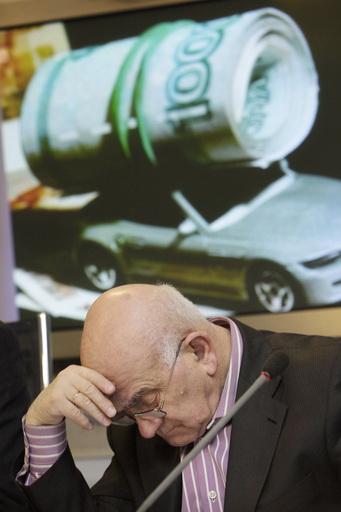
It is difficult to say what Vladimir Vladimirovich had in mind, who, speaking in the Duma, said that the recession ordered to live long. We see only one circumstance: in Russia there was an inflated bubble and it was blown away. We suffered losses, first of all, as a result of reducing world prices for the main goods of Russian exports. In addition, there were complications in world financial markets that led to a change in the situation in the Russian market. To a small extent, the Russian government also attached a hand to this. After the ruble was devalued, which we kept quite at a rather expensive cost, we reached the level that is natural for us - minus the same bubble. Perhaps this “foolishness” meant Putin, speaking of the end of the recession.
At the same time, it must be understood that so far there is no real, tangible revival in the economy. The Prime Minister said that we already have a growth dynamics of 5.8% of GDP, but I did not understand, in relation to what. Perhaps, in relation to the third quarter of last year, but we still need to get more thorough clarifications from Rosstat, which at that time changed the methodology, which led to the fact that the main dynamic ranks were broken, characterizing the issues of the main industries. According to expert conclusions, the growth rates in relation to August last year are still reduced on average. I would not want an increase in growth rate to be achieved at the cost of the methodological “reserves” of Rosstat. Recently, Vedomosti came out a note about the results of the first quarter. It followed from it that the indicator of 5.8%, which brought everyone in the government to the state of euphoria, is due to the fact that the classification of industrial products was revised. Our experts say that the growth is about zero, we should rather talk about stagnation, and not about the resumption of economic growth. For the growth of reasons, it is not yet visible. The world markets have risen somewhat, we increased income from raw materials, but they have not recovered to the level that was before. And in the domestic market investment and consumer demands are not growing. Therefore, it is difficult to expect the growth rate to be high. You need to look for some additional growth sources, except for those that are already in the piggy bank of the government. For example, a capital improvement in the business climate by increasing the level of trust in state institutions, which is very low today.
I am not ready to confirm the prime minister’s words that the restoration is faster than that of the Brik countries. This is not obvious. India and China are growing much faster. I would not dramatize our fall, for me it says only one thing: the growth that we observed the last two years before the crisis was a blow, including due to the endless borrowings in the West, due to the extraordinary revival in the markets, tied to unbearable goods, that is, to the fact that we cannot export and should sell in the domestic market - construction, automobile industry, services. To a large extent, due to this, growth took place, which was fueled by petrodollars. These incredibly bloated projects do not find new demand, new markets, there are no money for them. I still do not see any saving beacons that would allow us to stand out with something among the rest of the Brik countries, whose economy is in a healthier state than ours.
The crisis in the broad sense of the word, of course, did not pass. He did not go through the world, the main problems remain. The main causes of the crisis in large structural changes in the world economy, at the rapid pace of the economies of developing countries, primarily China and India, which are drawn to volumes previously produced in developed countries. What to do developed countries - this problem does not yet find solutions. Until it is resolved, there will be no economic recovery in the world. We can only add our own problems to this.
The prime minister announced his intention once again to reform healthcare. This measure is extremely relevant. I can not judge real plans for the reform according to the fragmentary information that comes to us. But my great fear is that we are supposed to develop a compulsory medical insurance system as a state institution, and not to build it as a market. Mandatory medical insurance means that the population will use the services funded by the state. Healthcare will receive a small feed from large companies financing social packages of their employees - the so -called additional medical insurance. The rest is the payment of the services of doctors, sisters, cleaners, nannies and those tests and drugs that are sold at commercial prices. This whole system, as it seems to me, is extremely imperfect. It does not realize the advanced experience of world health care and does not outline the use of the opportunities that we have in case we can organize normal voluntary medical insurance with the acquisition of insurance policies. A certain part of the services within these policies in accordance with constitutional obligations can be financed by the state, but everyone must connect. Today, a person who wants to be healthy cannot realize his demand for health. Normal policies are not common in our country that the population is convinced that health care should be free. This faith in it is reinforced by: the state will make a powerful compulsory medical insurance system, give quotas for expensive operations, and take care of regulating medicines. This picture means that solvent demand, which could be one of the engines of the Russian economy, will not work. The state only promises that it will give more money-that is what sounded in the speech of the prime minister. And the state will no longer have that kind of money and, moreover, it should not even be.
With pension reform, the case in the sense of developing ideology is better. But the basis of the concept that is known to me is still budget financing. That is, this is not a self -sufficient financial system. So, we will not have the long money that we counted on. People again will not take full participation in the formation of this system. Here we, like in healthcare, should finish the market economy and eliminate the Soviet one. In the meantime, in one case we have compulsory medical insurance, and in the other - one hundred percent contributions of employers and the state for future pensions. Citizens can only voluntarily contribute money so that the state pays it. The idea itself is not bad, but it does not inspire confidence that a person who starts a labor career today will have enough funds on a pension account by the time he retires. A person must invest something himself without counting on the state and employers. Nowhere, except in Russia, there is no such thing that only employers pay for pensions. In Germany, the employer pays 50%, the employee makes 50%. Of course, the question will arise: where to get 50% of the employee with low wages? After all, the state does not pay extra in the budget sector, and the pensions are not large. It must be taken into account that a modern citizen has a certain set of needs, which includes not only stall content - nutrition, clothing, vacation, the most modest apartment (despite the fact that our capital investments are not included in the consumer basket) - but also education, healthcare, and pensions. A citizen expects that these needs will provide him with the state. But the fact is that the industrial era is over, and the population growth ends with it. People must finance their education, their old age and think about it. To do this, they need to pay more. We must proceed from the fact that, within the framework of wages and other income, all expenses should be reimbursed, as Marx wrote, for the reproduction of labor. Then the salary will increase, employers will think more about how to replace people with high -performance equipment, and processes will begin that will promote the development of the economy, innovation, and increase in performance. And so we have a fairly large non -market sector in which all prices are regulated, there is no competition, and we sit and wait for wages to increase. This will not happen.
Photo by RIA Novosti