
Translated material
About sport! You are a rating!
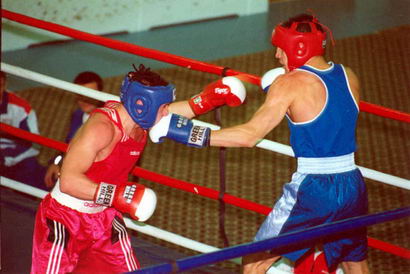
She specially took a pause and did not write immediately after the Olympics about the changed relationships of sports and television. I waited until Turin's passions have cooled while the victories and defeats of our athletes, blunders and finds of our commentators, the oddity of the simultaneous show of competitions on several channels will become less important than the changed ideology of sports showing on TV.
And the fact that the relations of television and sports have changed is shown the Winter Olympiad 2006 with amazing clarity. Just two years ago, during games in Athens, sports broadcasts were within the limits of traditional rating parameters, causing not greater interest of the audience than the last fifteen years. After the destruction of the Soviet Sports System and the Soviet System, the GOSTELEDRODIO SPORT on TV was rather in the role of a stepdaughter, which TV channels do not like to love, but at least occasionally they are forced to start the light, otherwise that people will say ...
High ratings of the final matches of the World Cup remained an exception to the general rule-in general, the interest of Russian viewers in sports in the 1990s-early 2000s fell sharply. The times when the hockey matches of the USSR-Canada or the demonstrations of the skaters forced the streets empty, as once the show of “seventeen moments of spring” passed, it seemed forever. The countries in which the sport was state ideology has gone, and there was no sport on TV with it.
What happened by February 2006, when a sport, who lived a decade and a half in the role of a stepdaughter, suddenly again became a beloved child, whose television channels, as divorced parents, began to divide?
Why was the sport again in demand by the Russian audience? The answer to this question is perhaps simple - because why sport was in demand in stagnant time at the end of the Soviet era. Namely, behind the absence in the television holder of another real unredarable life and other ideology people occupying thoughts. In the nineties, sagged, and others, more politicized ideologies, occupied the thoughts of our fellow citizens. By the middle of the two thousandths, for lack of others, sport again became a dominant ideology.
The victories of “ours” are again called to become the main (if not the only) cause of national pride and the main reason for the education of patriotic feelings. For current children, as once our generation, which has grown up in TVs in the 70-80s, the flag and anthem of the country can be associated not with the Kremlin, but with the pedestal of honor. I admit that when many politicians and public figures were indignant about the return of a slightly modified Soviet anthem, I did not share such a violent indignation for one simple reason. Unlike the elders, the Soviet anthem was not a symbol of Stalinism or totalitarianism for me, but only by the sound accompaniment of sports victories. The subconscious included the only picture - the faces of our best hockey players in the world listening to this anthem after the match against Canadians against the backdrop of this flag. Together with this association, it seems, then in me a childish sense of pride in a country was formed in me, in which there are such guys who can win. I think that in children and adolescents who begin to comprehend life with the help of a TV in 2006, there is a chance to repeat our experience and remember the Russian flag, which flutters in the hands of the winning skating before they are taught to distinguish between state symbols. The nostalgic feeling when the victories in sports were an analogue of the greatness of the state, in February 2006 suddenly returned. It returned, because it turned out that citizens of this country really want to love their homeland and be proud of the homeland, and does not often give any other (except for sports) reasons for pride.
In addition to ideological reasons for the revival of interest in sports, of course, there are financial reasons. The economy has become such that it can not only support sports and athletes, but can also let the fans get sick - go for your favorite football team for matches of European cups and, in the company of friends to tear the throat in the stands of Turin.
The coincidence of these and some other reasons led to a situation when the Russian viewer did not readily sat down to the TV, to watch the Olympics. And, sitting down, he found out that the same picture (though with different commentary) is on the air at once two channels - “first” and “sport”.
A little television background. In recent years, the rights to broadcast major international competitions shared two television giants - “Channel One” and VGTRK (in the person of the Russian TV channel). It was they who were shared, and not other large and small Russian channels for one simple reason - the right to broadcast most of the competitions were sold by the European broadcasting union, whose members of Russian television companies are only Channel One and VGTRK.
Thus, the two Russian superhigants saved funds - to buy a tie, of course, cheaper. And they left the freedom of maneuver. Obviously, not a single large federal channel is able to put in its broadcasting grid all matches of the football championship or competition in all sports at the Olympics, otherwise there will be no place for series, shows, news and other rating programs on the air. Having divided the purchased volume of sports broadcasts into two, the “first” and “Russia” saved both a place on the air and financial resources.
So it was before what happened to a sharp increase in the audience interest in sports broadcasts and before the appearance of the Sports channel, which is included in the same VGTRK corporation as the Russia channel. By February 2006, it turned out that the Russian viewer is ready to consume a lot of sports than before, bringing high ratings, and therefore more advertising income showing the sport, showing sports. And a specialized channel
"Sport", unlike the Rossiya channel, is ready to show rating competitions almost around the clock.
In addition, something happened in the relations of the teenagers who entered by that time in the serial war (the “Golden Calf” against the “first”; sold by the Rossiya channel on NTV “Brigade” against “Yesenin”, etc.). As a result, the leaders of the “first” and VGTRK could not agree, and from the beginning of the Olympic Games in the open Russian television broadcasts, oddities began to occur. The Sports channel began to show not only those competitions to which the VGTRK was the right to draw, but also those that the right of which retired to smokers, duplicating the broadcasts of the Channel One. The “first”, in turn, began to redraw the grid, removing the previously declared TV shows and shifting other programs in order to show on live figure skating or hockey.
In early March, I invited television leaders who are responsible for their sport channels to the Echo of Moskvy program to Echo Moskvy, the first deputy general director
"Channel One"Alexander Fayfman and CEO of Sports Channel Vasily Kiknadze. And what was my surprise when, instead of a conceptual conversation about the role and place of sports on TV, a corporate conflict has swam out related to these parallel broadcasts and impaired agreements. The “first” believed that competitors behaved, as they say, “not sports” and the parallelity of broadcasts deprived the “first” forecasted advertising income. After all, it is clear that when the same event is shown at the same time through two channels, the number of spectators is distributed between them and the ratings of one of the channels fall. That is, “Channel One” lost a part of the predicted advertising revenues for February. The Sports channel, in turn, is sure that it was he who for a long time “warmed up” the Russian television auditor’s interest in the Olympic Games and is very unfair when competitors use this “warm -up interest”.
But, to the honor of the television leaders, both admitted that the “negotiation resource” in this conflict is not only “was not exhausted”, but “was not involved at all”. And they promised that they would agree to the summer World Cup, and the audience will not have to watch matches at once on two channels.
Well, this conflict would have remained with the internal affair of the television channels - the viewer, in fact, still, one or five channels show what he wants to watch, the viewer is even glad that he can choose commentators. But hidden behind this conflict is deeper than just a television essence, once again reminded that we have more sport more than just sport.
We have a sport, as in the old stagnant times, again state ideology. But unlike those long -standing (and, perhaps, returning) times, the sport we now also have a rating. High rating. And large advertising income that large television companies are not going to give in to each other. And, in addition to sports battles at stadiums, unsportsmanlike battles for their display will be clearly continued. Moreover, the World Cup is just around the corner.