
Translated material
Reckoning for rhetoric?
Around Russia
 Reckoning for rhetoric?
December 8, 2010 Alexander Golts
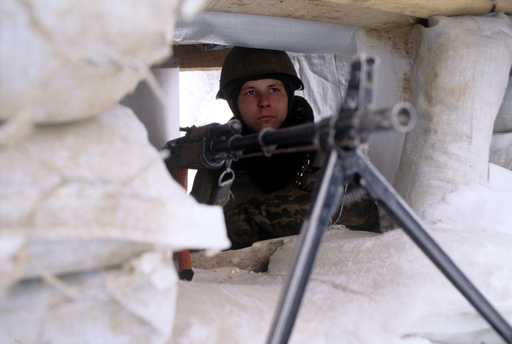 The next Russian-NATO honeymoon may end, barely starting. And by no means through the fault of Moscow. Exactly the day after, as they say, the fruitful visit of Dmitry Medvedev to Poland, during which our president has repeatedly proposed to be guided in relations with each other not the past, but the present, the next revelations of the evil WikiLeaks followed. The British “Hardian”, citing the next portion of the published diplomatic correspondence of the United States, said: at the beginning of this year, the NATO Military Committee approved the secret plan for the defense of Poland, Lithuania, Estonia and Latvia. It is reported that in the event of an attack on these states, nine divisions from Poland, Germany, Great Britain and the United States will reflect the blow. Polish ports will be involved in the reception of military equipment and marine corps of NATO members. At the time of the crisis, it is supposed to create a naval group of the North Atlantic Alliance in the Baltic.
Honestly, all this looks rather bad. Of course, we can take into account that such a plan appeared as a result of bargaining between the Baltic countries and the “old” NATO members, as a well -informed diplomatic source claims to be in “Gardian”. Lithuania, Estonia and Latvia, they say, all the time they felt their “second -rate”, since, having accepted them to NATO and by making their readiness to defend them, the states of the North Atlantic Alliance for five years did not bother to develop a real plan of this defense. It turns out that only by creating such a plan, it was possible to persuade Poland and the Baltic countries to an agreement regarding the “reboot” of relations with Russia.
This, of course, is a certain share of truth. It is no secret that all over the past years the above states persistently argued about the need to protect them from a Russian threat that did not exist in reality. I suspect that this is the method by which Poland and the Baltic countries want to stay in the center of world politics. In favor of such a version, Warsaw, as follows from the same correspondence, was not at all enthusiastic about the fact that she was included in the general defensive area with the Baltic states. Thus, the option is not excluded that the entire defense plan only appeared to get from Poland and the Baltic countries the rapid consent to improve relations with Russia (which only happened in Lisbon). At the same time, no one, of course, even in a terrible dream could have imagined that such exercises would be devoted to publicity.
However, this time the price that will have to be paid for decisions made of practical expediency will be quite high. With all the “historical” statements that NATO is not a threat to Russia, it turns out: the Alliance considers Russia itself such a threat. After all, if you do not mean the invasion of Martians, Poland and the Baltic countries, only Russia and Belarus can threaten. Here, of course, one cannot disagree with the anonymous representative of the domestic Foreign Ministry, who recalled that "recently, a joint statement was adopted at the RF NATO summit that clearly states that the security of NATO and Russia countries is interconnected, and the member of the Russia-NATO Council will refrain from the threat or the use of force against each other." Like it or not, there is, if not hypocrisy, then at least the obvious difference between the official NATO statements and the secret plans stored in the safes of the NATO command in Mons.
However, I would not dramatize the situation. Plans can be any, you should see if specific actions will follow them. Namely: how the combat training of the alliance troops will change. Whether during the exercises they will work out in the Baltic to work out the transfer of such a considerable number of troops. It is appropriate to recall that during the period when NATO was seriously preparing for the war against the USSR, exercises were annually conducted that rehearsed to the transfer to the area of a possible conflict of tens of thousands of soldiers and hundreds of tanks. If such large -scale teachings resume, then this could be considered as a serious threat. In my opinion, this is highly unlikely. It is not even very clear to me where in the conditions of mass reductions in the number of armed forces that in Germany, that these same nine divisions will take in the UK. Not to mention the fact that the United States brought out two “heavy” divisions from Europe, which at one time were intended for the role of a shock fist in the war against the USSR.
However, all this does not mean that Russia should not learn from this history of lessons. They, it seems to me, consist in the dangers of militaristic rhetoric, which Russian leaders love to resort to so much.
Yes, the unnamed representative of the Ministry of Foreign Affairs is absolutely right, when it states that “the Russian Federation not only does not increase its military presence among the borders of countries mentioned in the publication, but, on the contrary, consistently reduces heavy weapons in the Kaliningrad region and an event to reduce military potential on the western borders.” Moreover, the existing plans for military construction, the reduction of 11 times the number of units and formations at the expense of the regiments and divisions of incomplete composition, which, in principle, excludes the possibility of mass mobilization, excludes the possibility of a large -scale war against NATO. Why, also one wonders, in recent years, Russian leaders, as the starters, have repeatedly repeated about the threat from NATO, about the readiness to give the notorious “adequate answer”? Why did you defiantly withdraw from the contract on ordinary armed forces in Europe, which gave everyone security guarantees from a sudden attack? Why did Dmitry Medvedev in 2008 threatened to deploy Iskander missile systems in the Kaliningrad region? I note that at that very moment no NATO plans for the defense of Poland and the Baltic states existed at all. However, militaristic rhetoric (and only she), in the absence of any specific actions, gave arguments to those who insisted on the existence of a Russian threat. In this case, it is reasonable to ask: are the current NATO plans a kind of response to the traction of the Kremlin chiefs to demonstrate their steepness from time to time and speak the language of the Cold War?
Photos of RIA Novosti