
Translated material
Blood picture
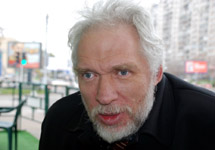
On the 50th anniversary of the execution of a peaceful demonstration in Novocherkassk NTV showed the film Gleb of the drunken "bullet-dura". He was made in the inherent at this TV presenter, an angry-clip manner, turning a folk tragedy into a Hollywood “horror” with an annoying show of corpses and blood. “Bullet-Dura” is not a film-investigation, but rather a random set of passages from other films where an attempt was made to investigate events on June 1-2, 1962. It is impossible to get an adequate representation of what exactly happened in Novocherkassk then from the film of drunk, although participants and eyewitnesses are present in it.
Someone, following the witness, who agreed that the workers were indignant due to the “increase in the rates”, perhaps he will think that the Novocherkassians simply were furious and rebelled after they raised their salary. In fact, everything was exactly the opposite. Simultaneously with the increase from June 1, food prices by 25-30% of the workers of the Novocherkassk plants by a third increased the rate of production, which, of course, was supposed to reduce salaries.
The main pathos of the film - see how bad the Soviet government was even with the relatively liberal Khrushchev, how ruthlessly she shot her people, who went to a peaceful demonstration, and even with portraits of Lenin and under red banners. Compared to this, the behavior of the current Russian police in relation to demonstrations of protest should look generally a model of humanism. After all, they do not shoot! At least for now.
With a number of assumptions of the author of the film, one can agree. So, drunk, reasonably questioned the official figures of the victims - 26 killed, of which 24 were identified. The film contains certificates of numerous missing people in those days in Novocherkassk, including children whom no one was looking for, about the secret burials of corpses of those who were shot in the surrounding ravines, that the wounded did not make documents in local hospitals and it is not known how many of them died (the official number of the wounded - can also be underestimated). With this in mind, the real number of dead could be several tens of exceeding the official figure, but rumors about hundreds of the dead were a significant exaggeration.
Drinking also gives convincing evidence that fire on the crowd, except for soldiers, also led from the roofs, dressed snipers and machine gunners from the KGB and special forces and that not only adults, but also children became victims of execution. The film clearly shows the inferiority of the re-investigation conducted in 1992-1994. It is in the film by the former military prosecutor General Yuri Bagraev. The investigation was then satisfied with the official figures of the killed and wounded, did not investigate the role of the KGB, although the head of the KGB in 1962, Vladimir Semi -Jewish in the film, admits that he was in those days in Novocherkassk. He probably commanded the mysterious snipers.
The investigation also did not find out who gave and carried out which orders and carried out, limiting himself to the initiation of a criminal case against Nikita Khrushchev, Frol Kozlov, Anastas Mikoyan and several other members of the Presidium of the Central Committee. And then it stopped the case of the death of the suspects. Against the seven -part, who was still alive then, no one initiated things. The author of the film is right when it indicates that the main wine lies with Khrushchev, without the sanction of which no one would dare to shoot an unarmed crowd. I note that Nikita Sergeyevich was not the first to shoot civilians. So, on April 1, 1941, a crowd of peasants from the Glyokovsky district of the Chernivtsi region (Northern Bukovina), whom the Soviet government managed to define in the same year, tried to leave for boyar Romania, but from the sanction of Khrushchev, the then host of Ukraine, was shot by Soviet border guards, who killed and injured about 50 people. When Khrushchev reported on the incident of Stalin, he gently reproached him: "... of course, it is possible to shoot people, but shooting is not the main method of our work." Khrushchev reproached and, becoming the leader of the country, if possible did without mass executions of the demonstrators, but sometimes retreated from this rule, such as, for example, in Novocherkassk in 1962 or in Tbilisi in 1956.
But Gleb of the drunken people is completely wrong when, among others, the responsibility for the Novocherkassk execution to the deputy commander of the North Caucasus Military District, General Matvey Shaposhnikov. He just refused to shoot people and put pressure on them with his tanks, and later tried to convey to the public the truth about the Novocherkassky events, for which he paid premature resignation and exclusion from the CPSU. From the court on charges of anti -Soviet activities the obstinate general was saved only by the fact that he was the hero of the Soviet Union. Meanwhile, among the military, the then commander of the SCVO, twice Hero of the Soviet Union, General Issa Pliev, who ordered his subordinates to use weapons, undoubtedly, agreeing his actions with the Minister of Defense, Marshal Rodin Malinovsky, who, in turn, probably acted as instructing Khrushchev, was directly responsible for the military. Just a month after the Novocherkassk tragedy, Khrushchev, on the recommendation of Malinovsky, appointed Pliev as commander of the Soviet expeditionary corps in Cuba, which included missiles with nuclear warheads. Obviously, Khrushchev had no doubt that Pliev without hesitation would use nuclear weapons against America, since he without hesitation shot his own people.
The film emphasizes in every possible way that Novocherkassk is the capital of the Don army, and the uprising is associated with the freedom -loving spirit of the Cossacks. Only by 1962 there were very few Cossacks in Novocherkassk. Here, and the testing in the civil war, and collectivization, and the Second World War, during which a significant part of the Cossacks left with the Germans, and then, being returned to Stalin, was in Siberia, far from their native places. After the Novocherkassk events, seven people were shot by the verdict of the Supreme Court of the RSFSR, which were not subject to appeal to the verdict of the Supreme Court: the village of Sofinka Balakovo district of the Saratov region Alexander Zaitsev, a native of the city of Nikolaev Boris Mokrousov, a native of the village of Davisa Pereyaslav-Khmelnitsky district of the Kiev region, Andrei Korkach, a native Sotnikov, a native of the city of Bakhchisaray in Crimea Mikhail Kuznetsov, a native of the village of Abalakovo, the Yenisei district of the Krasnoyarsk Territory Vladimir Cherepanov and a native of the village of Fastovskaya, Tikhoretsky district of the Krasnodar Territory Vladimir Shuvaev. Of the seven executed Cossack, there could be one Shuvaev, and even that Kuban, and not Don. Among the other seven defendants who were judged with them, but sentenced to various terms of imprisonment, there were only four natives of the Rostov region, but not one of them was a native of Novocherkassk. In this city, visitors from all over the USSR prevailed. Many of them had a criminal record and settled in Novocherkassk because they were forbidden to live in regional centers. Such a composition of the population, perhaps, contributed to the fact that in response to raising prices in the city, a spontaneous uprising broke out.
In conclusion, I note that many documents from the KGB archives dedicated to the Novocherkassk uprising are still not declassified. Their publication could shed a new light on those tragic events, clarify the number of victims, the goals of the rebels and the process of deciding on the execution of demonstrators.