
Translated material
Bulgakov: Satanic poems
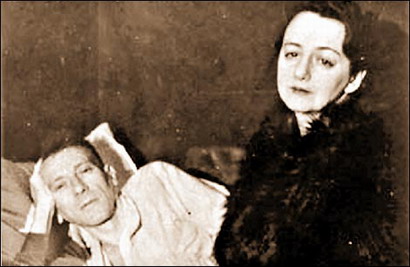
Like any TV, I recall the classic from the show to the show. So the turn of Mikhail Afanasevich came.
I am grateful to the authors of the series, in fact, first of all for the fact that those inconsistencies that you swallow in the text without noticing, just get out in the movie transition, cut their eyes and hearing.
What, indeed, is the connection between Pilate and Likhodeev? Between Love Story and Christ? Maybe Borto is to blame - not so removed? No, the case will not work. I took it off - as it is written (I took it worse, it was better to take it off - not the essence). He took off in good faith and in detail. And how to discuss the casting of actors, it seems to me that it is worth thinking about another: what is they shooting? Do you understand what romance and what the classic wrote about?
For me, this is a mystery.
And I would like to get stiffness and raise a few questions. By the way: they are self -evident, directly spelled out in the text of Mikhail Afanasevich. But for some reason, when you talk about it out loud, they shy away from you, as if you were saying something non-altitude, simply-indecent.
But indecent questions are always the most interesting. Therefore, here are a few.
Devil's conversation on a bench
I remember that in the 1960-70s, we, Soviet schoolchildren-students, discovered eternal topics-Jesus, the Gospel, the immortality of the soul-through the "masters". This is one of the reasons why it has become really cult. Say, much blocked no worse painted (from my point of view) “12 chairs” - “golden calf”. Of course, in the “household parts” of the Bulgaks no more strongly (in my opinion-weaker), but Ilf-Petrov did not serve for Soviet intellectuals in Yershalaim. And Bulgakov served. Therefore, he literally became the subject of the quasi-religious cult in the Erzats-Atheistic and Erzatz-religious society (exaggeration? Who remembers the 1970s, I think, will agree-if exaggeration, then small).
But what kind of “Erzats-religion” is it written in the “Master”?
First. To begin with, such a question - is there God? Or not?
“The proof of Kant,” the educated editor objected subtly, “objected,“ is also unconvincing.
- Take this Kant and for such evidence of the year three in Solovki! “Quite unexpectedly, Ivan Nikolaevich throat.”
Of course, this is a paraphrase of Sharikov’s approach, who was disagreeable with both Engels and Kautsky, suggested that the German mutout to take away and divide.
Well-Bulgakov again mocks the Schonder-Berliosis and the Homeless, this pretty ball?
Yes, of course ... only now:
“But the proposal to send Kant to Solovki not only did not hit a foreigner, but even delighted.
“Exactly,” he shouted ... “He was there the place there.”
The famous "if there is no God, then, then, it is asking who controls the life of the human and all in general a schedule on Earth." And as samples of “effective management”, two are given - “lung sarcoma” and a sudden hit under the tram. "Isn't it more correct to think that someone has been managed with him completely different?"
Ah, God at Bulgakov! Sarcomes and trams (the master has a special attitude towards these mechanical beasts). “He is not a foreigner! He is not a foreigner! - He thought, - He is a stranger subject ... But let me, who is he? "
“Well, we understand with you,” as one hero Bulgakov said with a wise smile that he was a professor of black magic. Woland, Devil, in other words. Yes. This is we understand. But another - understand? The final logical conclusion from the story of Woland about the structure of the world can we make?
Namely: there is no God in the world. The devil is quite enough, the sarcoma and trams - according to his part! So he controls the dwell-creator.
Bulgakov speaks about this extremely simply. The proof of the existence of God for Kant was ridiculed. It is accepted (Troika: Woland, Ivan, Berlio) to send the old man Immanuel to Solovki, the very place is grunt. Yes, the dvolla is for one tooth. So, evidence of the existence of God flew under the bench. As Laplace expressed, "I do not need this hypothesis (about the existence of God)." But: “I beg you goodbye, believe at least that the devil exists! ... Keep in mind that there is the seventh proof and the most reliable! And it will be presented to you now. ”
Devil's conversation on the phone
Now let's move away from the bench on the patriarchals, especially since Berlioza still does not help (is it worth it?), And we will briefly recall the life of "M.A. Bulgakov, Esquire."
1914. 1917. 1918-20. 1920s. 1930s. 1937.
God is there? And what did he do all these years, where he hid - let me ask?!
Could - seriously! - To believe in God, in the Russian Orthodox God, a smart Russian Orthodox man who saw everything that the doctor Bulgakov saw? He saw it - in the white, the red, the green. Believe not at the level of rituals, but in mind and heart? “So what about this check ... What can there be a finger, when there is no God? I have long ceased to believe in these nonsense. Since the fifteenth year, as he looked at the war, he decided that there was no God. No! If he was - he would not have the right to allow people to such a mess. We - the front -line soldiers - canceled God, left him to one old people and women. ” This says the combat Yesaul gr. Melekhov. What category do you order to attribute to Bulgakov’s military doctor - to old people or women?
God is not. And the devil is.
Before that, Bulgakov did not just deductively think of (“If there is no God, then who controls?”). He knew this devil - like everyone else.
We all went under God.
God has under the very side.
He did not live in heavenly Dali.
It was sometimes seen
Living. On the mausoleum
...
Once I walked Arbat
God rode in five cars.
Sulfur. The morning was squeamish.
He looked brutally, wise
His all -seeing eye,
With an all -pervasive look.
We all went under God.
With God is almost nearby.
Two details. Bulgakov knew: this is not God, but the devil. Lee Bulgakov did not know - after all, he talked to him on the phone (and this is the second detail)!
And now I ask you to transfer to the beginning of the novel, to the epigraph.
“... So who are you, finally?
I am a part of the power that always wants evil and always makes good. ”
Yes! Since there is no God, then the devil will work part -time. If there is no God, "then everything is allowed." Nonsense! Sophistry of a person who knows what God is, and the leading common disputes on these topics. And Bulgakov approached - I had to come up! - To the question practically. Not “if”, but “since” God is “not anyway”, then it remains to hope - for whom? Exactly. The devil is all and hope!
Bulgakov also knew this devilish dialectics - not from books. The devil liked the "days of the turbines." The devil spoke to him, gave him a work in the Moscow Art Theater. The devil asked him if he was tired of the Bolsheviks and whether he wanted to leave. He did not succumb to temptation, he replied that he was a Russian writer and wants to stay in Russia. The devil hung up - and a further conversation with him, the remaining 10 years of his life, Bulgakov led only in his mind.
It was a good devil - at least Bulgakov wrote about him. Bulgakov tried to love him - although this is a difficult matter, the play “Batum” to the devilish taste seemed inedible.
Dream of fascism
The devil “attached the history of Russia under the tram”, and then firmly moved the tram of Russian history along the necks of thousands of polers-berlioz. "The most important incident - the editor of the magazine crushed!" But for Bulgakov - judging by the diary of Margarita (he is published) - it was quite important and ... not unpleasant! He was not so bloodthirsty, “poor and bloodied master”, but since 1918 he accumulated from him, to see, to see, what a count of these stilers-Trotsky and Zinoviev, Averbach-Latunsky and Meyerholds ... And that on the way the tram crushed several million “Wulfs that are not to blame,” well ... the same as the devil!
Yes. Alas, there is no single truth. True, Bulgakov is not the truth of Meyerhold, the truth of Mayakovsky is not the truth of Yesenin, though Mandelstam is not Pasternak. And the devil was one. As they say, "one for everyone, we will not stand at a price."
Bulgakov lived in the hell of the civil war. And he concluded: there is no truth on the side of the whites. It was not a conjunctural move, but a deep conviction-by the way, the common for almost everyone who has closely encountered the charms of the “volunteer” “Grabi-Armia”. Moreover, there is no truth on the side of the Reds. Well, it’s absolutely nothing but horror, chaos, delirium (complete horror!), On the side of the free, rebellious people - those very free bakeries, Petliurists.
Where is the truth?
On the side of a strong man who is one! - He is able to restore order in this hell. AD will remain hell - but there is still nothing else, and it will be at least ordered hell.
My free fantasies are “on the topic of Bulgakov”? Why so ... Who is the only hero of the "running"? Salunty Golubkov? Fool Korzukhin? Charnota's pretty? Clear - no. The hero is highlighted, named (in the list of actors) without adding, by name: Roman Valerianovich Khludov. Yes, he is not "positive." It is much more important that he is just a hero, a center, a magnet, a logical focus. Everyone runs around him. He wants evil, he creates, of course, good (saved Golubkov-Serafima).
But holudes are, so to speak, only a draft drawing. Woland, clearly, will be more abruptly (our friend Slashchov against Stalin is just some kind of unreasonable Kant).
A real hero will decide the "Preobrazhensky theorem." In fact, what is the blue dream of the ideal intellectual of Preobrazhensky? Parliament? Freedom, so to speak, words? Civil society? “City! - shouted Philip Filippovich. - City! This is only that. And it doesn’t matter if he will be with a whore or in red cap. ”
A dream came true ... Professor! By 1937 (the moment of the appearance of Woland in Moscow) there were enough city. "Vocal impulses" of the 1920s, so tormented by prof. Preobrazhensky, were pacified-so much so that the king, so to speak, Ivan Vasilich turned over in the coffin of horror ... True, under the fodder of the city, the honest muzzle of the Dobryak-Sharikov, finally humanized-well, so not everything was foreseen by the old Preobrazhensky. Devilry, one word is dialectics ...
Sharikov-1937 = fascism. Soviet fascism (Bolshevism) in the most acute, paranoid-terrorist form. And Bulgakov’s attitude towards him is not at all simple.
For the political correct of the modern intellectual “fascism”-further undivided (and very abstract, honestly) cursing (like “Zionism” for comrades-patriots). But this was not always! The intellectuals turned away from fascism completely when he died. But when they knew him to the touch, many were not averse to continuing his acquaintance. At the time of its flowering (1920-30s), the intelligentsia split. There were anti -fascists, there were fascists, the fascists were also all the colors of the rainbow ... Heidegger, Gamsun and Richard Strauss liked the fascism brown, and the gap, on the contrary, was red. As you know, Mayakovsky and Ezra Pound, Berdyaev and Ustryalov were sick with fascism.
So Bulgakov’s-a strong hero hero (by the way, in no novel of Bulgakov there is not a word about the condemnation of the Chekists. On the contrary, they are always a power that streamlines chaos), the devil as the creator of the world, the good in the form of the swelling of the heads of the Schwonders-Berliozam.
And now - the apotheosis of the Bulgakov world. The highest degree of session of black magic is the ball of Satan. The Dolish justice, about which the master prayed to his pockmarked Woland, accomplished ... Master is poisoned, resurrected, released, the cut head of Berlioz received by her faith.
The ball is over, candles went out. The devil finished work in Moscow - it's time to fly away. Pretty - little by little.
And right-the 1937th ended. The session of black magic ended, where the whole country, from Brest to Vladik, ended, the judicial balls, the sessions of black magic, and the transformation of the People's Commissars and professors into poisoners of wells and evil sorcerers ended. The “morning of our homeland”, reassurance, “Berievskaya thaw” of 1939 came.
Humanism
So - Bulgakov sympathized with Soviet fascism?
Partly - of course. But to call him a “fascist”, of course, the language does not turn.
The attitude of the master towards Woland, as they say, is "ambiguous." Stalin attracted-Uzhasal-shutdown, bocked Bulgakov. Bloody feasts and balls (already in reality - judging by the diary of Margarita) also evoked complex feelings. Both fear and misunderstanding ... but also understanding (when they destroyed the "Latunsky" masters especially dear to the heart). There was no question of unambiguous, without any shades of disgust and rejection. About unambiguous delight - even more so. The "exposure" of the session of black magic did not work - even in the diary.
And at the same time, with all the reverseness of the word “humanist”, this, of course, is about Bulgakov. The nightmare of 1914-1940 (all the life of Bulgakov!) Humanism trampled into such dirt a million times, into such blood, into such blind horror and a dumb cry ... But Bulgakov remembered Gelle-in fact, this is a reminder of the guilty (there are no innocent in this world!), But causing pity, heart pain and the main nightmare of nightmares.
Doctoral dissertations have already been written about Bulgakov’s humanism - so it is too long to develop this topic for a long time. All this is true, who would argue, of course, M.A. He was a humanist. It was just then that there was a slightly different humanism ...
Pilatech
And the last. The most obvious and most amazing to me.
It is difficult to find a more anti -Christian work in Russian literature (well, not Emelyan of Yaroslavl to consider literature) than a “master”.
“But I once looked into this parchment and was horrified. Resolutely nothing of what is written there, I did not say. I begged him: burn God for your parchment. But he pulled it out of my hands and ran away. ”
Indeed, the Bulgakov could not burn the New Testament, in particular the Gospel of Matthew. Even the Bolsheviks could not. He could do something else - to contrast the scripture with his novel.
Roman, where Yeshua is not the Son of God for starters. Where there are no miracles, no apostles, no secret party, no resurrection.
"What is it with you, whatever you grab, there is nothing!"
Note that for a Russian Orthodox person from a high -religious family, to write such a “apology of Jesus Christ” - ordinary blasphemy. And Bulgakov and the Bulgakov with his novel “Militant Old Believer” - perhaps, would not be demolished by the master of the head! .. Yes, this is not at all like the Soviet (post -Soviet) reader to eagerly enjoy the “master and Margarita”, twisting the cross on the finger. (It is very cute that the Russian Orthodox Church, so indignant at the “last temptation of Christ,” has no complaints about Bulgakov.) However, Bulgakov is deeply honest: where there is only the devil, what can be the Gospel ... By the way, if some priest asked him (imagine this priest in Moscow-1937!), WHAT IS WHAT I, and why are you, and why are you, and why are you. My father, in general, took that Yeshua Ga-Notsri, a wandering philosopher, a holy holy humanist anarchist-is Christ?! Pilate judged many, many executed Sanhedrin, many traitors were called Judas - the name among ancient Jews is very common. And what the reader perceives so much that from this and the whole glory of the novel is his reader, a matter. ”
In general, by the degree of his anti -Christianity, Bulgakov’s novel is similar to the poem of Ivan the Crimean, where the quite real Jesus is also depicted - only, of course, not the Son of God.
And the conflict there, of course, is the same. A strong man (Gene. Khludov, Prosecutor of Judea) - against a good person. Again, all the same - part of the power that always wants evil, creates one good. And again, the good is done by the hands of the Chekist Afrania, and again the “good” comes down to revenge on the traitor-Jude ...
In a circle.
To put it mildly, I do not pretend to be in -depth knowledge in the field of literary criticism in general, Bulgakovsteniya - in particular. Therefore, it is possible that everything that is written here is perfect nonsense, i.e. It is convincingly refuted by facts, quotes from the classic, logic, etc.
By the way, I will answer one more, very childish (and therefore almost inevitable) question: "And you, a good citizen, what about Bulgakov?"
Mikhail Afanasevich, thank God, does not need my assessments. It is ridiculous to say that "I (myself!) Recognize him as an outstanding writer." Indeed, funny. But much more funnier than another-in my opinion, Bulgakov is not so much read as they just read.
I just tried to read the novel “Master and Margarita” - to read with open eyes, literally what is written in it.