
Translated material
In Ethiopia, they found a "sleeping beauty"
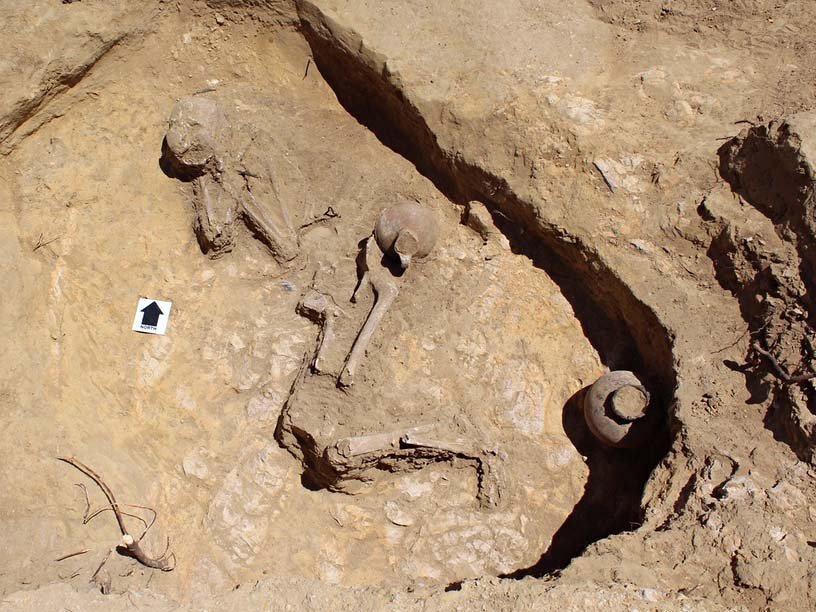
A group of British archaeologists, working in northern Ethiopia, made a number of finds dating back to I and II centuries. The discovered objects indicate the existence of early trade ties between the Roman Empire and the Aksumsky kingdom. This African state flourished in the I - VII centuries and served as a link between the Roman Empire and India.
Scientists investigated 11 burials in the capital of the kingdom, the city of Aksum, and discovered rich funeral equipment. The grave of the woman, whom they called the sleeping beauty, especially struck scientists. In her grave, a Roman bronze mirror and a richly decorated bronze spoon were found, which was used for cosmetics in that era. The black composition, with which the beauty once painted her eyebrows, was even preserved in the spoon. The woman had a bronze ring on the woman’s finger. She also wore a necklace from beads and a belt decorated with beads. This amount of jewelry indicates the high status of buried.
In the grave, two well -preserved glass Roman bowls, a clay jug, as well as a special vessel, a tear, were found. The expedition head Louise Schofield believes that the jug contained food and drink for a afterlife. Perhaps the remnants of the contents of the jug can be analyzed and installed exactly what offerings the inhabitants of the Aksum kingdom left at the funeral.
The researchers also discovered several buried warriors who wore characteristic large iron bracelets. Some of the warriors probably died in battles. In another female burial, a valuable necklace of 1065 colored glass balls was found, in the third - a glass vessel for perfumes.
As Luiza Chofild notes, scientists are known quite a lot about the Aksumsky kingdom from the 4th century, when Christianity was adopted there. The earlier period of history is much worse. The finds made by the expedition show that the active trading of the Axum with Rome began in the 1st century, while it was previously believed that trade relations arose only with the adoption of Christianity.
Now restorers are working with finds. Then the Aksum’s antiquities will be exhibited in the museum, the opening of which is scheduled for October. It is also planned to hold an exhibition at the British Museum in London.