
Translated material
Confessor Ivan Vasiliev
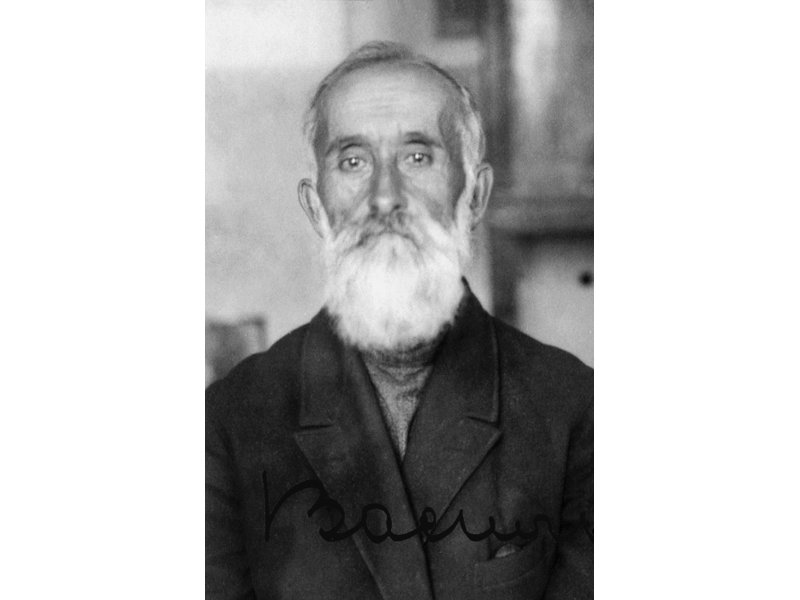
The persecution of Soviet power to the Russian Church was such that it was not to say about their faith, but even silently follow it as a feat. The new martyrs and confessors, glorified in the face of the saints did not come: believed, prayed and meekly went to their Calvarys.
“Polit.ru” recalls those who gave their lives for faith and by whose prayers the Russian Church is alive - even if almost nothing came to us besides the name.
Publications were prepared by Kirill Kharatyan (included by the Russian authorities in the register of foreign agents).
 Confessor Ivan Vasiliev
Ivan Vasiliev - the son of a locksmith from the village of Martyanovo Serpukhovsky district of the Moscow province. Since 1884, from his 15 years, he worked in the Harchevnaya shop of the Ryabov factory, where he became a clerk over time. After dismissal in 1922, he opened his trade.
Since 1919, he was the church headman of the St. Nicholas Church in the village of Buturlin Serpukhov district of the Moscow province, and the rector in the temple was the priest Konstantin Uarov.
In 1927, Komsomol members in the village of Buturlino decided to install a radio receiver on the church bell tower, but the believers opposed this, and the idea of young atheists failed.
In July 1929, 18-year-old Komsomolets Aksenov died in the village. Parents bought a coffin and everything necessary for the funeral, invited the priest to sing the deceased, having agreed to do this the next day at home. On the eve of the funeral, the chairman of the Komsomol cell of Belousov came to the mother and said that Komsomol members want to bury the comrade themselves, for which they collected money on a wreath and a wind orchestra, a red fabric for upholstery for the coffin was bought. At the same time, Belousov insisted that the funeral be without a priest. Mother did not agree, “since I already bought a coffin for my money, and if they had said before, I would agree,” she said later to the investigator. At 11 a.m., Father Konstantin came to do a funeral service. The brother of the deceased, active Komsomol member, without waiting for the end of the funeral service, took the coffin along with other Komsomol members and carried into a red corner. Father Konstantin walked for some time with Kadil behind the coffin. Belousov told the priest: "It’s enough for you to shut, maybe you will go to the red corner with us?" The father stopped and, without saying anything, went to his place. Arriving in a red corner, the Komsomol members abandoned the coffin with a red blade, arranged an honorary guard. Four hours later the photographer came and photographed them with a coffin, and when the orchestra came, they carried the coffin in the cemetery with music. The first rally was arranged by Komsomol members near the red corner, up to 100 people were present.
From the village of Levashov they carried a coffin in Buturlino. Another anti -religious rally was arranged in the square against the church. The speakers said that civilian funeral is better than church. From the people who gathered 500 people gathered, replicas began to spread: "Give the deceased to the priest that you are so burying as cattle." Confident in their permissiveness, the Komsomol members carried the coffin in the cemetery, where they again wanted to arrange a rally. The people began to shake their mother, telling her that burying so, without a priest, a sin and she should be ashamed, would her child burst out without a priest who should betray the body to the earth. Mother and sisters of the deceased did not let the coffin into the grave. A scream and noise rose, a crowd of people removed the Komsomol members from the grave, took the coffin with the body and carried it to the church.
Father Konstantin in the temple for some time expected whether they would bring the body to church. But the coffin was carried past the church. Father Konstantin, Deacon Sergey Troitsky and others, former in the church, began to gather home. A relative of the deceased comes and asks the priest to come to the cemetery. At first, Father Konstantin considered it inconvenient to go there, but then agreed. Approaching the cemetery, he saw that civilian funeral was coming. The wife of Father Konstantin, as well as the wife of Deacon and other people advised him to return back to church. A few minutes later, the relatives of the deceased come again and secondly asks Father Konstantin to come to the cemetery. While they agreed, the coffin with the body was brought to the temple, and Father Konstantin, along with the hairstyle, finished the funeral service.
On July 26, 1929, in the newspaper Nabat, published by the Communists of the Serpukhov Uyezd, a note was printed under the heading “by force they took off the coffin to the church”, signed by the pseudonym Ator.
“In the village of Buturlino,” the newspaper wrote, “there was a case that, in its impudence, surpasses all the others that the impudent priest is throwing out recently. In early July, the Komsomol cell buried her member Comrade. Aksenova by agreement with his parents without a priest. At four in the afternoon, from the premises of the red corner of the village of Levashovo, the funeral procession with the orchestra moved towards Buturlino. But Pop decided not to give his position without a fight. To achieve his goal, he mobilized the entire church asset. The funeral procession of the church asset began to meet groups of 10-15 people, and immediately began campaign against civilian funeral. The agitation was led by a priest who was in the crowd behind the coffin. At a rally arranged on the square Komsomol members in order to clarify civilian funeral, a representative from the education of Comrade. Tchaikina was not allowed to finish the speech. After the rally, the coffin was carried to the cemetery, where the Komsomol members wanted to utter a tombstone. But the crowd collected by the priest did not make it possible to pronounce a single word. When the Komsomol members began to get ready to score the coffin, the wife of the priest, the wife of the clerk and peasant Bykov raised a hysterical scream: without legend, it is impossible to bury the earth ... local authorities need to bring hooligans to justice. ”
On behalf of the head of the Serpukhov district administrative department, an investigation was conducted by the circumstances of the incident described in the article and concluded that the facts were stated incorrectly, there were no “hooligan actions by the priest, and this case occurred due to the fault of the Komsomol organization, since the latter did not agree with the relatives of the deceased, that they would bury him without a priest”.
On August 30, 1929, the OGPU launched a criminal case against the priest Konstantin Uarov, who served in the Nikolsky church in Buturlino. The headman of the temple Ivan Vasiliev was accused of "spreading false rumors about the innocence of the priest." There were false witnesses who reported to the OGPU that Ivan Vasiliev said:
“Here in the Mikhnevsky district at the congress, as printed in the Nabat on July 31, it was said that 39 churches will be used for the cultural needs of the district, it is necessary to declare in the CPSU (b) that the huge majority of the peasants are reasonably looking at this business, it is better to build new schools, and to preserve the old buildings, for which they were shouted up to 300 people who were shouted: The Bolsheviks do not know what they are doing, you are talking correctly. "
On September 3, Ivan Vasiliev was arrested and imprisoned in the Serpukhov House. On the same day he was interrogated. He answered the questions of the investigator: “During the funeral, I was not present and therefore did not see anything and I do not know. According to the priest Uarov, he was asked by the mother of the deceased Komsomol member to serve the all -night and the next day to take the dead man. Why did the priest Uarov captivated him in the church, I don’t know. ”
On September 16, the investigation was completed. The headman of the temple Ivan Vasiliev was accused of “that he tried to create public opinion in defense of the priest Uarov and campaigned among religious-decreased workers and peasants for an organized struggle against the policy of Soviet power in relation to the church.”
The investigator, however, stated that “in the case there is no sufficient testimony indicating the direct part of UAROV and Vasiliev in the commission of the crime attributed to him under Article 58-0, part 2 of the Criminal Code, in accordance with Article 202 of the Code of Criminal Procedure, the present case is terminated by the further investigation, but, taking into account ... the social danger of the accused was decided ... to send the case to the OGPU with the application for the application on the application of the application for the application of the application for the application administrative expulsion ... for a period of three years for each. "
On November 4, 1929, the Troika of the OGPU sentenced his father Konstantin to imprison the concentration camp for three years, and Ivan Vasiliev to send for three years in Kazakhstan.
Ivan Vasiliev was sent to the town of Zhamshi, the Karaganda station of the Caunrad district, Aktogai, where he got along with the criminals for six months. The expulsion expired on September 3, 1932, but he did not receive his release. Due to the harsh conditions of the exile, Ivan Vasiliev, already an elderly person, became very ill with the rheumatism of his legs. Because of acute pain, he could not walk. The dugout in which he lived was 3.5 by 3.5 meters in size, and three people lived in it. The place of the link was more than 400 miles from the railway, why, even at the end of the deadline, it was not easy for a sick person to leave there.
The son of Ivan Vasiliev petitioned for the early release of his father, indicating the reason that the sentence expires in October, and if the paper on the release delay for at least a month, then due to weather conditions and complete obstruction of the desert at that time, the father will not be able to leave for 7-8 months. On December 4, 1932, relatives received a telegram, and then a letter from the priest Skvortsov, who was serving his sentence with Ivan Vasiliev, where it was said that their father was mortally ill, his arms and legs were taken away and there was nothing to help him.
Ivan Vasiliev died on December 6, 1932 and was buried in an unknown grave.