
Translated material
What do our rulers do?
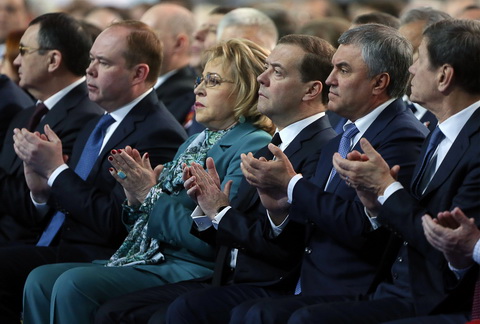
"What are they doing?!" - A very common assessment of the actions of the Russian leadership. His actions often seem strange and incomprehensible not only to the general public, but also to experts. Meanwhile, behind them is the logic of a specific style of thinking, even if the original axiomatics of this logic seems doubtful.
So, three sources and three components of the thinking of the ruling group of the Russian elite: traditional Russian strategic culture; professional socialization of this group; The individual profile of President Putin and the subculture of his closest associates.
Strategic culture as a view of the outside world
Strategic culture is a set of views, beliefs and approaches of the elite related to foreign policy and the “big strategy”. It is this culture that determines the actions of persons who make decisions in the field of security and foreign policy. Their reaction to foreign policy events seems to them natural and even inevitable.
The genesis of Russian strategic culture goes back to the pre -Soviet era, under the communist rule it was articulated. In modern Russian thinking, the following provisions of traditional strategic culture are reproduced: recognition of the post -Soviet space by the sphere of Russian influence; The special importance of Ukraine as a bridge to the west and at the same time buffer from potential Western aggression; The perception of Ukraine and Belarus as “accidentally independent” - units that have broken off as a result of the collapse of the Soviet Union (which, in turn, was the result of the US subversive actions) from the maternal Russian people and Russian culture.
In the optics of Russian strategic culture, Ukraine and Belarus are artificially created and inferior states, whose formally independent existence is justified only in the event of their strategic submission to Moscow. The drift of Ukraine and Belarus to the West is perceived as an attempt on the national identity of Russia and a dangerous challenge of the country's security.
Probably the most important and most famous ingredient in Russian strategic culture is the idea of strategic patience. The Russian elite is confident that the Russian people are ready to endure hard and suffering in the face of an external threat for sure: the Russian economy is not dynamic, but stable, it adapts to new sanctions and has a large margin of strength; Patience will lead to the fact that sooner or later a window of capabilities will open before Russia and it will achieve its goals.
At the end of 2016, it seemed for some time that this idea worked: Brexit, the crisis in the European Union and Trump’s victory in the presidential election looked like a window of opportunities for Russia. However, expectations did not materialize. Nothing, it didn’t work out then, it will work out later - now the Kremlin strategists think. For example, in 2020, when they expect a global economic crisis, which they are actively preparing.
The influence of corporate identity
Russia is the only country in the world (and, possibly, in world history), which is ruled by former and current intelligence officers. The corporate identity of the KGB of the USSR affects politics in three main aspects.
Firstly, politics, especially external, is seen in a conspiracy light. Any unpleasant and unacceptable actions for the Kremlin are perceived as a conspiracy inspired by the West. Particular anger caused democratic revolutions in the post -Soviet space, primarily in Ukraine, the main reason for which is considered the “subversive activity” of the United States. The cause of protests in Russia in 2011-2012 also believes the actions of the United States and the associated Russian oligarchs.
Paranoia is a generic line of special services around the world. But only in Russia do they govern the country.
Secondly, the methods of special services are transferred to the domestic and foreign policy of Russia and are used as key tools. Attempts (sometimes unsuccessful) to corrupt European leaders, support for populist parties and movements in Europe, cyber attacks, massive propaganda on social networks, etc. - all this was borrowed from the arsenal of special services and received the generalized name “hybrid war”.
In domestic politics, the best controls of management are blackmail, selective terror and planting atmosphere of fear. That is, reproduced - perhaps partly unconsciously - Modus Operandi Soviet special services.
Thirdly, the Chekists are characterized by a mania of control. Any uncontrolled activity - in business, culture, civic activity, politics - is considered as potentially subversive, and therefore subject to eradication or control.
Putin's individual profile and subculture of "boys"
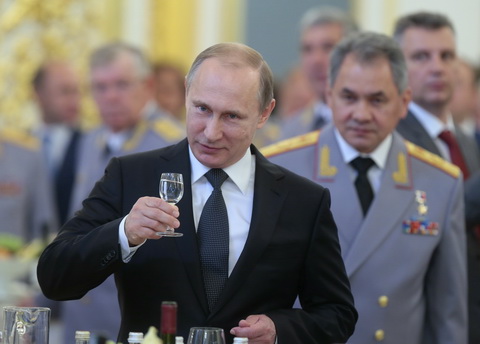
President Putin is not much occupied by domestic policy and economics of Russia, he believes that these spheres as a whole are successfully controlled by his administration, the government and the Central Bank. The main area of its interests is foreign policy and defense construction, it is in them that Putin’s personality gains a bright and most noticeable embodiment.
To understand the influence on politics, the most important are the two aspects of Putin's personality. Firstly, the Messianic complex formed over the years of presidency. Putin is convinced that it was he who - the person who raised Russia from his knees restored its power, and that the Lord himself leads it. Putin's religiosity is not a game of public, but a genuine feeling.
From the religious messianism of Putin, his specific view of foreign policy follows. He considers it not as interaction, sometimes conflict, states and countries, but as an arena of confrontation between mystical forces, where Putin and Russia personify the forces of light, and the USA and Great Britain - the forces of evil. The environment of the Russian president largely shares his views. The Kremlin is sure that the main goal of the enemies of Russia is to overthrow directly the Russian president. It is easy to guess that such an approach does any communication with the West, although Putin personally, not without sympathy, belongs to Trump.
The second key aspect of Putin’s personality is the subculture in which he was formed. Judging by the biography, Putin grew up among the so -called real (correct, specific, clear) boys, whose fundamental principles are more than close to the principles of officers of the Soviet KGB. This is a cult of power; intra -group democracy; superiority of the group over the ordinary population; The right of the group is to take tribute from the ordinary population, and its power over the population is based on normal law, and not on the law; the permissibility of violence against a weak and unorganized population; respect for strength and capable of fighting off; The permissibility of lies and deceit is the main thing to become a winner (cm. An excellent analysis of the “boys” subculture: Stevenson Svetlana. Life according to concepts. Street groups in Russia . M., 2017). The main idea of the Moral Code of the “boys” is extremely simple: strength is the only source and, along with cunning, a key tool of power, everything else - law, morality, public opinion - does not matter.
A number of participants in the “near circle” of the president were also formed in the subculture of “real boys”. Many (outwardly) political and economic practices of modern Russia are perfectly explained and described by this subculture.
Thus, we are dealing with the consistent, holistic and internally logical worldview of the ruling group of the Russian elite. It cannot be destroyed or questioned by moral, cultural or intellectual criticism from the outside. Indeed, to this day, this thinking made it possible to successfully lead the country and achieve group goals, that is, it was effective. Therefore, it will begin to collapse only in that case (and nothing else!), If and when its practical results lead to serious defeats and failures.
Author - P olive analyst, Doctor of Historical Sciences
The original can be read here
Photo: 1. Ekaterina Stucina/Press Service of the Government of the Russian Federation/TASS
2. Mikhail Metzel/TASS