
Translated material
Very timely list
In society
 Very timely list
September 4, 2012 Sergey Gogin
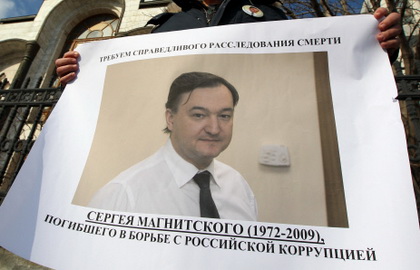
The Magnitsky Act, approved by relevant committees in both wards of the US Congress, can be adopted this fall. Europe did not stand aside: in early July, the OSCE parliamentary Assembly adopted the Magnitsky resolution, which also calls on the authorities of the member countries of this organization to introduce visa sanctions against the persons responsible for the death of Magnitsky and other gross violations of human rights in Russia, and freeze their assets in these countries. The Russian Foreign Ministry, as you know, threatened the “tough answer”, and the State Duma announced in this case to accept a symmetrical list for foreigners who infringe on the rights of Russians abroad. The adoption of the Magnitsky List will overshadow Russia “getting up from the knees”, as pseudo -patriots understand it, but all honest citizens, I think, should be welcomed by the adoption of such a list, as well as similar to other cases related to human rights against corruption.
Usually, evaluating the consequences of the adoption of the Magnitsky List, analysts pay attention to the domestic political factor. Since the list will complicate the life of those who are accustomed to steal in Russia, but to spend a well -stained abroad, the list can cause discontent of part of the Prochrevsky elite, bring a split into it, as a result, power in Russia will have to either change, or at least renew the benefit for democracy. But even if we underestimate the ability of the Kremlin bureaucracy to rally, there is an economic factor that acts slowly, but true.
People from lists like the Magnitsky List, deprived of the opportunity to export and legalize everything taken away and loot in the West, all these sawlifters and rollbacks, will think where to put such a break in money. They just have to save or invest all this within the country. As a result, they will be interested in the preservation of their assets, they will want guarantees of their investments, while today there is no need to talk about the inviolability of private property in Russia. The best guarantee of investments is a game according to the rules established for all, that is, really existing laws, legal culture. Thus, the new elites will slowly strive for the rule of law and begin to influence power, pushing it in this direction. This is similar to a new wave of initial accumulation of capital: yesterday's bandits, having chopped capital, at the next stage they strive to “go out into the nobility”, get public recognition, and be legalized in public opinion. They change gold chains to tuxedos and butterflies, become outwardly respectable businessmen, and their children and grandchildren who grew up in a civilian environment are almost no different from other civilized citizens. In other words, sufficiently detailed “lists” can lead to a peaceful evolution of the regime, which will move towards greater predictability for purely economic reasons, from the only monetary interest of new elites.
The "list of Magnitsky" is useful primarily to Russia, although the benefits will manifest only over time. To do this, a whole series of lists should appear where all investigators who have falsified criminal cases should be included, all judges who sentenced unlawful sentences, all officials who were related to corruption transactions, and security forces who used the torture. The list of Khodorkovsky-Lebedev, a list of Alexei Kozlov, lists of all innocently planted or killed. (The only thing that should be taken care of is that the lists are quite “clean”, verified, so that there are no people not involved in corruption and violations of human rights.) Crooks and thieves will receive a signal: you have no place in a civilized society. If the defendants in these lists are forbidden to invest in any legal assets, it is forbidden to use the benefits of Western civilization, including children's education, rest in elite resorts and inspection of the architecture of ancient European cities, then they will have no choice but to arrange the West in their country. Everything will happen almost according to Marx with his doctrine of the basis and superstructure: the basis - the capital that must be invested and increased, the superstructure is the public system that contributes to this, with all its attributes: an independent court, the rule of law, honest elections, free media, etc. It is not for nothing that the Americans called their bill Magnitsky Rule of Law Accountability Act of 2011, that is, the “Act of Magnitsky on the subordination of the principle of the rule of law” (by the way, in English “law” and “law” is translated by the same word Law , which says a lot).
Perhaps this proposal seems too radical, but it is excused that decent people will not fall into these lists and will not suffer from sanctions. The worst if, in revenge, the authorities come up with any muck for its citizens: it will launch a new round of repression, let's lower the “iron curtain”. It remains to be hoped that the middle class has already been formed in Russia - people who are used to the good thing that brought liberal reform: a decent car, rest in Spain or Italy, even in Turkey, if only “All inclusive”, a McCartney concert in Moscow, a trip to the World Cup or Olympics in London. It will be difficult for these people to explain the benefits of the “iron curtain” and good intentions of repressive power.
The role of Europe in regarding the “lists” seems even more important than the role of the United States, because our crooks and thieves, oddly enough, consider themselves Europeans, reach for Europe, buy houses here, go here on vacation, strive for this civilization. Therefore, the adoption of the "lists" of the European Union countries will have even a stronger effect than the American "Act of Magnitsky".
Ulyanovsk
Photo by RIA Novosti