
Translated material
Status: running
Neither the United States, nor China, nor Russia can no longer ignore the successes of the DPRK missile program. Blackmail was a success, and nuclear deterrence is about to collapse forever
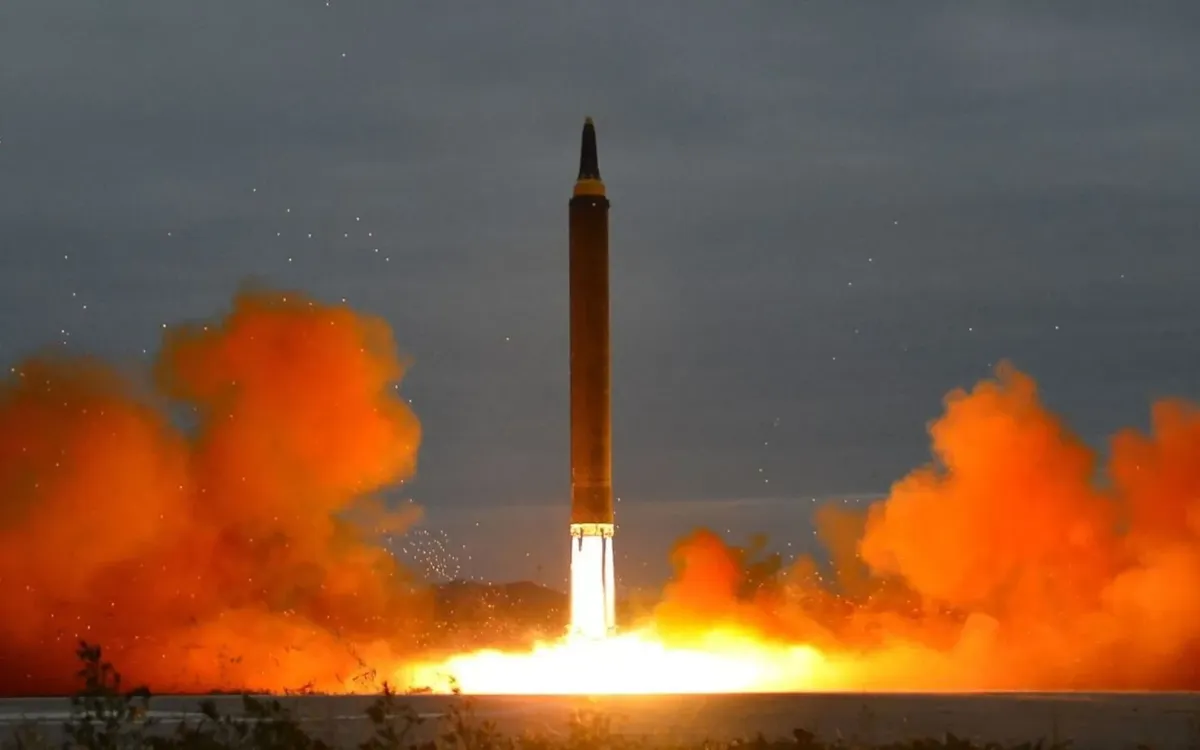
For thirty years, the DPRK’s efforts have been going on to create their own nuclear missile potential, and everyone is somehow used to the fact that Pyongyang regularly threatens to burn with nuclear fire either Washington or the US troops in East Asia or the US Pacific Island belonging to the United States.
But threats remain threats, North Korean missiles either fall into the sea, then explode in the air, and the nuclear devices tested underground are relatively low -power. All these years, the Russian General Staff diligently underestimated the North Korean missile-nuclear threat, based on the fact that their missiles are not aimed at Russia, that they are unreliable, and "Koreans are not idiots to actually use them."
Today, the situation has changed dramatically: after many years of effort, the situation has established the production of relatively reliable multi-stage ballistic missiles of medium and larger range: “Shzason-10” with an estimated range of 2.5–4 thousand km, “Khusason-12” with a range of 4-6 thousand (was launched on August 29, flew 2700 km above the Japanese sea and over the hockey sea and the hockey and Fell into the ocean). There is also experienced by a relatively small range, presumably the intercontinental missile (MBR) “Shzason-14”. Koreans also work out the ability of warheads of new missiles, without destroying, to enter the dense layers of the atmosphere.
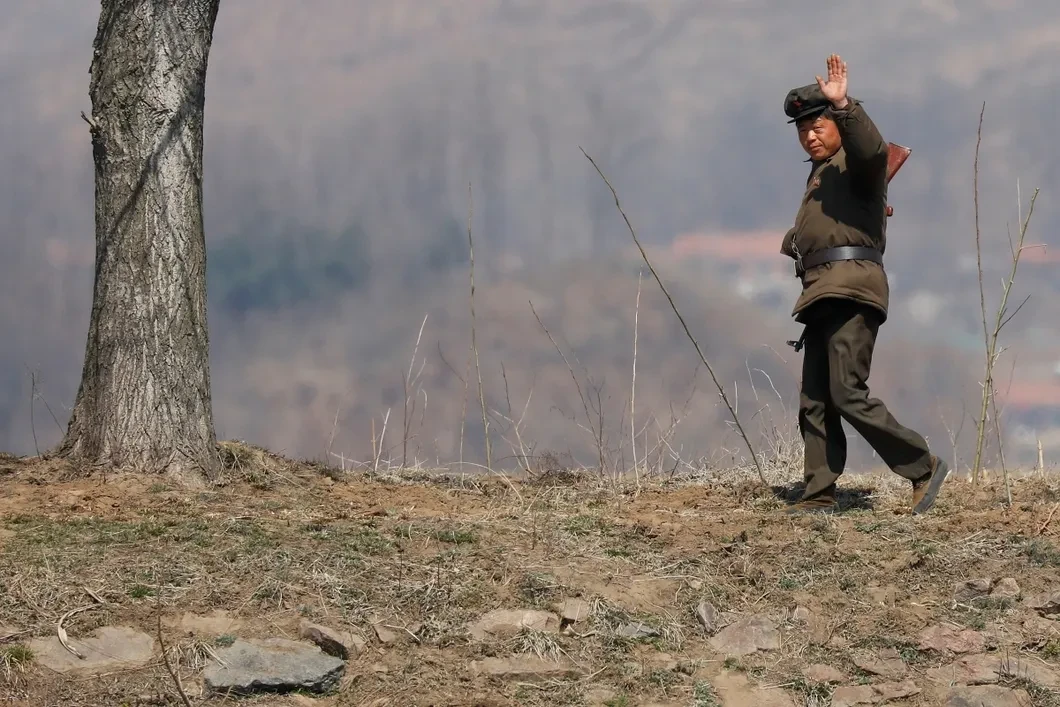
This missile-nuclear story began in the eighties: in the DPRK they copied and established serial production of the Soviet single-stage operational-tactical rocket R-17 (known in the West as Scud-B). The Koreans increased the source scud-b (300 km) to 500–700 km, lengthening the missile and reducing the discharge weight (option Scud-C). Korean ballistic missiles were almost immediately sold to the Middle East and used to shell cities during the Irako-Iranian war. In 1991, Saddam Hussein fired at Scud-sviv and Saudi Arabia, interrupting a lot of people. In the nineties Koreans “soldered” in one block 4 Scud-B missiles with four relatively low-power RD-21 missile engines, and the Nodon missile with a radius of up to 1,500 km and a 1 ton-toned missile was obtained. Koreans immediately sold “Nodon” to Iran, where they helped to establish its production under the name “Shahab-3” (covers all Israel, the south of Russia and takes out to the Balkans).
But an attempt to make on the basis of the same technology multi-stage MBR “Tepkhodon-1” and “Tephon-2” failed with a bang-other much more powerful engines were needed. This problem was finally solved this year-the DPRK was established by the production of an analogue of the Soviet RD-250, which was developed in the sixties for the heavy Soviet ICBR R-36, known in the West as Satan. Heptil RD of the Academician Valentina Glushko systems are reliable and effective, and although hephyl itself is terribly poisonous and carcinogenic, in the PRC and in the Russian Federation they continue to use it massively for military and civil commercial purposes.
It seems that it was on the Analogue of Glushkovsky RD-250 that the current rocket of the Shzason family flew. The way the Koreans jumped out of the RD-21 to RD-250, indicates that technological solutions and samples for copying they got somewhere in the former USSR. Moscow and Kyiv were poked with a finger at each other, Kazakhstan could be a source of leak, where the R-36 was deployed and where they were repeatedly launched from Tyuratam, which now, however, does not matter-engines, rockets, and hepttil Koreans now produce themselves.
It seems that one step remained, and Pyongyang will achieve the desired - Washington will be forced to enter the DPRK into the so -called “nuclear deterrence” mode when both sides are able to cause unacceptable damage to each other, and therefore must avoid direct military clash with all their means. Washington will be forced to enter into negotiations and make concessions in exchange for Pyongyang’s obligation to “freeze” some aspects of his nuclear missile program. The DPRK’s leadership really does not really want to fight.
They created a nuclear-nuclear weapon for “restraint” (blackmail) to be fed, supplied, guaranteed the safety of the regime and bear investments, and the Pyongyang will be capricious and constantly violate obligations.
Moscow, agreeing that the DPRK violated the requirements of many UN resolutions, categorically objects to any new sanctions: it is necessary, they say, to sit down at the negotiating table and resolve the issue exclusively with peaceful means, without driving the Koreans in the corner. Pyongyang, in fact, wants the same. Moscow, it seems, was ready to impose a veto in the UN Security Council on the United States proposed by the U.S. Resolution No. 2371 with a new harsh package of sanctions. Russian diplomats criticized her quite sharply, but received instructions to vote “for” August 5, since they decided so in Beijing. In the context of an increase in confrontation with the United States and the West as a whole, Moscow cannot afford disagreements with the only remaining strategic partner and is forced to in the Korean issue behind the Chinese ship.
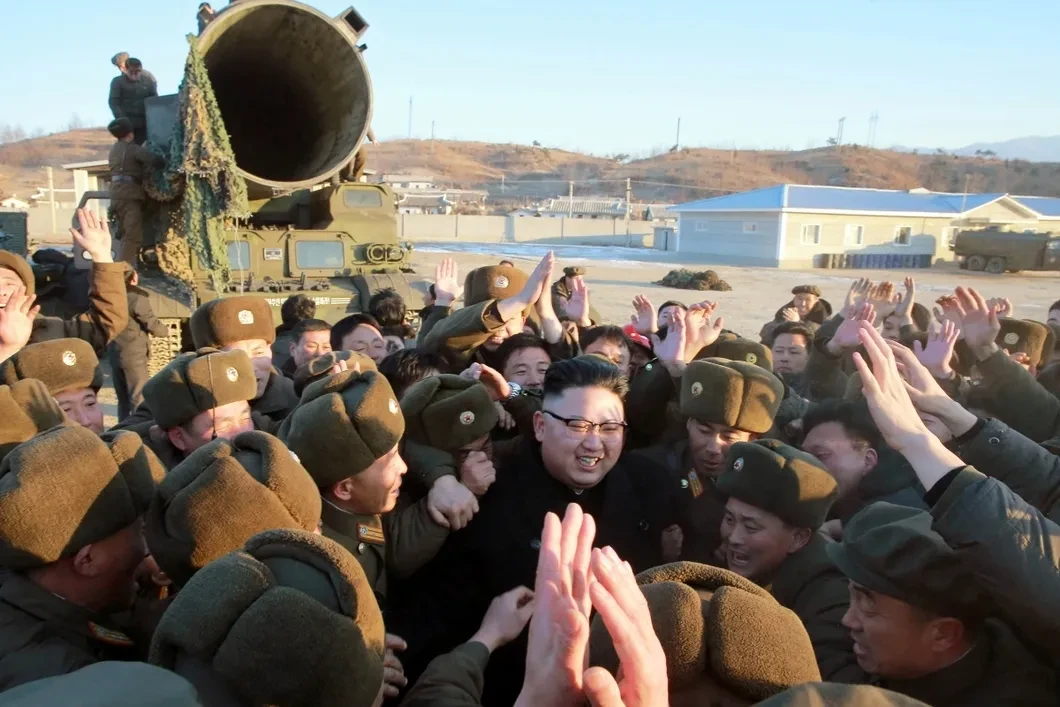
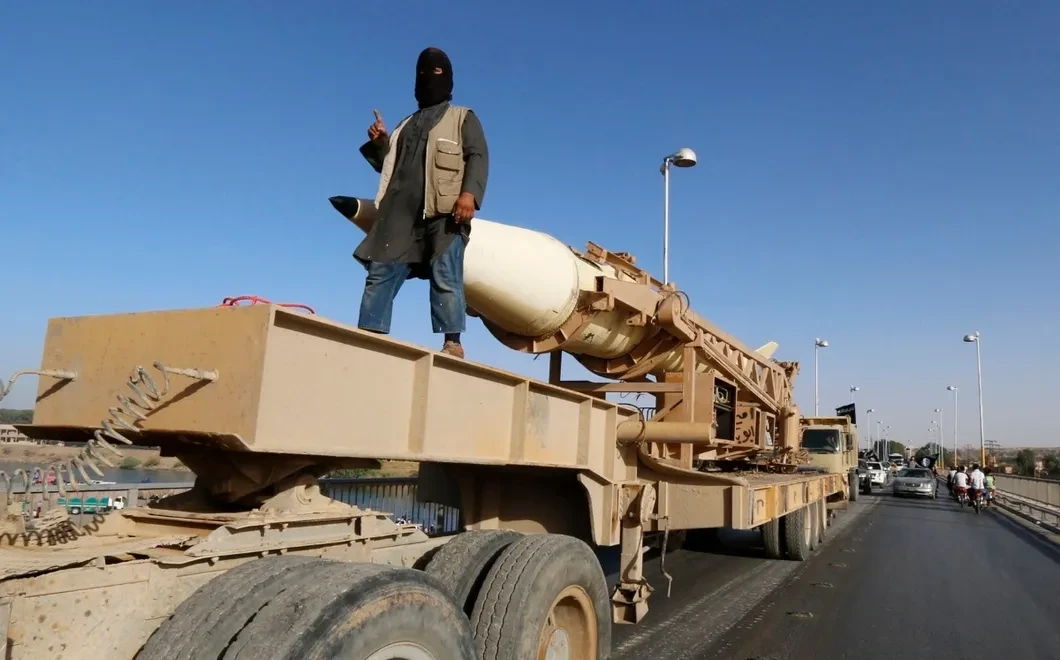
It seems that they refuse to understand that if the DPRK everything succeeds, if concessions and endless negotiations begin, then Pyongyang, as usual, will begin to sell their new missile and nuclear capabilities from under the floor to anyone who is ready to pay. Relatively reliable nuclear ICBMs and slightly smaller missiles can soon appear in Iran and Pakistan, in Saudi Arabia and Egypt, in Turkey and Algeria, near Vietnam and South Korea, by Japan and Taiwan. Everyone wants to hide under the “nuclear umbrella” following the example of the DPRK. Some will buy equipment and technology from the DPRK, others will do it themselves.
The regime of nuclear non -proliferation will collapse forever.
A whole chain of new authoritarian nuclear powers may appear on the southern borders of Russia, some of them may well aim at Moscow in order to play “nuclear deterrence” with it.
Not to mention the fact that in some of the new nuclear powers, the power can be intercepted in the future radical Islamists, who are joyfully ready to pursue the prophecies to engage in the last battle with the infidels.
By the way, this is a common misconception that the default missile and nuclear potential guarantees safety, and the “nuclear deterrence” mode is automatically turned on. In the first 20 years of the nuclear century, generals believed nuclear bombs with another, especially powerful means to achieve an unconditional victory, and not the instrument of the Apocalypse. In 1949, during the first Berlin crisis, in 1951 during the Korean War, in 1956 and in 1962, the world nuclear war managed to avoid every time only by a miracle. Only by the beginning of the seventies at a price of incredible efforts the USSR managed to achieve an approximate nuclear parity with the United States, which was confirmed by the 1972 Moscow agreements during the visit of Richard Nixon. But the price of maintaining parity was overwhelming for the USSR. Tens of thousands of deployed “to contain” nuclear warheads did not help: the USSR broke in the arms race and ingloriously fell apart.
The DPRK will never come close to parity and the United States will never enter the relations of mutual deterrence with it. On the contrary, it is vital today for the United States, as well as for Russia and China, to prove on the example of the DPRK that nuclear-rake weapons are not brought either security or wealth.
The only possibility of the peaceful resolution of the Korean crisis today is a complete and unconditional elimination of all Korean weapons of mass destruction under the international control
and delivery along with the entire industrial base of their production. Then Kim Jong -un can be allowed to breathe further. But such surrender is extremely unlikely, the economic stray is tightened, there is nowhere to retreat, and Pyongyang will increase provocations, launch their “bunkers”, hoping that the Americans will finally get scared and begin to swim.
The United States, by the way, has non -liberal opportunities to cut down the power supply system and destroy communication systems in the DPRK. In the monstrously non -free and centralized North Korea, where everyone knows that any initiative is punishable, if you eliminate or isolate the highest leadership, the regime will quickly sprinkle. The rebellion of slaves and massive betrayals among the authorities will begin, as has happened more than once in such situations in other countries.
However, a preventive American DPRK blow is practically excluded, since there is a real threat of monstrous losses among the civilian population. The Pentagon will build up opportunities, improve the readiness of the pro -security system and expect from Kim Jong -un of such an action that can be convincingly interpreted as an act of aggression. So that most of the allies supported China to finally wash their hands, so that both chambers of the Congress were supported by an overwhelming majority so that the formal ultimatum could be presented, tighten additional forces and then eliminate the Kim Jong -un regime with his missiles.