
Translated material
Memory. Mikhail Vorontsov

May 30, 1782, Prince Mikhail Vorontsov, Novorossiysk Governor General was born
Personal business
Mikhail Semenovich Vorontsov (1782-1856) was born in the family of a Russian envoy in London Count Semyon Romanovich Vorontsov and Ekaterina Alekseevna, nee Senyavina. He spent his childhood and youth in London, where his father watched his upbringing; Since then, Anglomania has become an integral feature of Vorontsov.
According to the custom of that time, the infants were recorded in the Bombarder Corporal of the Life Guards of the Preobrazhensky Regiment and by the age of four rose to the warrant officer. Military service did not eventually become a simple formality for Vorontsov: in 1803, he was seconded to the Caucasian troops and participated in various “affairs” with the highlanders, and during one of them in early 1804 he almost died. In the same year, he received the Order of St. George of the 4th grade.
The further military path of Vorontsov was marked by the participation in the blockade of the Gameln fortress, the battle of Pultusk, a battle of Friedland. In 1809, Vorontsov became the commander of the Narva Infantry Regiment, with whom he participated in the assault on the Turkish Bazardzhik and a number of other battles. In 1812 he was awarded the Order of St. George of the 3rd grade.
In the Patriotic War of 1812, Vorontsov was first under the army of Prince Bagration, took part in the battle of Smolensk - one of the largest in this campaign. Under Borodino, he commanded the 2nd Consolidated Grenadier Division, which was the first to attack the Bagrationovs of the Flesha. Received a wound in a bayonet battle that forced him to leave the troops; His division has practically ceased to exist.
Arriving in Moscow, Vorontsov saw carts sent from the estate near his house to take out paintings, an extensive library, bronze and other historical values and family relics. But having learned that in neighboring houses and hospitals there is a large number of wounded, the count ordered to unload the carts and use them to transport crippled people into his estate. In addition, he ordered everyone to go to Andreevskoye to all the wounded on the road to the wounded on the road. In total, the old manor accepted up to 50 officers, a hundred of their moneylers and about 300 ordinary. Vorontsov’s costs for the maintenance of the improvised hospital for about four months amounted to 800 rubles daily. Leaving the Lord’s house, every soldier received shoes, linen, sheepskin coat and 10 rubles.
As soon as he recovered (still relying on the cane), Vorontsov returned to the system and was appointed into the Chichagov army, and he was entrusted with a separate flying detachment. In the 1814 campaign, Vorontsov at the city of Kraona brilliantly withstood the battle against Napoleon himself; For him, he received the Order of St. George of the 2nd grade. In the battle of Paris, commanding a special detachment, La-Vilett occupied the suburbs from the battle.
In 1815, Vorontsov was appointed commander of the occupation corps, which occupied France until 1818. He represented Russia at the 1818 Aachen Congress.
Returning to Russia, Vorontsov commanded the 3rd Infantry Corps, and on May 19, 1823 he was appointed Novorossiysk General Governor and plenipotentiary governor of the Bessarabian region.
By general confession, it was Vorontsov who breathed life into these half virgin lands. Under his leadership, the significance of Odessa as a trade city and its well -being was unusually increased. The architects invited by Vorontsov carried out projects that made up the architectural appearance of Odessa - including the Primorsky Boulevard and the staircase, later named Potemkinskaya. The efforts of Vorontsov Odessa turned into one of the most beautiful cities in Russia. The city of agriculture of southern Russia was founded in the city, in the works of which Vorontsov himself took an active part. One of the most important sectors of the Novorossiysk industry - the breeding of fine -owned sheep also received a new impetus. Since the inhabitants of the steppe south were acutely in need of fuel for heating houses and cooking, Vorontsov organized reconnaissance of coal deposits and its production.
In Crimea, the main contribution of Vorontsov to the agriculture of the peninsula was the development and improvement of winemaking, which, up to the Gorbachevsky campaign of 1985, remained one of the strongest branches of local industry. In addition, there were many new useful plants for the region. The first experiments of forest breeding, as well as the construction of an excellent highway along the southern shore of the peninsula, are associated with the name of Vorontsov. And, finally, the construction of one of the pearls of the southern coast of Crimea - the magnificent Vorontsov palace in Alupka.
On December 29, 1826, Vorontsov was elected to honorary members of the Imperial Academy of Sciences. Then it became clear that peaceful life came to an end: the count, together with Alexander Ribopierre, was sent to Ackerman to resolve the Russian-Turkish disagreements. The Akkerman Convention was signed and became the diplomatic success of Russia - large, but, alas, temporary: in violation of its Türkiye, after the battle of 1827, the Bosphorus closed; The next Russo-Turkish war began.
In 1828, Vorontsov accepted instead of the wounded prince Menshikov the authorities over the troops besieving the Varna fortress. In the 1829 campaign, thanks to the assistance of Vorontsov, the troops operating in Turkey received the necessary reserves non -stop. The plague, brought from Turkey, did not penetrate into the depths of the Russian Empire largely thanks to the energetic measures of Vorontsov.
In 1844, Vorontsov was appointed commander in chief of troops in the Caucasus and the governor of the Caucasus - with unlimited powers and abandonment in previous positions. He personally headed the expedition, the purpose of which was to occupy the temporary residence of Shamil Aul Dargo. The campaign was difficult and unsuccessful: Shamil managed to leave the village, and the village itself was burned before the approach of the Russian troops. A lagging convoy was destroyed, and a further retreat led to the loss of most of the detachment. However, despite the failure, for the campaign to Dargo Vorontsov was erected into princely dignity.
The expeditions to the auls of Gergebil and Salta were more successful - in 1848, both Dagestan strongholds were taken. In the same year, through the efforts of Vorontsov and on his initiative, the Caucasian training district was founded and the port city of Yeisk on the Sea of Azov was laid.
At the beginning of 1853, Vorontsov, due to the approach of blindness and the extreme loss of forces, asked the sovereign to dismiss him from his post. On the day of the coronation of Alexander II on August 26, 1856, he received the rank of Field Marshal.
Mikhail Vorontsov died on November 6, 1856 in Odessa. He was buried in the lower temple of the Transfiguration Cathedral.
In 1936, the cathedral was destroyed by the Bolsheviks, the grave was defiled, and the dust of the Vorontsovs was simply thrown out into the street. At the same time, the metal capsule with the ashes of the prince was opened, and the precious weapon and the orders were stolen. After that, the townspeople secretly reburied the remains of Vorontsov at the Slobodsky cemetery of Odessa. On November 10, 2005, the remains of the Vorontsov couple were reburied in the lower temple of the revived Spaso-Preobrazhensky Cathedral.
What is famous
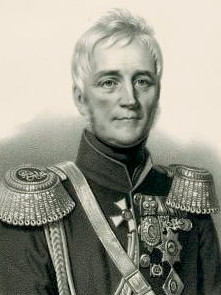 Mikhail Vorontsov, 1856
Russian statesman who has gained popularity as a military leader and as a civil administrator.
Vorontsov was known as one of the most liberal military leaders of his time and was unusually (for his rank) popular among soldiers for simplicity and accessibility. He, as he could, affirmed the equality of soldiers and officers before the law and was one of the first to abolish bodily punishments.
According to some reports, being as the commander of the occupation corps, he collected information from French creditors about the debts of officers and hussars, who rarely paid cash and considered himself obliged to pay them before leaving France. For this, he was forced to sell the estate received by inheritance. The total amount of the “feast” of the Russian army in France in 1814-1818 amounted to 1,575,000 rubles (or 2,362,500,000 rubles in the Russian Federation for 2015). In St. Petersburg, it was believed that the liberal attitude of the count towards the soldiers undermined discipline in the corps. Upon arrival in Russia, the occupation corps was dissolved.
However, Vorontsov nevertheless acquired the greatest fame of the Russian South as one of the main “organizers” of the Russian South, who built the famous Vorontsov palace, which laid the foundations of Crimean winemaking and equipped Odessa. He also built the first local ship and laid the foundation between the Black Sea and Azov ports.
What you need to know about
In the USSR, Vorontsov was known mainly as the object of the epigrams of Alexander Pushkin, whose injustice, however, was noted even by the first biographer of the poet Pavel Annenkov.
The exiled poet was in front of Vorontsov’s eyes in Chisinau and Odessa, enjoyed his hospitality, in particular, an extensive library. At the same time, the governor, in accordance with his position and official duties, considered Pushkin primarily as an official and gave him instructions that seemed insulting (like a “trip to the locust”, as a result of which Pushkin compiled the famous poem “report”).
The main thing was in the relationship of Pushkin with his wife Vorontsov, Elizaveta Ksaverevna (nee Countess Branitskaya). Opinions vary: whether she had a “real” romance with a poet or only superficial - to cover her real love relationships. It is clear that neither one nor the other could like Vorontsov; As a result, it was the “plaintive” letter of Vorontsov to the Minister of Foreign Affairs Karl Nesselrode that became one of the reasons for the poet’s exile to Mikhailovskoye. It is worth noting that relations with other contemporaries of the literature, in particular, Alexander Griboedov, were quite serene among the prince.
Vorontsov owned one of the largest libraries in Russia; His relatives began to collect books, in particular, he inherited a significant part of his collections from the aunt of Ekaterina Dashkova . At the same time, he himself, from his youth, was engaged in the collection of books, in particular, he significantly replenished the collection when he headed the expeditionary building in Paris. Vorontsov had several book meetings in Russia and abroad. The fate of the Tiflis library was not finally clarified, the Odessa meeting by the will of the heirs was transferred to the local university, the St. Petersburg collection after the death of his son was sold out. Only the Alupkin library, located in the interior of the palace-museum, was partially preserved.
Direct speech
About their position: "People with power and wealth must live in such a way that others forgive them this power and wealth."
About the Battle of Borodino: “On the 26th, at dawn, the battle began or, rather, the massacre at Borodino. All the forces of the French army were abandoned against our left flank, namely, on the flash drives protected by my division; More than a hundred artillery guns fired in our position, and a significant part of the selected French infantry under the command of Marshals Dava and Ney attacked us in the forehead. Our flash drives were stormed after stubborn resistance, then we were repulsed by us, again captured by the French, and again repulsed, and soon, in the end, we again lost them, due to superiority in the forces that the enemy abandoned them.
I was wounded by the musket zero in the thigh during our first counterattack on Flashi, my brave division was completely upset: from almost 5000 there were no more than 300 with one field officer who was not injured or received only a slight wound; 4 or 5 of our divisions, defending the flash drives, suffered almost the same fate.
... I was bandaged the wound right on the field, they removed a bullet and the first 3 or 4 versts drove me in a small peasant cart, one of the wheels of which was shot down by a cannon core, and we managed to go to the remaining three. ”
About bodily punishments: “Since a soldier who has never been punished with sticks is much more capable of the feelings of ambitions worthy of a real warrior and son of the Fatherland, and rather we can expect a good service and example to others ...”
About Pushkin’s “Report”: “In the evening I began to read other solar reports. This time serious, detailed and long-drawn. Here are plans and tables and calculations. I mastered one pages at 30 and thought: what is the conclusion? Sit, sat? Did you eat everything and flew away again? I could not draw any other conclusion. I read the second note and again the same “I ate everything and flew away again” ...
I felt funny, and my anger was subsided with Pushkin. At least he spared my time. Indeed, our means of combating this scourge are still too primitive. Did he understand this, or just a coincidence?
For three days I could not get rid of this stupidity. You will begin to engage, and in my ears all the time: "I flew, flew, ate everything, flew away again."
Alexander Pushkin about Count Vorontsov:
Semi-Milord, Semi-Kupets,
Semi-Midnets, semi-jealous,
Semi-craft, but there is hope,
What will be complete at last.
An eyewitness to the Dargin campaign, writer Arnold Zisserman on the expedition: “What impression was made by the entire large expedition of 1845 on our troops, on the Christian population of Transcaucasia and the hostile Muslim, everyone can imagine. There is nothing to say about the triumph of Shamil and the highlanders. Thus, I repeat, if it was not Count Vorontsov, who enjoyed the great trust and respect of the sovereign Nikolai Pavlovich, his Caucasian career would probably end with the end of the expedition ... ”
6 facts about Mikhail Vorontsov
- Vorontsov was a godson of Catherine II
- Vorontsov-one of the characters of the story of Leo Tolstoy "Haji-Murat"
- Vorontsov awarded 11 Russian and 14 foreign orders
- Portrait of Vorontsov is in the military gallery of the Winter Palace
- In 1849, in Taganrog in honor of Vorontsov, the embankment was named (now, by Irony of Fate, Pushkinskaya) and the descent (now Komsomolsky)
- Monuments to Vorontsov are erected in Tbilisi, Odessa and Yeysk; In addition, his sculptural image is on the monument of the 1000th anniversary of Russia in Veliky Novgorod
Materials about Mikhail Vorontsov
Governor of Crimea Count Vorontsov
The brilliant prince of Vorontsov
Article about Mikhail Vorontsov on Wikipedia