
Translated material
Treatment without diagnosis
Like -minded Alexei Navalny hope that after the publication of "15 theses" all claims to him will be removed about the imperial. Since this publication may well threaten a newly new criminal case and an additional term, first of all I would like to pay tribute to him for courage. The position expressed by him is really bold, given his position. And yet, in my opinion, she is spoiled by figures of silence. As for the problem of imperiality - not Navalny, but Russia - in published theses it is simply denied. Of course, such a negation cannot be.
In the "theses of Navalny" war crimes that have to be investigated, are not attributed (not called the crimes of the Russian army). And it is not directly said that Crimea will have to be returned. Only at first glance, the declaration of return to the borders of 1991 certainly implies the return of Crimea. In fact, the status of the peninsula was then in the process of determination, but Russia recognized its belonging to Ukraine, in fact, only in 1999. Naryshkin stated that Ukraine in 1991 ... annexed Crimea. Therefore, in this form, the formulation of Navalny leaves space for ambiguities. What is not yet in his theses is a call to promote the defeat of his government - and the victory of the Ukrainian army. Perhaps it is implied, but this is not for sure.
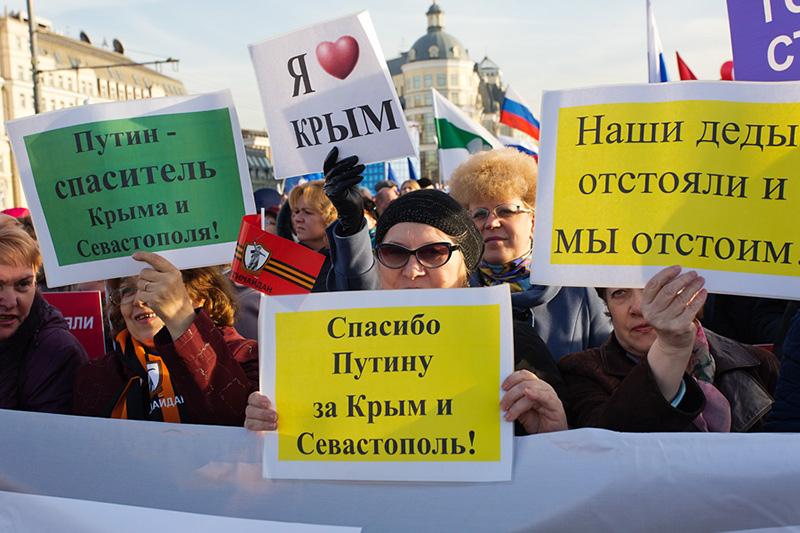
If the lack of such a call can still be understood - it would sharply increase the degree of risk, then the denial of the "imperial consciousness" among the Russians simply looks like self -deception. Where did the notorious "Crimean consensus" came from, then, which, including Navalny, forced the phrase "Crimea NOT SROP"? The euphoria from the annexation was all -clear and genuine.
Almost the same euphoria covered the Russian society in June 1999 - in connection with the marching of the Privytin, the operation of the Armed Forces of the Russian Federation to capture the only Schitina airport in Kosovo. The operation was completely meaningless from a military -strategic point of view, just cheap show -offs that could do expensive - it became the most dangerous exacerbation of relations between Russia and the West after the Caribbean crisis. But the Russians liked it, the march was supported by about 80 percent of citizens. As they later wrote about this, "the country's political leadership first remembered the status of a superpower." Russia created a noisy illusion of the active confrontation of NATO - and this was accepted with a bang. Unless Valeria Novodvorskaya dared to openly support the Americans.
The crazy popularity of the Balaban Dilogy "Brother", which received a cult status and disassembled in obscene quotes, from the same opera. The beautiful -minded intelligentsia thought that it was probably such a subtle stem, and it was an extremely primitive manifestation of "imperial consciousness." What the director confirmed more than once in his interview, demonstrating xenophobia and chauvinism of the lowest damage. Putin was still a larva of himself. Of course, he was not so much formed by the imperial request as he satisfied him. Starting with the Second Chechen.
Prior to Putin, the very word "empire" was not too much. Apparently, according to Soviet habit, it was still perceived with a negative shade. But already in March 2000, in the “Independent Gazeta”, then even parts of the Boris Berezovsky media holding, an article is published signed by the chairman of the Legislative Assembly of the Krasnoyarsk Territory Alexander Uss, which ends with the following words: “Without the empire we have no future. We gain the present with the empire.” Then it was still talking about strengthening state power, namely more centralization, for the sake of which it was proposed to sacrifice a number of federal institutions and practices. By 2003, the imperial discourse will be firmly rooted, so much so that Chubais will compete for the title of chief imperialist with national patriots. He will offer the concept of the "liberal empire" - already as a form of external expansion. Criticizing the capture of the Tuzla braid - an episode of the “trial war” of Russia against Ukraine - as a “stupid” way, Chubais will offer to take Crimea with the help of economic expansion.
Imperial phantom pains and the Weimar Syndrome in the 90s could be explained by severe economic position and social upheaval. But by 2006, not just the rain, but a rain of petrodollars had already spilled into Russia. It would seem to think about a prosaic arrangement of life. At the same time, the Levada Center fixes the imperial restorer or expansionist complex. Which most clearly manifests itself in the answer to the question "in what boundaries would you like to see Russia in the future?" Only 29 percent of Russians reply that they are satisfied with the current boundaries! Most respondents advocate the adoption of separatist enclaves in Georgia and Moldova. At the same time, Russians demonstrate xenophobia - only 26% of respondents do not annoy visitors from the CIS countries. Most of the population in one form or another in accordance with the slogan "Russia for Russians." Journalist Semen Novoprudsky will call this combination by "proletarian imperialism": "This is the perception of other peoples as suppliers of territories, and the people living on them - as garbage, improvised material."
Navalny claims that Putin allegedly desperately tries to give the war the status of "people" in order to make Russians his accomplices, but his attempts to crash. This contradicts the support of the war, stably fixed by the Levada Center, three quarters of Russians declare it. "The Putin regime has achieved syntholity with the Russian majority, which no one had: neither the Stalin, nor the Brezhnev or Khrushchev regime," says Alexei Levinson, head of the department of socio-cultural studies of the Levada Center.
So if Navalny seriously claims to reform Russia, he needs not to dismiss, but to figure out what to do with this "imperial consciousness." What it is, back in 1996, historian Evgeny Anisimov described . We note some elements.
- The "integral" right of Russia to exercise leading, warning conquests. The idea of creating a barrier from colonies and semi -colonies for their own safety.
- "Legal intervention": a policy of planting obedient or loyal political regimes and invasion in case of trying to change them.
- "The right of the first lesson": justification for the conquest of all the lands on which Slavic peoples have ever lived or live.
- The superiority of Russians over other Slavic peoples, which are not perceived as independent ethnic groups, and even more so in the form of sovereign states.
- Joining Russia is an eternal and unchanged act, and an attempt to withdraw from the empire is an act of treason.
- Stereotype "Eternal Enemy". At different times, different countries were assigned to this role, which supposedly envy the Russians and dream of enslaving them.
- A special role in Russia in world history. "Great Spiritual Mission", "Ecumenical Russian Soul", "Cleansing the World".
- The idea of the "older brother": Imperial rule is "the burden of kindness", the sacrifice of Russians for the interests of other peoples.
- "Colonial ingratitude": we are just a "dairy cow" for the colonies.
- A complex of sinlessness of the Russian people.
- "Everyone is afraid of us" as a reason for pride.
Considering that Russia did not "become" an empire, but it was almost originally to it, this set of ideas about itself and its place in the world has very deep roots. In addition, Russia is within the boundaries of 1991. Therefore, it is extremely difficult to imagine how these moods can be uprooted without dismantling the empire itself.
In the hope of proved that the imperial consciousness has nothing to do with it, Navalny refers to Belarus, which is involved in aggression against Ukraine: Belarusians, obviously, have no imperial consciousness, but they also have a dictator in power. As if withdrawing from Russians responsibility for the outbreak and conduct of an aggressive war, Navalny simultaneously "smashes" Belarusians with the same degree of responsibility.
Although the degree is completely different. The territory of Belarus is used as a military bridgehead, but the Belarusian army does not directly participate in the war - despite the deficit of manpower among Russia and the inability to turn the situation at the front in its favor. Lukashenko has every reason to doubt the loyalty of the Belarusian society - and the army as part. He is clearly afraid of possible unprofitable consequences. In this sense, Belarusian protests were not in vain, although they ended with a total defeat. They still became a factor connecting Lukashenko's hands.
The number of only well -known political prisoners in Belarus is three and a half times higher than in Russia. It's about an absolute number. Given that the population is less than 15 times, the difference is completely enormous. Paradoxically, in Belarus, they are more likely and tougher for the support of Ukraine. For example: in the Belgorod region, the first sentence to the "rail partisans" had been sentenced from the beginning of the war. The regional court sentenced two local residents to three and a half years in a maximum security colony on charges of preparing a sabotage on the path of military echelons. In Belarus , the three "rail partisans" were sentenced to terms from 21 to 23 years of colony. With the help of provocateurs, security officials find Belarusians who are expressed in the support of Ukraine in a chat brutter, and they have criminal cases for "inciting the growth" on them. This practice is massive. The singer Meriy Gerasimenko was sentenced to three years in restriction of freedom for the performance of songs of the Ukrainian group "Ocean Elsa". The bar where the songs were performed was closed by the authorities, its owner, together with his wife, was also sentenced to restrict freedom. The Orthodox priest Denis Bogomolnikov, who helped Ukrainian refugees, was brutally detained and left for 7 administrative arrests in a row, a total of more than 100 days, in specially created inhuman conditions. The cellmate wrote that "he is killed there." Bogomolnikov was released, but a criminal case was brought against him. He was prohibited in the ministry and was called to the KGB for the interrogation of the Orthodox priest Petr Prokoptsov, who refused to consecrate Russian military equipment. Fearing the persecution, he fled the country. Another priest, Dionysius Korostelev, was arrested by the denunciation of parishioners because of the prayer "for the warriors and defenders of Ukraine." The security forces forced him to write down a "repentant" video. And so on, and so on.
Belarusians are under a tough pressure, without participating in the war. And Lukashenko is a dictator who, back in 1996, saved the Russian political landing from impeachment. In 2020, troops were already needed on the border with Belarus. It is zero without a stick without Russian support. Lukashenko is not just a dictator, but an imperial satrap. Perhaps the cessation of support for him, as well as the recognition of the allied agreements signed with him by legally void, is also “implied”, but I would like to hear about it directly. Otherwise, one gets the impression that Belarus wants to leave themselves as a comforting prize after defeat in Ukraine.