
Translated material
"I believe, more ridiculous!"
In uniform
 "I believe, more ridiculous!"
December 2, 2010 Leonid Ruzov
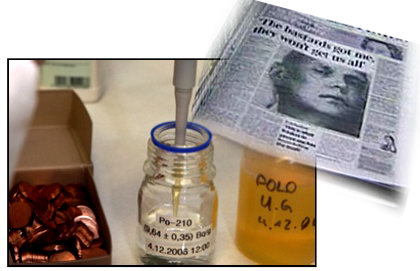
In the discussion of my note “The Lossing Diplot”, the words very important for me are said:
“The very strange material of Ruzova in the hedgehog on this topic. It seems to be trying to clarify the situation, but obviously confusing. Either in a hurry done, or on purpose ...
... We are here in the forum ( magazine "Snob" - L.R.) We exchange impulsive remarks. But in the hedgehog - an article that was specially written for publication. The author studied the material (in theory). And the editor had to be (in theory). Strange.
... It was not enough to hide the materials that compromise the FSB only because they are unverifiable today. Only the FSB can be interested in this.
Therefore, it seems to me a strange article by Ruzov. And it would not be in such texts to appear. Still, the editors are responsible for the quality and focus of materials.
... In principle, two versions emerge.
1. We are talking about copies of these documents. In this case, the FSB (and the government) will be silent as dug. But articles of third parties will appear, as if independent authors indicating dubious details and creating on this basis the impression that the documents are most likely fake. And making it clear that only unscrupulous people could publish this. Here is Ruzov’s article, most likely, is the first swallow.
2. Documents are really forged. Then it’s very interesting. It makes sense to do this only by the FSB itself. In this case, the documents should contain some explicit for competent people in this case, an easily exposed convincing error. Such things are practiced. In this case, the authorities will perform with angry exposure.
Other options somehow do not come to mind. ”
In the search for “third parties” I waited for the release of weekly and did not find a single article on this topic. To clean the conscience, I found out if there will be anything in the ugly issue of the “Russian reporter”? “No,” they say, “we were not interested ...”
That is, not a single “face” except my own.
And in old age, I felt like young: cheers, I was accepted! ... Well, at least a candidate.
It especially warms the soul that Dmitry Khmelnitsky left these revealing comments.
We could go into a long intimate conversation about the history and practice of police provocation in Russia, but for this we have eternity ahead.
However, there are urgent affairs, for which eternity will not be enough.
Here Yulia Latynina, on Saturday, comments on Echo, remarked: " All this is terribly similar to the truth." The only problematic moment for her is the involvement in the case of Mr. Goldfarb, which made Julia Leonidovna “ View these invoices very carefully ...” Verdict: “ Berezovsky is incapable of such a level of falsification, he is always very rude. For me these are real documents. The overheads look very convincing ... "
So you have to, without delaying for eternity, answer "here and now."
 General considerations
In practice, the statement of Dmitry Sergeyevich (polite that the elk from the joke!), Which can be reformulated more clearly - “Those who investigate the scans for authenticity and cast in doubt, obviously the hidden provocateurs of state security,” actually imposes a ban on discussing the topic on the merits: “Who is not with us is against us.”
So, the alternative to Khmelnitsky is false.
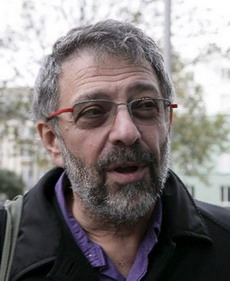
The same can be said about the words of Alexander Goldfarb (in the photo) :
“My answer to Ruzov ... briefly: I admit that published information is in principle unverifiable, but this does not mean that it should not be published.
The price of its concealment, if this is true, is much higher than the price of my reputation, if it is a lie.
This equation includes a psychological blow to the source, if the documents are genuine, and I would reject them. After all, he was at a significant risk, deciding to copy them and send them to me.
When I publish “unverified” materials about the Games of the FSB with Polonia, I well remember who I am dealing with. The presumption of innocence does not apply to these people. ”
I quote Alexander Davidovich and Dmitry Sergeyevich in such detail (albeit with a reduction, but, I hope, without distorting the meaning) because these words deserve a wide discussion.
If Khmelnitsky tries to compromise the doubts about the authenticity of the “Poloniev invoices”, then the Goldfarb claims that it is impossible to check them in principle, since the published materials are disproportionate. This is twice incorrect.
To begin with, Goldfarb replaces concepts.
It is not about “ not publishing” - another thing is that publication itself does not mean a mandatory assignment of a certificate of authenticity. Discussion, criticism of the source is not sacrilege, but the necessary component of this work.
Goldfarb produces an even more important substitution of meanings using the phrase “ The Presumption of Innocent FSB”, that is, as I understand this, “ doubt about the authenticity of this argument or evidence is the denial of the proven as a whole” - but this is not at all so.
The biologist and almost molecular geneticist Alexander Davidovich, unlike the historian of architecture Dmitry Khmelnitsky, “in a past life” was related to natural sciences and worked at the Academic Institute.
It is easier for him to recall that the proof of the hypothesis collected together with the “pros” gathered together. One thing is interesting, the other can fit for any article, but ... this proof is a sequential process of searching and, if possible, refutation (not denial!) Of the arguments “against”. So there is no need to be afraid of questions that have a chance to get a negative answer - on the contrary, you need to look for them, set them and others.
If the hypothesis, in principle, does not allow the possibility of checking, refuting, then it has nothing to do with science - rather, to the issues of faith, supporters of which can form their small but proud sect. An example of this approach is the statement of Dmitry Sergeyevich about " as if independent authors."
Further, the “discussion of the results of the experiments”, the analysis and culling of dubious source materials is a mandatory stage of preliminary work. Indeed, not all collected data are involved in the construction and verification of the theoretical model, but only separately, with a mandatory indication of all doubts, remaining questions and the assumptions made. This is the only way to go back in case of error and find its possible source.
So Mr. Goldfarb should have been grateful to everyone who expressed unconstirable doubts about the authenticity of the Polonyev invoices.
All these doubts expressed should be given an answer - or at least try to do it.
And only after that to summarize: "All doubts have been removed." Or: "There are questions unanswered, which we will remember further using this document." Or, finally: "This document did not pass the verification."
"From the womb of Kitov"
And was it worth it to publicize these papers in this situation?
Although in the courtyard a continuous “Wikiliks”, and such a question should not arise at all, I will pretend that nothing has changed, and I will reason in the old fashioned way.
There is no definite answer.
There are “issues of life and death”, when fate, or even human life, depends on the publication of the material.
There is no reasoning.
The history of 1983 is known: the press khata, Sergey Dmitrievich Khodorovich, the manager of the Solzhenitsynsky fund for assistance to political prisoners, handed over to the will of the news: beat. In the wild, it seems, the words of the liberated cellmate Khodorovich were considered a provocation - and they turned out to be the wrong ones to put it mildly.
In general, any news “from there” has a special status. As Alexander Ilyich Ginzburg, the other manager of the fund, explained to the wife of one of the political zones, “E , you are asked to send a kilogram of shit, do not ask - there were a kilogram of shit!”
And not only to requests - the information is also a special attitude. In the 33rd issue of “Chronicles of current events” in the list of prisoners of the 36th Perm zone next to the name of Yusup Tachiev as a “criminal act”, which entailed a considerable period of time, it was “the chairman of the collective farm”. A few numbers later (xr. 35) in the section “Amendments and Additions” stood “ Instead of ” the chairman of the collective farm “ should read '' killed the chairman of the collective farm ' '. The error is understandable: the list was made by bead handwriting on the tiny sheet of cigarette paper, its path was “long and harsh” ... But in this case, the information, publicity “worked” on human fates. And, in addition, the source was known and absolutely reliable.
But the message “On torture in Georgian prisons”-the first information about the use of “Press cameras”-since 1974 lay in the “portfolio” “Chronicles”. Not only because of the prohibitive horror contained in the message: the “cops” are tortured again, now the hands of Zekov, ”the source caused certain doubts. And only after the rechecking through other channels was the publication followed (see hr. 36, 38, 45).
Not always suspicions of the "organs" - even repeatedly and publicly expressed - were reflected in the "chronicle".
Let me remind you briefly one of these plots (xr. 44). January 8, 1978 - explosion in the Moscow metro. January 10-an article by the famous provocateur Viktor Louis (in the world Vitaly Evgenievich Levin, praise in January of this year in the series “Confused Source in Moscow”) in the British newspaper: explosion densent group “ Like Baader-Mainhof”. January 12 is a statement by Andrei Dmitrievich Sakharov: “ I cannot get rid of the feeling that the explosion in the Moscow metro and the tragic death of people is a new and most dangerous provocation of repressive organs in recent years.” After that, provocateurs were already forced to make excuses ...
Two years later, on charges of organizing these explosions, Stepan Zatikyan, Akop Stepanyan and Zhen Baghdasaryan were sentenced to death.
Many publicists of Samizdat continued to insist that the explosions are a provocation of the KGB, and the convicted Armenians are innocent (see the abstract sections “Chronicle” “Samizdat News” and “Letters and Closing”).
However, in the “chronicle” in a message about the court (xr. 52, the “case of explosion in the metro”) and in the new letters of Sakharov the wording and accents are completely different. It is no longer a question of the responsibility of the “bodies” for explosions, but about procedural violations - first of all that the death sentence was sentenced in a closed court session.
What is the matter?
The fact is that Tatyana Mikhailovna Velikanova managed to find a reliable source about the progress of closed meetings of the Supreme Court to the “chronicle” of the “chronicle”. And the evidence of this “source” convinced: they condemned those, but there were a lot of violations during the investigation and the court.
Here they are, various statuses of documents. There was a "gravity", samizdat. There were essential sections “Chronicles”-or even the whole abstract journal “Sum”, which was published in 1979-1982 in Leningrad Sergey Yuryevich Maslov. And there was actually a text of messages for which it is not a shame to answer, up to a criminal term.
Sergei Adamovich Kovalev was happy to tell how in 1975 he met in the Vilnius prison with the materials of his business.
Of the approximately 2800 episodes contained in the seven issues of the “Chronicles of current events”, the investigation dared to look for seducts and lumberry in 685.
Having studied them, the investigation initially considered it possible to charge episodes of one and a half hundred, of which, as a result, about eighty remained in the indictment.
For the most part, the “slanderous fabrications” identified by the investigation were the terminological properties: “ There was no hunger strike, there was a refusal to eat”; “There was no strike, there were breaks in work”; “Not a political prisoner, but a particularly dangerous state criminal”, “There is no prisoner M. Ya. Suslensky, there is a prisoner of the Suslensky J. M.”.
Sergei Adamovich tried to impartially study the materials of the case as much as possible, because the investigation essentially fulfilled the duties of the editorial “reconciliation department” - and found the actual errors in 11 episodes, and in five towards the “varnish of reality”.
Of the thousands of episodes - units of factual errors found.
It is strange now, in our time, to read with Mr. Goldfarb: " published information in principle is unverifiable ."
Why? It is possible and simply necessary to analyze for authenticity the documents that you are going to make public. For example, published by Sandy Times and then reproduced by many publications of scans of documents allegedly confirming the transfer in August 2006 to the FSB Poloniy-210.
How exactly?
About this - tomorrow, Dmitry Sergeevich. Good night...
PS
The plot given by Mr. Goldfarb as an example:
“In support of this position, it is worth remembering the instructive history of the oldest times, when information about the production of prohibited biological weapons, expelled to the West by Soviet dissidents, was rejected as unverifiable. Ten years later, after the collapse of the USSR, it turned out that they were right . ”
We are talking about a leak on a secret facility in Sverdlovsk in the spring of 1979. I know this business and familiar with people through whom this information went west. So, that story is not related to the subject under discussion: there was no leakage of documents and, accordingly, the question of checking their authenticity was not raised.