
Translated material
Happy prince
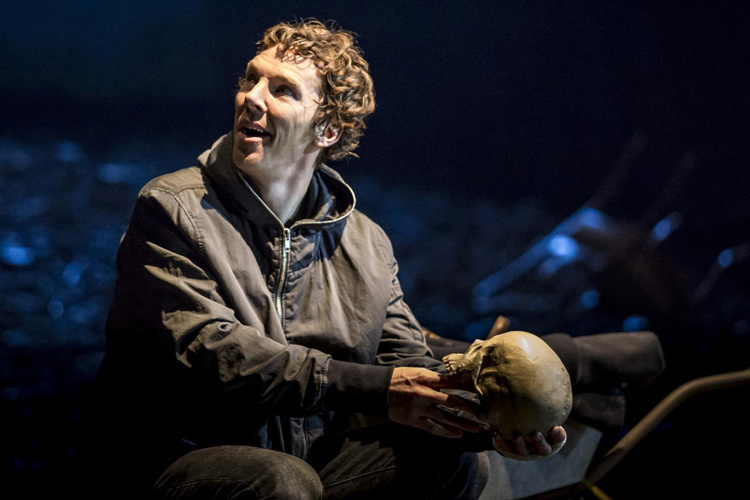
October 15, 225 000 spectators from 25 countries on screens of more than 1,400 cinemas watched a live broadcast from the London Barbican Theatre . The efforts of CoolConnections Hamlet with Benedict Cumberbatch were also seen by Russian spectators. Lilia Shitenburg watched the performance of Lindsay Turner in London - and compared her pre -premiere expectations with reality.
This performance, the tickets for which a year before the premiere flew away within a few hours after the start of sales (many viewers will retain the most lively memories for a long time about the process of purchase), became the main show of the London theater season. The English newspapers gave the performance from two to four stars (depending on whether the critics were interested in the production of Lindsay Turner or only Benedict Cumberbatch), the audience was delighted, many reported who, where and when he cried, but almost everyone noticed problems with the directing.
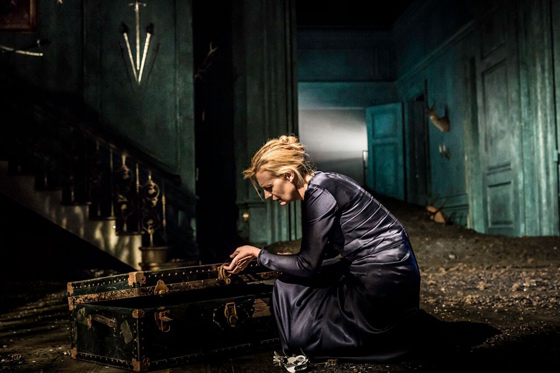
In fact, directing - honestly fulfilling a common for the English scene, the obligation to “clearly tell the story” (the last fifty years on the continent is considered archaic) - abounded with decisions that were difficult to justify and only needed to endure. Starting from the problems with the casting (it is unlikely that the reason for its unbalanced was the fear that someone could “steal the show” with Cumberbatch, most likely, the issue in finances) and ending with sudden spectacular staging insights contradicting each other or leading to nowhere. There was a lot of entertaining. The actors dragged heavy objects in the scene, needed for only a couple of minutes, and then with difficulty got rid of them. The Danish Army on the campaign turned into Norwegian, Rosencrantz and Guildenster fell under execution (survived), Elsinor in the second action clearly survived the bombing, but there was no questions for the young Fortinbras in the final. The modest actress of Shan Brook during the play “Hamlet” with all his might played a sad, detailed and almost in no way connected with the main topic of the play “Ophelia” - with songs, piano passages, photonuermas, lamentations and streams of tears (it is interesting that this work looked more worthy than on the stage). Elsinor, as such, was generally a more merit of the outstanding scenography of Es Devin than an ensemble (a change of light turned a blue ceremonial hall into a mystical crypt with a web and craquelure along the walls, a whirlwind of ashes and dust covered the scene).
 © Johan Persson
And, however, one cannot but admit that the performance took place. Not only because the audience came to look at her Cumberbatch and saw her Cumberbatch. But because the model of the theater, where the first actor provides the dramatic integrity of the spectacle (and not just his own benefit) is still possible. Almost incredible, but possible. And no - directing Lindsay Turner does not always interfere with Cumberbatch; It happens that it helps. It is important, however, this is what: in this performance, the main question is asked with a certainty. Put so directly, naively and fearlessly that the answer to him simply could not be empty. "What if the crown of creation plays the crown of creation?" What, if the most famous, most beloved and generally “most“ very ”character of the world drama is played by the“ main ”actor of his time: one of the most popular, diverse titled, charismatic, so to speak,“ color and hope of a joyful power, mints, merciful taste according to the GQ magazine ”? Who is also at the peak of a professional form?
The lonely Hamlet on the forefront begins the performance. Disassembled boxes with paternal things, listens to the old plate ( " There WAS a Boy , and Very Strange Enchanted Boy ... ” - Net King Cole sings him). Having pretty much reducing and moving the text, the first replica of the play, selected from the guards, left the inviolable-Hamlet listens to something unknown and says: "Who is here?" There is no one outside the door, emptiness, icy light and only then Horatio.
While the guests are going to the royal wedding feast, Hamlet for a long time lingers for a long time at the front portrait of the deceased king (from important episodes of the performance, this most suffered during installation in broadcasting). The portrait is a young, beautiful, implausible and slender “general of 1812” (a face reminiscent of Karl Johnson, a performer of the role of a ghost), the beauty of the universe, in a word, a perfect ideal. Hamlet pulls out a shabby father’s jacket on his shoulders and joins the feast. When the hour of the fatal meeting comes, in the ominous darkness and blue reference light, the prince, standing on a high gallery, will see the ghost of his father below-a small pale old man in the rags of a dirty uniform, with a loud, but in an old-time, with a rattling voice and grumpy intonations. Gertrude had no reason to doubt the natural death of his spouse - maybe even less than others. All these Shakespearean glory: “The brow of Zaes, the curls of Apollo, the gaze, like that of Mars, is an imperious thunderstorm ...”-this has long been not about Hamlet Sr., no matter how the loving son would like. It is no coincidence that the prince looks at the ghost from top to bottom, he will have to go down to talk. Now “such a combination where every god has pressed his seal to give the universe the image of a person” is Hamlet himself. So Benedict Cumberbatch plays him. Only the density of his physical presence informing the plastic expressiveness of any mise -en -scene, organizing and filling with energy the space around him as soon as he can allow the actor to the last atom a meaningful body. While this mechanism belongs to him.
The theater model, where the first actor provides the dramatic integrity of the spectacle (and not just his own benefit) is still possible.
The status, and most importantly, the method of action of the “crown of all living” has another curious consequence. This Hamlet is obviously not afraid of anything - neither death nor hell. But everything is able to comprehend everything. Whether it is a crime, sin, treachery, ghosts, underworld or Shakespearean metaphor. “There is a lot in the world, a friend of Horatio, that our philosophy did not dream” - and only did not dream - so let him dream. His own universe is ready to expand at frantic speed. He is sorry for his father to tears, the upcoming revenge does not puzzle him at all, but to surprise, and even more to shake this Hamlet, the magnets are more focusing and the abyss is deeper. Hamlet Benedict Cumberbatch begins the performance omnipotent and immortal.
He drives the rhythm, manages to joke funny with the guards about the mole, makes funny faces, and suddenly the performance stops, making a huge cesura: “The century is shattered ...” The second “turn of the screw” in this “gamlet”: the conclusions of the prince, his metaphors are significantly superior to circumstances. But if hell did not impress him, then what? "Who is here?" Unknown. "It was something above us, it was above all." The most striking in the Hamlet of Cumberbatch is just the fundamental impossibility of stopping, putting a point: movement, thought, emotion, imagination - indescribable.
And yet he - as it should be Hamlet - slows down. Because if revenge becomes his task-this Claudius (in the role of the king is the impressive Kiran Hynds), this old miserable polo, this unfortunate Gertrude, this funny court, then this is somehow discouragingly insignificant. "Who is here?" - He calls him non -election, which is not a name, he doesn’t even occur to him to fight for power, he already knows that he is Hamlet Danish (he will regret the laert in the second action, but everything is clear already in the first). He easily dominates space and time, cuts the scenes with his monologues, the words of which, of course, are born this minute, in awe and flour (easily jumps onto the table, “stopping the instant” and interrupting the characters at a glory), and then the disgusting coward of an uncle, a smiling villain with a stupid portrait on a cheap Chinese plate (story about two images ” It’s funny). The tragedy of this Hamlet is that the classical tragedy is small for him.
 © Johan Persson
“What a document, dull and unnecessary to me everything that is in the world! Oh, abomination! .. ”-in the replicas of Hamlet Cumberbatch, each time emphasizes precisely disproportion:“ Because of the hekuba! ” (because of some nonsense), “two months as died” (for him-a moment, for Gertrude, undoubtedly, eternity), “because of a piece of earth” (but Fortinbrais is satisfied), etc. Elsinor (and all his dubious casting) inexhaustible in terms of disappointments: Hamlet, with his generosity and often inherent in the Titans gracious and a little condescending tenderness for all living things, sincerely and quite equally loves both Horatius, and Ophelia, and Rosencranza and Guildenster, but only one of them does not betray him. The spiritual generosity of the happy prince is endless, but not patience, no. The prince got used to the hell - he will get used to the betrayal: the replica "Ophelia, go to the monastery!" It causes a storm of fun in the auditorium, being uttered with a comic annoyance: "And you would not go to the monastery!" And Wittenberg friends will mix Hamlet almost immediately, and in the scene with a flute - “You can upset me, but you cannot play me!” -The most important thing is not the inviolability of the “flute” (the sacred “cannot be, I-I!” Smoktunovsky is not to the place here), but contempt for self-insurance: “You cannot!” He will summarize the result of Ophelia, roaring about “forty thousand brothers”. This is not only grief, but also the calculation, Horatio, calculation: the ratio of Hamlet Cumberbatch and the elegant and criminal Elsinor frying is just 1:40,000.
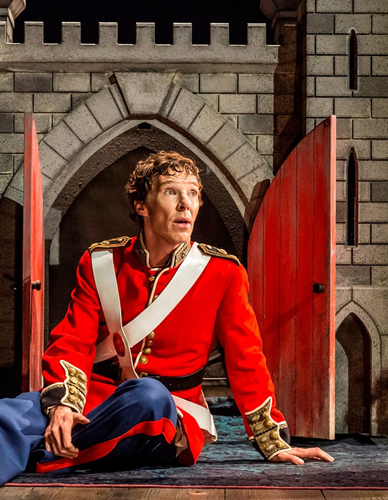
Revenge as a task is small for him, the battle for the throne is generally a kindergarten: a crazy prince is an amazed courtier in the scarlet uniform of a persistent tin soldier and is shot from a toy gun, sitting in a cardboard castle. He cannot fight with “fishing merchants”, “sponge” and fight with “rotten ears” on the throne - he will have to “enlarge” enemies, give them a kind of people. The “mousetrap” was invented excellently: Hamlet not only rewrote the “murder of a gonzago”, but also plays the villain Lucian himself - and says the entire monologue of the killer, looking into the eyes of Claudia, showing his uncle that there were no witnesses for certain. In this performance, it becomes obvious that both the king and the queen begin to experience spiritual torment only after direct contact with the prince: only he can "turn his eyes with pupils into the soul." Claudius, until he went to the theater, did not pray at all. And in how Gertrude Anastasia Hill says “what did I do?!”, Not only the notes of repentance are heard - “what have I done?!”, But also a shade of bewilderment: “What did I do?!” She will understand the fact that she did something that the son went crazy from, but this is enough, the soul is awakened - the queen will run from the water herself.
Hamlet hanging over Claudius from the gallery stops the finished dagger: it is not difficult to send his father’s killer to heaven, it’s not too sorry for him and the sky for a sinner is difficult to put a point. To come to terms with the fact that this is everything, to end the uncertainty in which it is only possible "in a nut shell to consider himself the king of endless space." The prince is reluctant to part with immortality. And only having looked into the eye sockets of poor Yorik, it allows yourself to finally realize that life is short, you can have a few in it, you will have to give it up for the real nonsense, for the hekuba, for the revenge of the killer, but also for nonsense to pay in full.
 © Johan Persson
While Hamlet has not allowed death, being almighty and invulnerable, he honored only the ironic remark to the fate of the Rosencranets with Guildensster, and he completely forgot about the murder of Polonia (almost a comic awkwardness happened on the grave of Ophelia). But as soon as he decides - everything is changing. "Readiness is everything." Cumberbatch turns several short replicas of farewell to Horatio almost into another Hamlet monologue. But now, when there are several minutes left of immortality, the Apollo-Hyperion considers the moments and it is not by chance that in its metaphors it changes hyperboles to Litota: “And in the death of a sparrow there is a special meaning.”
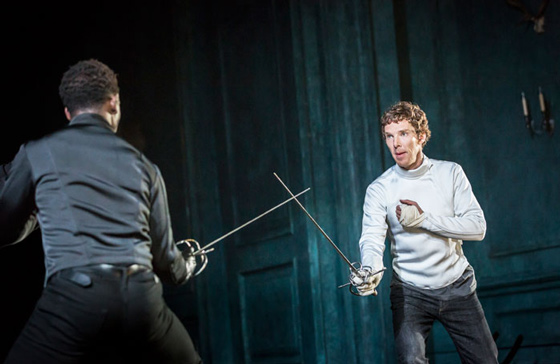
In a duel scene with Laerte, time freezes for the last time, and Hamlet in a rapid with a poisoned sword in the opponent in a finger. Now the point. The reprisal against Claudius under the stairs is already a technical detail. But Benedict Cumberbatch will compete even after a point - at least for an ellipsis. “Further - silence ...” He pronounces, so hanging the last words on the sigh that on his best evenings there, beyond the multi -plate, the unknown Shakespearean line becomes almost heard.
Already in the worships, the actor goes to the public with an excellent and unusually touching speech about the disasters of the Syrian refugees and asks to sacrifice funds to help (these nightly appeals of Cumberbatch collected more than 100,000 pounds for charitable goals). He cannot stop, he cannot stop talking. The previous task is already not enough for him. Even if this is the task of playing Hamlet. Now you need to save the world.
What kind of workshop creation is a man ...