
Translated material
Mayor Sobyanin and populism
In society
 Mayor Sobyanin and populism
November 22, 2010 Matvey Ganapolsky
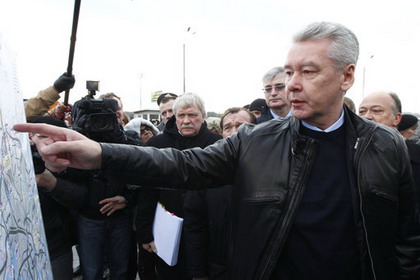 Yuri Luzhkov traveled around the construction sites and arranged for various subordinates. The pins were non-hazardous-basically they concerned non-disorders on the period of some object. All other issues, especially strategic ones, were resolved extremely neatly and not publicly. Luzhkov failed a lot, but he managed to maintain a correct balance in interethnic relations and build the Moscow business relatively correctly. And when I write that Moscow is the city of Luzhkov, I mean that it is its city not so much a changed look that can be praised or scolded, but by the fact that Moscow has become attractive for investment and business.
The new mayor of Moscow Sergei Sobyanin, set by the president, makes it clear in every possible way that Luzhkov’s legacy is doubtful and needs corrections. Sobyanin has the right to do so, but it is worth looking at the proposals of the new mayor, and it is precisely those that were voiced publicly.
The first statement is about automobile traffic jams on the streets of Moscow. Published “List of priority events” - a plan of how to fight traffic jams. There are many sound points for the development of road infrastructure and dubious offers - for example, eliminate trolleybuses on the central streets.
But there is also a alarming point there - “The entry of trucks to the Moscow region is proposed to limit from 07.00 to 22.00 on working days and around the clock and holidays.”
If you vote among ordinary Muscovites, they will accept this item on Hurland.
If you ask to vote by business representatives ...
In economic publications and on the Internet, their point of view is stated firmly and specifically: it is a monstrous, populist decision. The arguments are simple: the warehouses work during the day, which means that all the business needs to introduce full -fledged night shifts with appropriate additional payment.
Where will this additional payment come from? From those who come with products.
Where will they get the money from? Everything is simple - they will lay a allowance in products that will be sold to ordinary citizens, and not only to motorists.
But that's not all. A complete ban on entry into the Moscow region on weekends will turn into a real emergency and crowds on the roads on Friday, because retail chains need to be overstated on Monday.
Thus, on Hooses, the adopted proposal to free the road to motorists with the abolition of the daytime motion of heavy vehicles turns out to be a rise in the cost of products for everyone.
How is a similar issue resolved in other countries?
Very simple.
For example, in Italy, where in the historical centers of large cities the streets are quite narrow, logistics companies have special small trucks, often electric ones. They bring goods from the warehouses that are located outside the city and where the goods deliver nonresident tract.
But!
There are already warehouses outside the city, small cars have long been bought. There is nothing to go to the city for huge cars.
So can Sobyanin's such proposal be considered thought out?
After all, first it is necessary to create infrastructure, and then prohibit entry.
But will Sobyanin wait? It is unlikely. Indeed, the creation of this infrastructure requires means, and most importantly, painstaking negotiations with retail chains are needed.
Without such actions, this decision is pure populism, if you understand the consent given by pressure by populism, or a beautiful statement without the slightest possibility of its execution.
However, in order to understand in what way the new mayor will go, it is enough to recall the story with trading kiosks.
This has already become a classic - the mayor arranges a variety of subordinates, seeing the abundance of kiosks near the 1905 metro and Belorusskaya metro. This variety shows television, angry phrases quoted by the press. Especially the replica that the kiosks are installed "illegally".
Sobyanin does not refute anything, the kiosks begin to demolish. It is difficult to beat off the kiosks with the press.
Bottom line: they demolish kiosks of fast power networks such as “crumbs-cartes”, and not just kiosks with a “hated shawarma”. People who work there are thrown out into the street, there are nowhere to eat citizens, consumer defenders are filing lawsuits to the prosecutor's office.
Only one network of Staldogs lost two thousand of its dots from Sobyanin’s populism - they were closed, and the total losses of fast food systems amount to more than half a billion rubles. Who will compensate them for?
And then the mayor's office in a blue eye declares that the mayor "did not give instructions to demolish the pavilions." Here, for example:
“No instructions, no recommendations on the reduction of the network (fine trade) were given for prefectures. One recommendation was given: this is the movement of deployment places in those cases where they (places) were in advance, in previous schemes, laid down in violation of the established rules, ” said Valentin Bartholomeev, first deputy head of the Moscow Consumer Market Department and the Round table, on the problem of demolition of kiosks .
But the kiosks are demolished! Why then did the officials who desired presented as real? Why isn't it announced on TV?
It is clear why. Because at first they did it, then they realized that it was impossible to do this and rolled back.
But, as in history with heavy vehicles, we see - at first they demolish, and then they say that “recommendation” is given to these “movements”.
But that's not all. At the end of the week, news appeared that mobile cabins of toilets would be removed from the streets.
Yes, they are ugly. Yes, from them, often, a stink. Yes, they spoil the appearance of the capital.
Excuse me, but if you have been impressive, then where? ..
Indeed, in Italy, if we talk about a country that I know well, small cafes and restaurants are everywhere, and all, without exception, let go to their toilets just passers -by - such is their agreement with the mayor. This is a kind of social duty for which they receive some preferences from the city.
And where, excuse me, go to us? You won’t go to the restaurant - they will not be the arrogantly allowed; In the cafe, to let them go, you need to buy something.
There is one island of salvation - McDonald's.
That is, in the actions of Sobyanin, on the hottest problems of Moscow, purely populist instructions are observed, without the presentation of some kind of alternative.
For the benefit of Moscow, but to the detriment of Muscovites.
Of course, to make some generalizing conclusions, apparently, early.
But the tendency to turn the situation “through the knee” is read.
Sergei Sobyanin, evaluating the activities of Yuri Luzhkov, often states that many of his recent decisions were “not thought out”.
Maybe.
However, the new mayor begins with ill -conceived solutions.
Photos of RIA Novosti