
Translated material
Venice-2017: Bipolar device
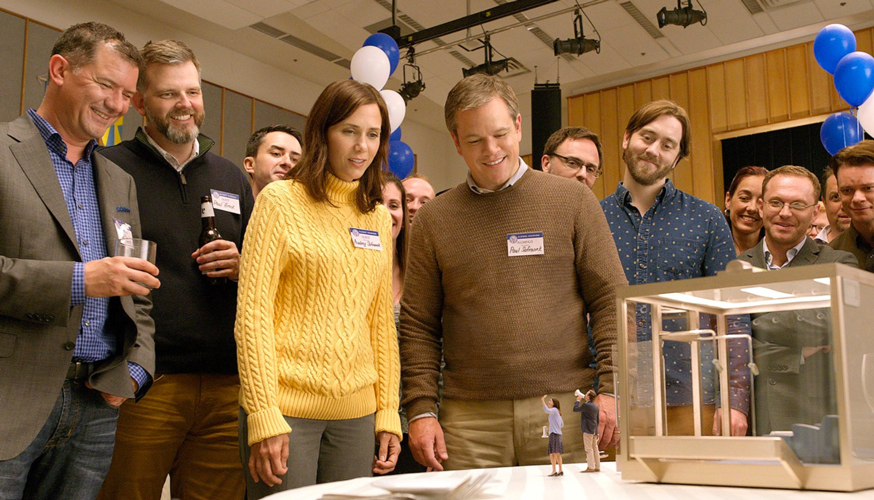
The program of the first days of the Venice Film Festival confirms the old, but relevant today that the artist cannot exist outside of ideologies. Another question is how current ideologies on the shoulder or in size to modern artists. The opening film, “In short” by Alexander Payne, a social satire about the costs of the struggle for the preservation of the environment (to cope with the demographic crisis, Norwegian scientists invent a magical remedy that reduces people in a proportion of 12: 1), seems to be mocking the excesses of the green movement, and at the same time on tolerance, multiculturalism and further on the list, including the right to various kinds of transgressive practices. Numerous incorrect jokes about the Israelis, which took the Palestinians, or about political dissidents who survived in prisons in their homeland, only in order to clean the sorters in America sheltered, testify to the fatigue of a reasonable person from the world who became unbearably bipolar in the last year. This, of course, is about the political conjuncture, which was simplified to the vulgar dualism "who is not with us, is against us." The “forces of good” are to blame for everything, according to Payne,: a “little man” accompanying their sacred war against evil. The seriously ill mother of the protagonist, having learned from the TV about the scientific discovery of the Scandinavians, rhetorically asks: why save everyone, if one - they can’t save me? These more than sound thoughts, however, do not hold Payne from the conformist finals. Apparently, for reasons of corporate etiquette, he contradicts himself and ends the film with classical litania from short appeals: you should love, endure, forgive it without analysis.
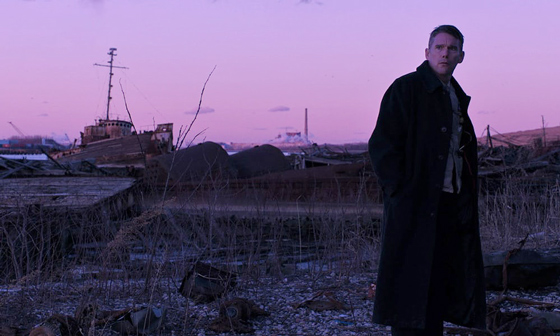 © Killer Films Frame from the film "First Reformist"
The new picture of Paul Schroeder “the first reformist” is unexpectedly devoted to the same problem - the salvation of the planet from man. Former Capellanes Toller (Ethan Hawk) is experiencing a crisis: the only son died through his fault, the marriage broke up, in the silence of the empty church, which is visited only by rare and indifferent tourists, he drinks whiskey and re-read the works of Thomas Merton, a trappist monk, trying to find at least one reason, so as not to put a bullet in his forehead. The incident encounters Toller with Mary (Amanda Seyfrid), who applied for advice - her husband, an activist of the green movement, refuses to have children and prepares a terrorist attack. Toller has to find answers to eternal questions: what is the meaning of our stay on Earth and whether we will be forgiven if we lived aimlessly and in sin. The “first reformist” rhymes with the “silence” of the long -standing co -author of Schreder - Scorsese, who, in his old age, exchanged the favorite theme of individual madness for a frenzied God -seek, but if the demoeze is convinced that in Christ a man is waiting for salvation, Vera is one of the forms of sociopathy for Schroeder, possibly the most dangerous.
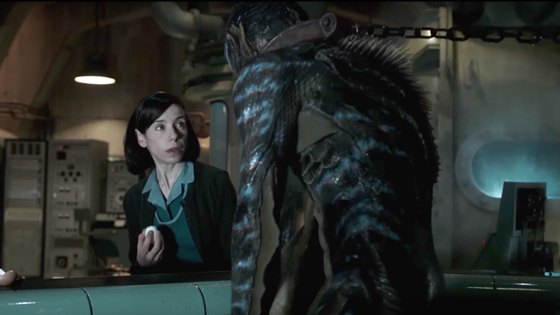 © Bull Productions Hard from the movie "Form of Water"
"Form of water" Guillermo del Toro is a free fantasy on the topic of interspecific love in the decorations of the Cold War; The basis of the plot here is the cult horror "Creature from the Black Lagoon." Despite a lot of advantages-a lovingly reconstructed era of the beginning of the 1960s, a muscular fabric of a musical genre, bright acting work (Michael Shannon, Sally Hawkins), which is finally relevant than ever, a stem over the image of a communist enemy, the “water form” remains an exercise in the usual director of the register. A decorative and applied fairy tale, the burleshell Imazhinism of which is seasoned with the new-fangled trends of the Body as part of total/totalitarian tolerance.
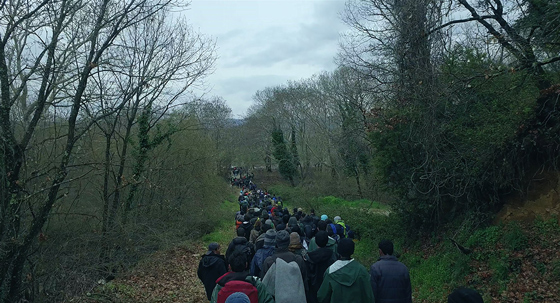 © 24 Media Production Company Frame from the movie "Human Stream"
Finally, the main intrigue of the festival is a documentary picture that frankly speculates on the doctrine of multiculturalism, calling for the fraternity the peoples of different races. Nevertheless, the peoples continue to “deep down to hate each other,” as one of the interviewed, the leader of Druzov in retirement, speaks. Ai Weiwei shot his film in 23 countries, and it seems that the picture, the named “human stream” should be an embodied movement. But no, the film is surprisingly statist, it is difficult for an artist to rebuild from one medium to another. Ai Weiwei understands cinema as a set of verified easel compositions, the optics chosen by him is absolutely academic, originally from the 18th century painting, and it is difficult to imagine that the author of the “human stream” is our contemporary, and, for example, Jacques-Louis David of the “Coronation of Napoleon”.
 © Vision Entertainment Frame from the movie "This is Congo"
It is curious to compare the “human stream” with the film “This is the Congo” by the New York photographer Daniel McCeib-about the impossibility of reconciliation in the ongoing civil war between the heirs of Mobut and the rebels from the M23 group. McCeib managed to make a picture in the genre of military report, to capture the chaos of the partisan struggle, the goals (and even tactics) of which are not quite clear even to its participants. At the same time, human characters are not lost here for the abundance of exoticism. The protagonist of the Congo is the General of the National Guard Mamad, a fanatic nationalist, firmly confident in the possibility of a normal life for his long-suffering people (almost all publications supplied his name with an explanatory commentary, typical of post-colonial consciousness: Mamada is not a pseudonym and not a joke, because in the Francophone countries of Africa the word “mamad” neglect the black population in general). McCab is not afraid of provocative statements, the story of the Congo and neighboring Rwanda, actively supporting the rebels, was filed in a left -handed vein, the director with direct text speaks of the negative role of the United States in inter -tribal conflicts.
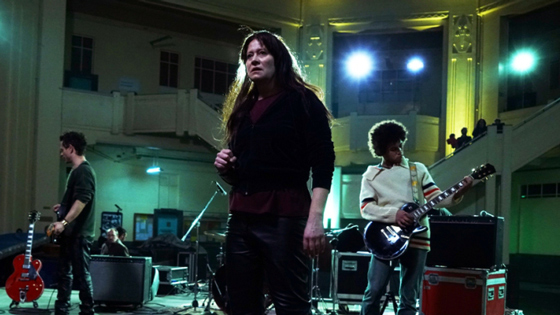 © Vivo Film Frame from the movie "Nico, 1988"
Against this politicized background, a sip of fresh air looks like Suzanne Nijearelli's film “Nico, 1988” (program “Horizons”) - the story of the last years of life participants Velvet Underground , the fatal woman of Lou Reed - singer Nico. Danish actress Trina Dirholm plays literally a ruin, likening his heroine a bombed post-war Berlin, in which Niko grown, or an unsightly proletarian Manchester of the 1980s, where the rock star moved before her death. Sometimes a movie made without ambitions and complaints about a fundamental teaching about the fate of the world tells the viewer about the world and a person than the work full of professionalism. Nico tiredly explains the accidentally met by the fan: “ i've Been on The Top , I ' VE Been on The Bottom , Both Places are Empty " . So far, this is the best that sounded from the screen in Venice.