
Translated material
Our everything is?
217 years since Pushkin's birth in the mirror of folk love
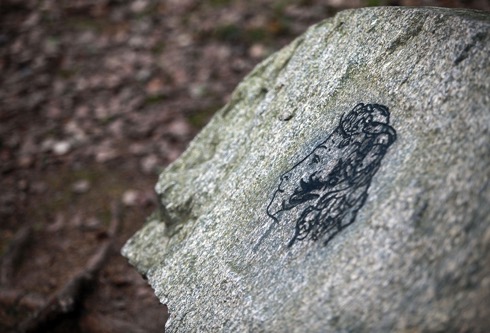
A stone with a self -portrait of Pushkin at the entrance to the village of Mikhailovskoye, where Alexander Sergeyevich, a guest in the estate of his mother, wrote more than a hundred works in 1824-1826. Including the head of Evgeny Onegin and the tragedy Boris Godunov
The birthday of Alexander Sergeyevich Pushkin in Russia has long been status - thank God, the unofficial - state holiday. In any case, few people will call the date of birth of any other writer immediately, in contrast to the coveted on June 6. Of course: after all, Pushkin is our everything.
The cherished formula, invented in the 1859th literary critic Apollo Grigoryev, like a spell, forever put Pushkin on a special place in our collective consciousness. And unconscious, however, too. Indeed, according to a well -known test, the request, without thinking, to name the surname of any poet, the Russian immediately, the Russian blurts out “Pushkin!” We speak his language - this is not so much about quotes, identified and often unconscious as about the Russian speech itself, as if Pushkin born in its modern edition. He is a hero of legends and apocrypha, jokes and other fairy tales. He is widespread and ubiquitous, we see and invisible. We do not turn to any of the classics during our lives as often as Pushkin, whether we want it or not. He is above the notions of good or bad taste.
The transformation of a very specific one who lived not in such time immemorial, a man into a non -missed monument began in the 19th century (we note that under Tsar Alexander II), but the Table of Ranks introduced in Stalin's times finally fixed the place of Pushkin in the literary hierarchy. He was officially the first number. Could this change after the collapse of the USSR? Of course it could. Not only Gorky and Mayakovsky ceased to be considered geniuses, but also Nekrasov or Chernyshevsky quickly, almost imperceptibly fell out of the people's favorite. But not Pushkin: no one would suffer such blasphemy.
At the junction of historical eras, in 1990, a comedy, which instantly became a hit of rental: the satire of Yuri Mamin “Bacenbard”, was released on the screens. Now she could be afraid to release her - and certainly she would not have received state support. And then everyone applauded the impudent pamphlet of a dark person, confident in their similarity with Pushkin. The main role was brilliantly played by the very young and really unknown Viktor Sukhorukov. His character arrived in a small provincial city and quickly stopped a typical “perestroika” turmoil, recruiting members of youth informal groups to his “Pushkinists Society”. They marched under the poet’s poetry in cylinders and shepowns, and had never parted with combat weapons - a cane. The parable of chaos and order (both of them - the favorite material of the poets) warned and predicted a new phenomenon of fascism on national material. The whole film was both ridiculous and terrible, like a brilliant scene in which the Soviet sculptor-drinker turned Ilyich’s standard bust into the same bust of Alexander Sergeich with several careless movements.
Interestingly, the gloomy forecasts of my mother still have not come true. “Pushkin’s“ their own ”is still the Westerners and the Slavophiles. And he, as the genius should be supposed, successfully eludes any definitions. For example, in recent months, he has again bathed in folk love in the role of a thief-river from the comedy series of the Pushkin STS channel.
Photo: Alexandra Zotov