
Translated material
Good will
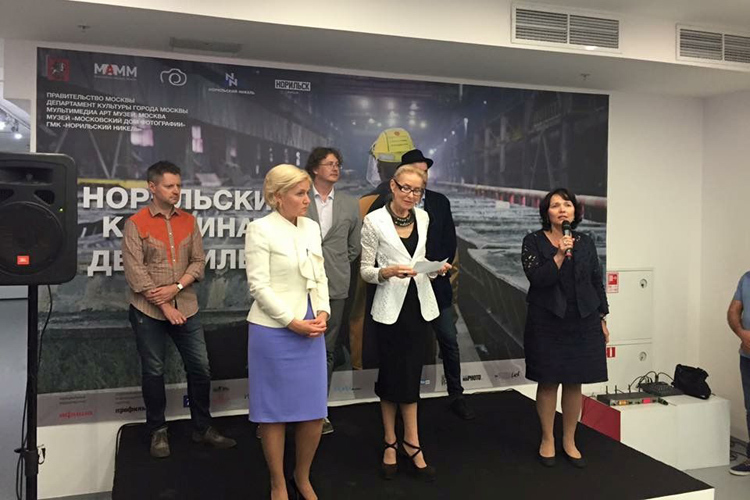
In April 2012, President Vladimir Putin presented letters of honor to the billionaires to the year Nisanov (group of companies Kyiv Square, a Gorsky Jew from Azerbaijan), Samvelu Karapetyan (Tashir, Armenian) and Ziyavudin Magomedov (Group Sum, Dagestan). These confessors of various religions businessmen, whose combined state exceeds $ 5 billion, “made a great contribution to the implementation of measures to restore the Kronstadt Sea Cathedral in the name of St. Nicholas the Wonderworker,” for which they received awards from the hands of the president.
Nisanov is the largest owner of commercial real estate in Moscow, he always belongs to customers the shopping center "European" at the square of the Kievsky station, Radisson Hotel Royal ("Ukraine") on Kutuzovsky Prospekt and many other iconic objects. Tashir Holding Samvel Karapetyan is engaged in developing, construction, owns Rio shopping centers, supplies Gazprom's equipment and not the last player in the energy sector, the total annual circulation of his companies exceeds 165 billion rubles. Ziyavudin Magomedov and his brother own several large ports, the market capitalization of their FESCO company is $ 145 million. A little more than 6 billion rubles took to restore the cathedral (about $ 20 million at the rate of that time), while a lot of money was allocated from the budget and brought by private philanthropists. Nevertheless, the contribution of three businessmen was evaluated highly.
Many charitable projects go along with privatized or purchased city -forming enterprises.
There is not a single billionaire included in the Forbes list who, to one degree or another, would not be engaged in charity. Businessmen help orphanages, hospitals, churches, schools. Many collect and put on public art, support artists, musicians, publish books. Clearly established rules, a mature culture and even an industry of charity, which has long existed in the West, in Russia could not have developed in just 25 years after the end of the USSR. However, it seems that Russian billionaires in the first generation also feel a duty to society and fulfill these duties, albeit less technical, but sometimes more zealously than their Western associates.
How is a person who has put on a state in the era of the initial accumulation of capital comes to charity? There are several main ways. Firstly, to businessmen whose business becomes a little more noticeable against the backdrop of other same businesses in their city or area, unprotected segments of the population begin to come for help: people who do not have enough money for operations, keepers of animal shelters, director of orphanages or music schools. For example, billionaire Alexander Svetakov once accepted the directors of a boarding school for children with disabilities. Svetakov responded to a request for help and gave the boarding school a lot of computer and office equipment, but when he stopped by to visit, he saw that the building itself needed a major repairs. Since then, the owner of the Absolut group, whom someone considers a successful and ruthless raider, allocates money on a regular basis and created the Absolute Help, which was headed by the very director of the boarding school.
Secondly, many charitable projects go along with privatized or purchased city-forming enterprises. The maintenance of hospitals, support for schools and cultural houses, children's recreation camps from the social burden on the company become the personal project of the owner. Thirdly, very often businessmen part with the money “by call”-when the governor, another dignitary, up to the president, asks for the restoration of the museum or temple. A special case of these two types of charity, brought to the point of absurdity, is eight years of Roman Abramovich as the governor of Chukotka. Very often, businessmen family members are engaged in charitable projects: Forbes magazine found at least 12 examples when wives or daughter of billionaires from the list not only nominally heads charitable foundations, but actively work in them. For example, the founder of the Winzavod Modern Support Fund and the wife of Roman Trotsenko Sofya is a professional cultural manager.
Finally, personal addictions and requests in the field of beautiful often encourage businessmen to collect collections of works of art, and then put them on public display, creating their own art galleries or libraries.
Not tint
How generous Russian philanthropists are? It is very difficult to answer this question for sure. The amount of money distributed by each billionaire just like that, one -time amount is not given accounting. Charitable organizations that new Russian philanthropists and philanthropists began to create in the 21st century do not always publish correct reporting at least according to Russian accounting standards. However, large funds created by the richest people of the country gravitate to transparency and lay out the figures of expenses per year on sites.
In Soviet times, the shareholder of the Norilsk Nickel, Vladimir Potanin, built a successful career in the foreign trade system, and in the 1990s he acted as an ideologist of the system of privatization of large industrial enterprises through the mechanism of collateral auctions. In 1996-1997, Potanin was the first Deputy Prime Minister of the Russian government, in the same period the ONEXIM group created by him and Mikhail Prokhorov consolidated the control package of Norilsk Nickel. This world's largest manufacturer Nickel and Palladium brings more than $ 1 billion of net profit annually, Potanin to this day remains a large shareholder of the plant. With his partner Mikhail Prokhorov, he quarreled and shared assets; Some believe that the occasion was a scandal in Curshell. It was Potanin of the media that called the true author the idea of holding the Winter Olympics of 2014 in Sochi, which will never be remembered separately from the annexation of Crimea.
The former raider became almost the only owner of a private theater in the country.
Potanin registered his charity fund one of the first among Russian billionaires, back in 1999. What is declared as the main goal? “Promoting the development of charity in Russia, the formation of a public environment, where values are creativity, professionalism and voluntary activity,” the fund's website says. The development of philanthropy is a separate area of activity, the philanthropist wants to educate philanthropists, since "a strong and developed non -profit sphere is an indispensable condition for stable social development." For example, since 2007, Potanin has finances the “Target Capital” program: it issues the amount of money to non -profit organizations so that they learn to find funds in other ways later. In addition, the Potanin Foundation supports several partnership programs with Russian museums: for example, 359 such organizations participate in the Museum. Dialog contest.
Gennady Timchenko is not only a friend of Vladimir Putin, but also one of his few friends who more or less engaged in commerce until 2000. Then he and his partners managed the Kirishi oil refinery and helped export oil and oil products Surgutneftegaz. After Vladimir Putin came to power, Timchenko, the Gunvor oil oil industry, became the largest player in this market - according to some estimates, up to 30% of all Russian oil exports passed through it. In addition, Timchenko Stroytransgaz has become one of Gazprom's largest construction contractors. Just a month before getting on the US sanctions list, Timchenko sold his share in Gunvor to a partner.
Timchenko founded his Ladoga charity foundation in 2010. Among the priorities of the Fund are active longevity and children's sports, assistance to adoptive children and “Development of Russian regions by means of culture”. One of the iconic projects in the direction of culture is the preservation of the architectural complex of the Valaam Transfiguration Monastery.
Mikhail Prokhorov began his career as a financier, as a financier, but laid a strong foundation for his well -being in 1996, when Norilsk Nickel bought them with Potanin. In 2008, Prokhorov successfully sold his Nornickel package to the Rusal group Oleg Deripaska, having received 14% in its capital and $ 7 billion cache. This money allowed Prokhorov is much easier than other businessmen, to survive the crisis of 2008-2009 and even buy some other interesting assets, for example, a 20% of another monopolist - a manufacturer of mineral fertilizers of Uralkali. In 2012, Prokhorov ran for president of Russia and scored 7.98% of the vote. It was he who owns the RBC holding, whose journalists, under the leadership of Elizabeth of Ossetian and Badanin’s novel, described the activities of the Innopactics Foundation, daughter Vladimir Putin Ekaterina Tikhonova and found that her husband Kirill Shamalov, the owner of a large package in the company Sibur. It was Prokhorov who hired the general director of RBC Nikolai Molibog, who in the spring of 2016 fired the editor -in -chief of the newspaper RBC Maxim Solus. Following Solus, the Ossetian, Badanin and a significant part of the team left the holding.
It was Potanin of the media that called the true author the idea of holding the Winter Olympics of 2014 in Sochi, which will never be remembered separately from the annexation of Crimea.
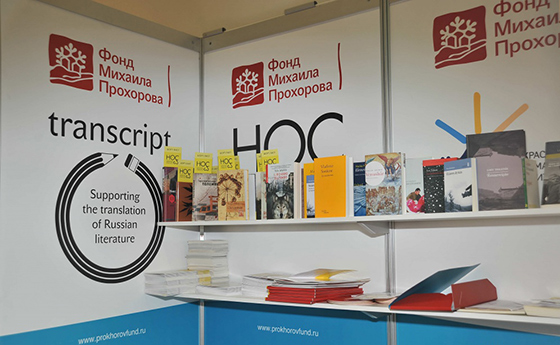
The Mikhail Prokhorov Foundation was founded in 2004 and at first acted only in Norilsk, a city that, thanks to the Norilsk Nickel, brought the businessman the most money. Another name is “Charity Fund of Cultural Initiatives”, it is engaged in projects in the field of science, education, education, as well as art and culture. For example, the Fund established its own literary prize "Nos", gives out grants for training talented students abroad, develops a school of cultural journalism, sponsor theatrical festivals and a book fair in Krasnoyarsk. The head of the Fund is the head of the fund, sister Mikhail Prokhorov, Irina.
Vladimir Potanin, Gennady Timchenko and Mikhail Prokhorov - permanent residents of the Forbes list, billionaires and famous people. Of course, the amount of money that businessmen distribute to charity does not coincide with the amounts indicated in the reporting of the charitable foundations based on them. And the assessment of the personal state of a businessman is the amount of assets belonging to him, and not earned in a year of cash. Nevertheless, it is interesting to see how the expenses of charitable foundations correlate with the assessments of the personal states of their founders.
How much Russian billionaires spend on charity
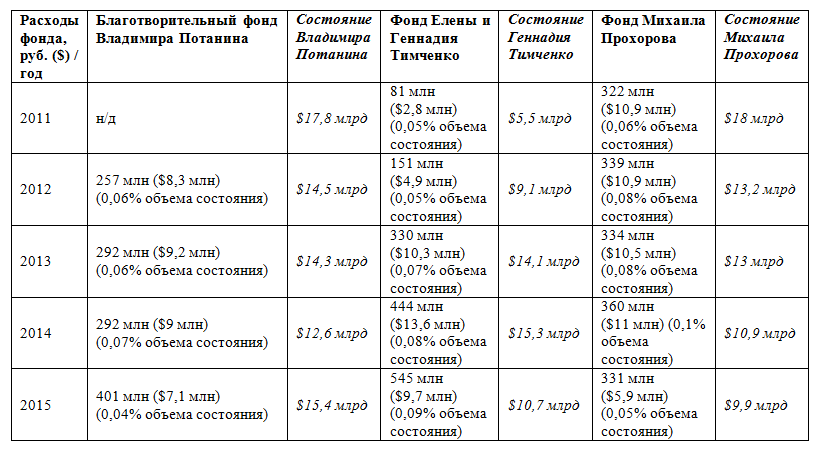
Sources: Fund reporting, Forbes rating, Bank of Russia currencies
As you can see, the Mikhail Prokhorov Foundation regularly spent $ 10-11 million until last year. The Gennady Timchenko fund systematically increases financing. But none of them spent the amount on charity, at least partially comparable with the billionth value of their assets. Of course, the Russian distribution system of such assistance is also not able to administer large amounts by an order of magnitude. Abroad, billionaires spend much more on charity in absolute and relative expression.
Expenses of the Bill and Melinda Gates Foundation
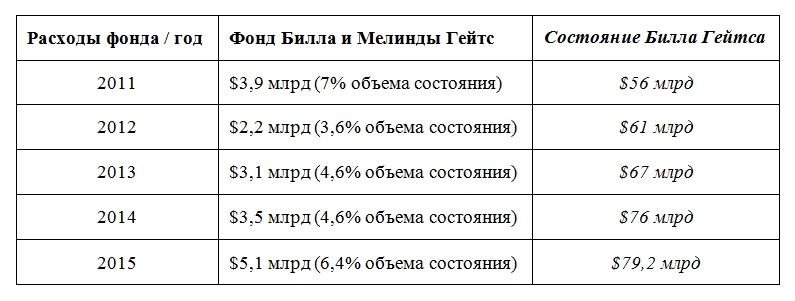
Sources: Fund reporting, Forbes rating
Kindness as a source
Were the Nisanov received by the year, Samvel Karapetyan and Ziyavudin Magomedov Honorary Presidential letters by the guarantor of the success of their business? No, the Sea Cathedral in Kronstadt did not save Magomedov from departure from among the largest construction contractors Transneft and did not help Nisanov hold the already won right to build up the territory of VDNH. However, many businessmen know how to extract quite tangible benefits from their charity programs.
In 1994, Galina Vishnevskaya agreed with Yuri Luzhkov so that she was allocated a site for the school of opera singing on Ostozhenka, next to the Zubtievsky Monastery. The construction of the Union of Theater Workers under the leadership of businessman Vitaly Shaffer took up construction. As a result, by 2000, a huge residential building in a pseudo -classical style has grown on Ostozhenka, apartments in it are now sold for 200-350 million rubles. The center of opera singing Galina Vishnevskaya modestly occupies one of the outbuildings. According to this principle, the Union of Theater Workers built several more massive buildings intended for leasing.
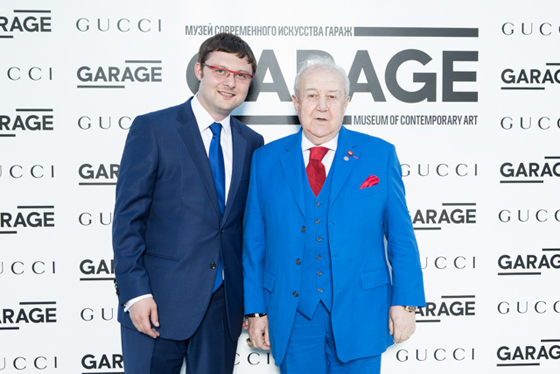
The owner of the Volga-Dapal Plant "Volga" and the former deputy minister of property relations of Russia Shalva Breus gathered an extensive collection of paintings by Russian artists of the 1970s and further. Breus estimated his collection at $ 50 million. Now the businessman rents squares in the Drumber cinema near the Kremlin (there is a ceremony of presenting Kandinsky Prize, established by Breus). In 2015, the Moscow government decided to sell the cinema from the auction, and Breus stated that he intended to buy the building and arrange a museum of contemporary art in it. The initial price was announced - 556 million rubles (about $ 10 million), but the city without explaining the reasons set aside the auction, and the “drummer” never went into private hands. But Breus with a high probability will still receive a “drummer”: the auction, although postponed, but not canceled.
None of them spent the amount on charity, at least partially comparable with the cost of their assets.
In the early 2000s, the glory of Rosbuilding and its founder Sergei Gordeev rattled in Moscow. Energetic young people aggressively bought up shares of the newly privatized enterprises of the capital like the Kverizza toy plant, parted with former management, and closed production workshops. Gordeev and his partners before everyone understood how to ozower in the redeelopment of successfully located industrial enterprises. In 2005, Gordeev liquidated the company and the Rosbuilding brand, creating a new Horus Capital, but it was not possible to get rid of the glory of the raider. In 2007-2010, Gordeev was a senator from the Perm Territory, and in 2010 he sold his Horus Capital along with the Otkritie financial corporation for $ 800-900 million.
One of the largest facilities was the Business Center “Stanislavsky Factory”-a neatly restored former gold-frame factory of the Alekseev family near Taganka. The great -grandson of the wealthy founder of the factory was Konstantin Alekseev, better known as Konstantin Sergeyevich Stanislavsky. So that the workers at the enterprise do not drink and wept idle in their free time, young Alekseev opened his own theater in the factory in 1904. Among the first played plays of Ostrovsky and Chekhov.
In 2008, Sergey Gordeev actively engaged in the reconstruction of the enterprise and allocated the former building of the theater of theater art studio led by director Sergei Zhenovach. So the former raider became almost the only owner of a private theater in the country. Now there are 24 people in the troupe. According to RAS reports, the theater helps out 45-48 million rubles, and in order to work normally, it needs about 80 million rubles.
In 2011, for the reconstruction project of Stanislavsky Factories, Sergei Gordeev received the Prize of the Royal Institute of British Architects. At the end of 2015, in an interview with the Moscow-24 television channel, Gordeev said that he would not mind stop being the only breadwinner of the theater art studio, which he contains about 10 years. In 2016, Mark Zakharov and several other eminent directors turned to the Minister of Culture Vladimir Medinsky with a request to take care of the studio, since she has “financing problems”. You need to know the measure in charity.
Elena Buisky - independent journalist
Download the entire issue of the magazine "Disagreements" (No. 10) "Who pays for culture?": PDF , mobi , epube