
Translated material
"Why is there no place in modern media religions?"
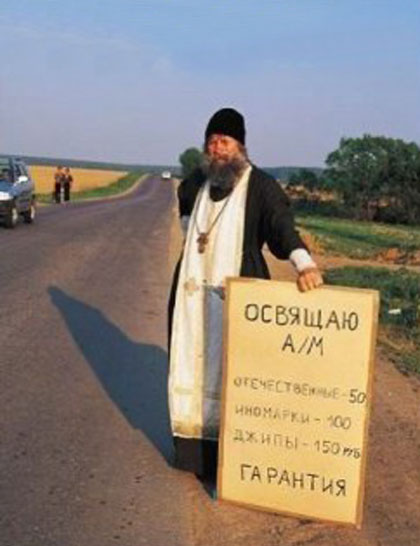 Under such a rather strange, in my opinion, the motto took place on April 12, a meeting of the expert seminar in the Synodal Information Department of the Russian Praise Church. It was possible to ask with the same success: why poetry (history, algebra, instrumentation, even economy as such) there is no place in modern media. The media do not deal with abstract categories, they are engaged in everyday turnover, what is here and now, it seems to be a common truth. When religion (in any manifestation) is reflected in some kind of event significant for society-whether it is the Patriarch’s election, or the transfer of a valuable icon from the museum to the temple, or here is the current story with the performance of the Izhevsk priests -so the most seemingly most not included in church topics, how vividly react to these events. But the participants of the seminar approached the problem with a rather unexpected side.
The chairman of the Moscow Religious Society at the Faculty of Philosophy of Moscow State University Ivar Maksutov complained to "the absence of religious discourse in modern media, the lack of religious studies as a brand and religious scholars as experts." (What says about his inattention: there are a lot of comments in the media in the media.) The head of the Association of Orthodox Experts, Kirill Frolov expressed his fears that "folklorization of Orthodoxy" is happening. (Maybe there was such a danger, and the law on religious organizations transfer religious property, it seems to me, completely shallow it - many museum workers dream of living, what kind of folklorization is there?) The writer and TV presenter Arkhangelsky complained that to give comments in the media - “this is a trap, confirmation of the commented stupidity, even if the commentary expresses the opposite position ". And although the editor -in -chief of the Russian Profile magazine Andrei Zolotov believes that “the situation with the media religion in the media is incomparably better than it was ten years ago: the formats, no matter how terrible it sounds, increased different ones, and there is, of course, interest in this topic”, it feels that Orthodox experts are dissatisfied with the general situation. And they can be understood.
Discipline in the church is cleaner than the army: I went against the attitudes launched from above - immediately troubles. And Patriarch Kirill, after his election, made a tricky move: he called on the church intelligentsia in all sorts of new synodal departments, commissions and committees, into the same inter -sorting presence, thereby turning many into church functionaries. Here, in general, the Corporate Code orders to keep his mouth on the castle. That is, you can assent something, but it is already more difficult to speak on independent sites about vital problems for the church community, as Orthodox experts would like. And they would like. This topic has been raising for a long time, I remember the round table as early as 2007, at which at that time the responsible secretary of the Church Herald newspaper Sergei Chapnin complained about the limited format and genres of church journalism, as well as the inability to seriously talk about the problems that excite them. Since then, the task remains unresolved if you listen to Orthodox experts. 
But this is not entirely true. Some Orthodox media will not tell her that they are successful, but they decide: in any case, really sharp and topical materials allow themselves, such as, for example, if you take recent events, a discussion of history with Izhevsk priests. And Orthodox experts are all "looking for ways." The head of the Synodal Information Department Vladimir Legoyda, who has not only separate resources, but also a whole magazine “Foma” in his hands, he is there as a chief editor, continues to reason that “today is extremely necessary both status and permanent discussion intellectual sites that would work between large church and public forums and would be absolutely open to everyone who wants to participate in similar discussions. " The information department is ready to “partially fill this niche by organizing such events,” Legooda emphasized. But why is the “events” to fence if we are talking about the work of the media? Or do you still want to hide in the status?
“In order for Orthodoxy to be present in the media and has gained a socially significant living image,” Roman Lunkin, who also took part in the seminar, shared his opinion with his opinion of his opinion, “not enough paradoxical statements by Vsevolod Chaplin and Hamovatu's assertiveness Andrei Kuraev. In the current Russian media, there is a failure in coverage of social church topics - the life of parishes, monasteries, dioceses and their social projects and public actions, as well as regional Orthodox life. In my opinion, this is the main problem of the Russian Orthodox Church-the lack of interest is not even in the outside world, but to their own creative people, active pastors and their affairs. ”
Izhevsk history, in my opinion, will largely become a professionalism test for the Orthodox media. The priest Sergiy Kondakov, Mikhail Karpeev and Alexander the Malykh, who turned to Patriarch Cyril with an open letter, demand a church court , refusing to consider himself excommunicated from the Church. Representatives of the Synodal Information Department, for their part, said that in the Russian Orthodox Church they were ready for dialogue with Udmurt priests. The Orthodox press, it seems to me, should make certain efforts in order to bring this case to a church court, or at least to an open discussion with the participation of the priesthood, clergy and the Orthodox community. And objectively cover all the events associated with this, will happen to such. Then, I think, Orthodox experts will have fewer reasons for sighs. And that the secular media will not stand aloof from this discussion, there is no doubt - so far it was the secular media that pulled out forced church problems for public display.
Photos: Mikhail Maslennikov / Noga- Art.com